What if that “minor” electrical note in your home inspection report is actually a mechanical failure waiting to happen? Finding a double tapped breaker during a property transaction often sparks immediate worry about house fires and expensive panel upgrades. It’s frustrating to see technical jargon stand between you and a successful closing, especially when you’re already juggling the fast paced Central Indiana real estate market. We understand that your home’s safety is your top priority, and navigating these findings shouldn’t feel like a guessing game.
At 5M Inspection Services, your home’s safety is our pride, and we believe you deserve clarity over confusion. You’ll learn exactly why two wires under one screw can lead to overheating, which specific breaker brands like Eaton Type CH are safe exceptions, and how most repairs only cost between $100 and $300. We’ll preview the 2026 National Electrical Code standards and the upcoming July 1, 2026, Indiana legislative changes so you can make a confident, informed decision for your family’s future.
Key Takeaways
- Identify why a double tapped breaker is a mechanical failure point that leads to overheating, not just a minor code technicality.
- Learn how to spot specific hardware exceptions like Square D and Eaton breakers that are engineered to safely handle two wires.
- Determine the clear path to a professional repair through circuit mapping and evaluating available panel space.
- Gain confidence in your Central Indiana real estate deal by knowing which electrical findings require immediate action versus safety upgrades.
What Is a Double Tapped Breaker?
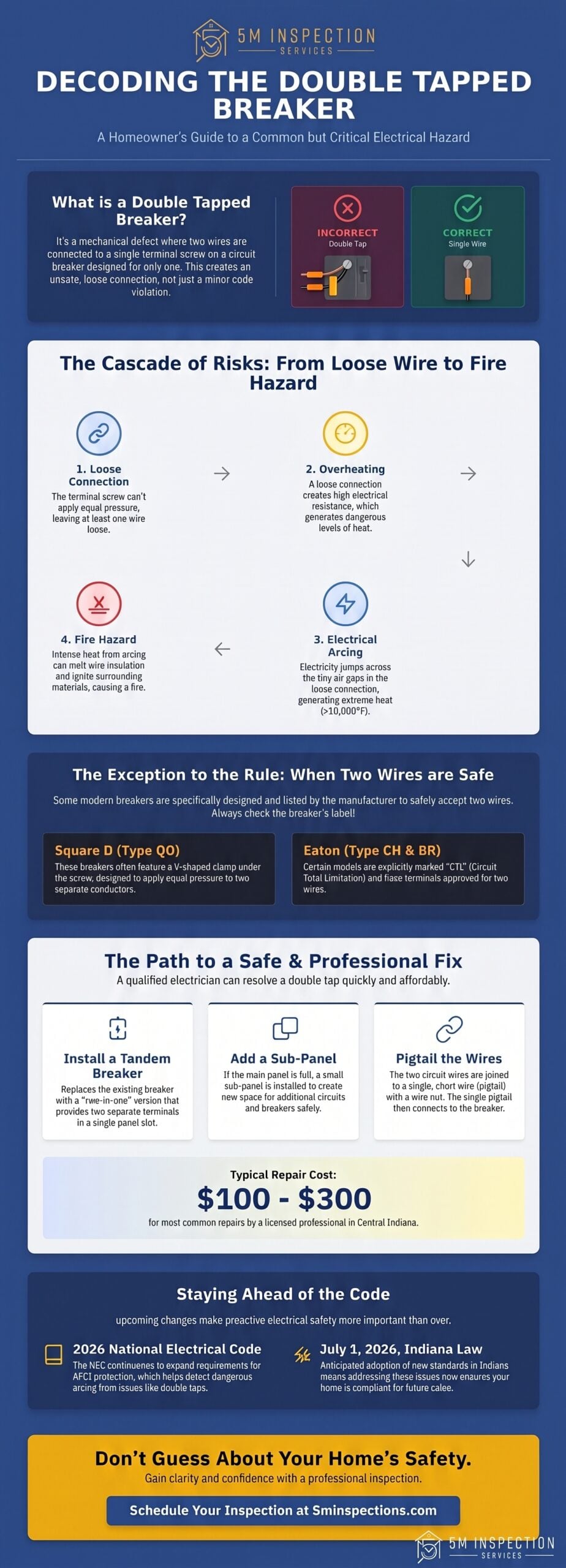
A double tapped breaker is a specific mechanical defect found within an electrical panel. It occurs when two separate electrical conductors are connected to a single terminal screw on a breaker that the manufacturer only intended for one wire. This isn’t just a paperwork violation of the National Electrical Code. It’s a physical risk. Most terminals are designed to clamp down on a single wire to ensure a tight, low-resistance connection. When you add a second wire, the screw cannot exert equal pressure on both. This leads to loose connections, arcing, and potential fire hazards.
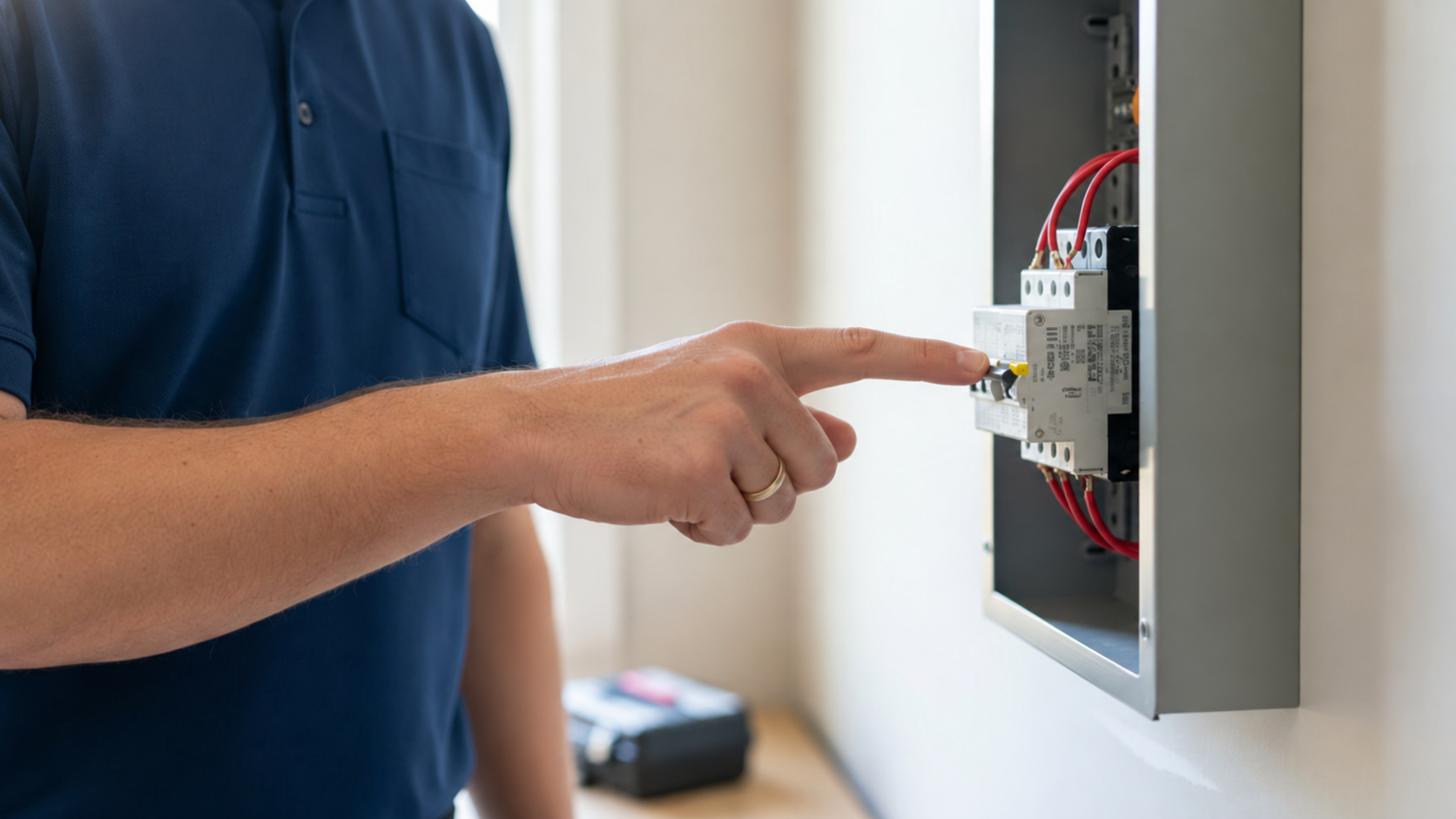
Home inspectors prioritize this finding because it’s a leading cause of residential electrical issues. If you look inside your panel, you’ll see wires entering the bottom of each breaker. A standard circuit breaker should have only one wire visible under that screw. If you see two wires competing for the same spot, you’ve identified a double tap. DIYers often confuse this with a “tandem” breaker. A tandem breaker is a single-slot device with two separate switches and two distinct terminal screws. It’s a safe, code-compliant way to save space. A double tap is a shortcut that compromises safety.
Common Causes of Double Tapping
Why does this happen so often in Central Indiana homes? Usually, it’s the result of unpermitted basement finishes or kitchen upgrades where an extra circuit was needed but the panel was already full. Instead of installing a sub-panel or using tandem breakers, an unqualified person simply tucked a second wire into an existing breaker. We also see this when contractors “daisy-chain” circuits directly at the panel to save time. It’s a quick fix that leaves the homeowner with a hidden hazard that often goes unnoticed until a home inspection.
Double Tapping vs. Triple Tapping
While a double tap is dangerous, a “triple tap” involves three or more wires under one lug. This significantly increases the risk of mechanical failure. The most critical version of this is a “top tap” at the main service lugs. These lugs carry the full amperage of the home and are never designed for multiple wires. At 5M Inspection Services, we use modern methodology to identify these risks during a thorough home inspection. We don’t just look for the wires; we check for signs of heat damage and oxidation that indicate a failing connection. Your home’s safety is our pride, and catching these defects early prevents expensive emergencies later.
Why Double Tapping Is a Safety Risk
The safety risk of a double tapped breaker isn’t just about following technical rules. It’s about basic physics. Most circuit breaker terminals use a simple screw and pressure plate. This mechanism is engineered to secure one solid or stranded wire. When you insert two wires, the screw can only apply full pressure to the highest point. If those wires aren’t perfectly aligned, one wire remains loose. This creates a high-resistance connection. High resistance generates heat. Enough heat will eventually melt the plastic insulation on the wire, which is a leading cause of residential electrical fires.
The danger is amplified when varying wire gauges are used together. For example, if a 12-gauge wire and a 14-gauge wire share a terminal, the thicker 12-gauge wire will support the terminal screw. The thinner 14-gauge wire will sit loosely in the gap. This specific scenario is a major cause of the dangers of double-tapped breakers because the smaller wire can easily slip out or vibrate, creating a constant hazard. If you’re preparing to sell your home, booking a pre-listing inspection Indianapolis sellers rely on can help you identify these risks before they become a deal-breaker for a buyer.
The Hidden Danger of Arcing
Arcing occurs when electricity jumps across an air gap. In a loose connection, this happens at a microscopic level thousands of times per second. This micro-arcing generates intense heat, often exceeding 10,000 degrees Fahrenheit at the point of contact. This process happens silently inside your electrical panel, hidden behind the dead front cover. Most traditional breakers only trip during a short circuit or an overload. They won’t always detect the low-level arcing caused by a double tap unless the panel is equipped with Arc-Fault Circuit Interrupter (AFCI) protection.
Long-term Effects on Electrical Components
The damage isn’t limited to the wires themselves. Excessive heat transfers into the breaker’s internal trip mechanism. This can cause it to fail or weld shut, preventing it from tripping during a real emergency. You may also see carbon buildup, known as pitting, on the terminal screw and the panel’s bus bar. Continuous heat cycles cause wires to expand and contract, which naturally loosens the connection further over time. This cycle of heating and cooling makes an old double tap significantly more dangerous than a new one. At 5M Inspection Services, we take these risks seriously because your family’s safety is our personal pride.
The Exception: When Two Wires Are Code-Compliant
While most electrical connections require a one-to-one ratio, the term double tapped breaker does not always signal a safety failure. Some manufacturers have specifically engineered their hardware to accept two conductors. This is a common point of confusion for homeowners during an inspection. The key lies in the Underwriters Laboratories (UL) listing. If a breaker is UL-listed for two wires, it has been tested to ensure the terminal can maintain equal pressure on both conductors without overheating or loosening over time.
The Square D “QO” series is the most recognizable exception. These breakers feature a specialized pressure plate terminal. Unlike a standard screw that presses directly onto a wire, this plate moves vertically to sandwich two wires securely. It’s a common mistake to assume all Square D products share this feature. The Homeline series also offers models designed for two wires, but you must verify the specific model number. Similarly, Eaton Type CH breakers often list “(2) #14-10 AWG” on their specification sheets. In these cases, a double tapped breaker is actually a code-compliant installation. However, just because a breaker is “designed for” two wires doesn’t guarantee it’s safe. If the wires are different sizes or poorly stripped, the connection remains a hazard.
How to Read Breaker Labels
You can find the definitive answer on the side of the breaker itself. Manufacturers include a small diagram or text string indicating the permitted wire count. Look for a symbol showing two circles under one screw or text like “1 or 2 wires.” These “UL Listed” markings are vital for your insurance coverage. If a fire occurs due to an unlisted connection, your provider may deny the claim. Many older panels in Westfield and Indianapolis homes were installed before these dual-wire designs became standard. Don’t expect to find them in houses built before 1990.
What the Inspector Looks For
During our assessment, we don’t just count the wires. We verify the mechanical integrity of the terminal. We check for the specific pressure plate required for dual-wire termination to ensure it isn’t a standard lug being misused. We also verify that both wires are made of the same material. Mixing copper and aluminum in a single terminal is a critical failure due to different expansion rates. We take these extra steps because your home’s safety is our pride. Verifying these nuances ensures you aren’t paying for unnecessary repairs while keeping your family protected.
How to Fix a Double Tapped Breaker
Resolving a double tapped breaker is a common requirement during Central Indiana real estate negotiations. While the fix is often straightforward, it must be performed by a licensed professional to satisfy insurance requirements and local building codes. In Indianapolis, a standard repair usually involves one of three primary methods. Your electrician will first map the circuits to identify the electrical load. They need to know if the shared breaker is powering a high-draw appliance like a microwave alongside a light circuit. Once the loads are identified, the repair follows these steps:
- Evaluate the panel for open slots to install an additional full-sized breaker.
- Determine if the panel is rated for tandem breakers to split the load.
- Implement the pigtail method if physical space is limited.
- Perform a final torque test using a calibrated screwdriver to prevent future loosening.
If you’re buying a home and see this on a report, don’t panic. Most minor corrections for a double tapped breaker cost between $100 and $300, which typically includes the electrician’s service call fee. If you need to verify if a previous owner’s “fix” was done correctly, schedule a professional home inspection to get an unbiased assessment. We don’t perform repairs, so you can trust our evaluation is purely for your protection.
The Pigtail Method Explained
This is the most frequent solution for a double tap. The electrician takes the two wires currently under the screw and joins them with a third, short “lead” wire using a wire nut. This creates a single point of connection for the breaker terminal. It effectively turns a “V” connection into a “Y” connection. The key is ensuring the wire nut and the lead wire are rated for the combined amperage of the circuits. It’s a cost-effective fix that eliminates the mechanical failure point at the terminal screw without needing a new breaker.
Tandem Breakers and Panel Limits
A tandem breaker, often called a “wafer” or “twin” breaker, allows two independent circuits to occupy a single panel slot. Each circuit gets its own switch and its own terminal screw. This is a perfect solution for a crowded panel, but it comes with a catch. You must check the panel’s wiring diagram. Not every slot in every panel is rated to accept these devices. “Cheating” a tandem into a non-rated slot can damage the bus bar or cause the breaker to sit loosely. Always verify the panel’s maximum circuit count before making this change. Your home’s safety is our pride, and ensuring your panel isn’t over-crowded is a vital part of that mission.
Navigating Electrical Findings in Your Indianapolis Home Inspection
Finding a double tapped breaker is the most frequent electrical defect we document across Central Indiana. From the historic bungalows in Broad Ripple to the sprawling estates in Carmel, this issue crosses all price points and neighborhoods. It’s often the result of decades of minor DIY additions or unpermitted basement finishes. While it’s a common find, it shouldn’t be ignored. In the high-stakes environment of a real estate transaction, understanding the weight of this finding is essential for both buyers and sellers.
In a typical real estate deal, a double tap is categorized as a safety hazard rather than a cosmetic defect. While a home inspector doesn’t have the authority to “fail” a house, we provide the technical data your Realtor needs to negotiate repairs. Most buyers prioritize electrical safety because it directly impacts their ability to secure homeowners insurance. Many providers in the Indianapolis area will flag a double tapped breaker as a condition that must be corrected before a policy is finalized. If your lender also requires a WDI inspection as part of your closing process, understanding all required reports together helps you navigate the transaction with confidence. We deliver unbiased, thorough reports that serve as a clear roadmap for your closing process.
Central Indiana Housing Trends
Older Indianapolis homes often feature outdated panels like Zinsco or Federal Pacific Electric (FPE). These brands have a documented history of failing to trip; this makes a double tap even more dangerous because the safety backup is already compromised. Conversely, new construction in Fishers or Westfield isn’t immune to these errors. High-volume building schedules can lead to oversight where a sub-contractor might double tap a breaker to finish a circuit quickly instead of adding the proper hardware. You can find more context on these local nuances in our Indianapolis Home Inspection Guide.
Your Next Steps After an Inspection
Once you receive your 5M report, your next step is requesting an electrical certification from the seller. This document proves that a licensed professional has corrected the defect and verified the system’s safety. You can use our detailed photos and descriptions to get accurate quotes from local electricians without them needing to visit the property first. We take our role as your trusted partner seriously. 5M Inspection Services does not perform repairs because maintaining an unbiased perspective is essential to providing you with an honest assessment. As a family-owned business, we treat your family’s safety as our personal pride. If you have questions about a finding during a stressful negotiation, our team is available via text 24/7 to help you make a confident decision.
Take Command of Your Home’s Electrical Safety
Identifying a double tapped breaker is just the first step toward a safer home. You now understand the difference between a mechanical failure and a code-compliant exception like the Square D QO series. Most repairs are straightforward, often costing between $100 and $300 according to 2026 industry standards, but the peace of mind they provide is invaluable during a high-stakes closing. Don’t let technical jargon or home inspection stress stand in the way of your next move.
At 5M Inspection Services, we prioritize your protection through meticulous and unbiased methodology. As a family-owned business operated by Chris and Morgan Markham, we treat every client like a neighbor. We don’t just hand you a report and leave you to figure it out alone. Our certified experts are available via text 24/7 to answer your follow-up questions and ensure you make a confident decision. We are here to be your trusted partner from the first walk-through until the keys are in your hand.
Schedule your thorough Central Indiana home inspection with 5M today! Your home’s safety is our pride!
Frequently Asked Questions
Is a double tapped breaker a fire hazard?
Yes, it’s a significant fire hazard because the terminal screw cannot apply equal pressure to two wires. This creates loose connections that lead to micro-arcing and intense heat buildup. Over time, the heat melts wire insulation and can ignite surrounding materials inside your electrical panel.
How much does it cost to fix a double tapped breaker in Indiana?
A typical repair for a double tapped breaker in the Indianapolis area costs between $100 and $300. This price generally covers the electrician’s service call fee and the labor for a pigtail correction or a single breaker replacement. Local professional rates currently range from $50 to $150 per hour depending on the contractor’s experience.
Can I fix a double tapped breaker myself?
No, you should never attempt to fix panel wiring yourself. Working inside a live electrical panel carries a high risk of electrocution and requires specialized tools like calibrated torque screwdrivers. Licensed electricians ensure the repair meets the 2026 National Electrical Code standards and provide the documentation your insurance company requires.
Will a double tapped breaker fail a 4-point inspection for insurance?
Yes, insurance carriers almost always flag this as a high-risk defect that must be corrected. Most providers in Central Indiana will deny coverage or cancel a policy if a 4-point inspection reveals double tapping. Fixing this issue before you apply for a policy prevents delays in your home’s closing process.
What if my panel is full and I have a double tap?
Your electrician will likely use a tandem breaker or install a small sub-panel to create additional space. Tandem breakers allow two circuits to share one slot safely if your panel’s wiring diagram permits them. If the panel is outdated or maxed out, a sub-panel is the most reliable long-term solution for your home’s safety.
Why did the previous inspector miss this double tap?
They may not have removed the “dead front” cover or perhaps they lacked the modern methodology required for a thorough assessment. At 5M Inspection Services, we treat your family’s safety as our personal pride and perform a meticulous physical check of every terminal. We catch what others miss because we are deeply invested in your well-being.
Are all Square D breakers allowed to be double tapped?
No, only specific models like the Square D QO series and certain Homeline breakers are UL-listed for two conductors. These breakers feature a specialized pressure plate rather than a standard screw. You must check the specific label on the side of the breaker to verify it’s engineered for dual-wire termination.
Does a double tapped breaker cause lights to flicker?
Yes, flickering lights are a common symptom of the loose connection a double tap creates. When electricity struggles to jump across the air gap in a loose terminal, it causes voltage fluctuations that you see as flickering. If you notice this in your Indianapolis home, it’s a sign that the connection is already failing and needs immediate attention. If you’re planning to list your property, reviewing our ultimate pre-listing inspect check for Indianapolis sellers can help you address these electrical issues before buyers discover them during their own inspection.