
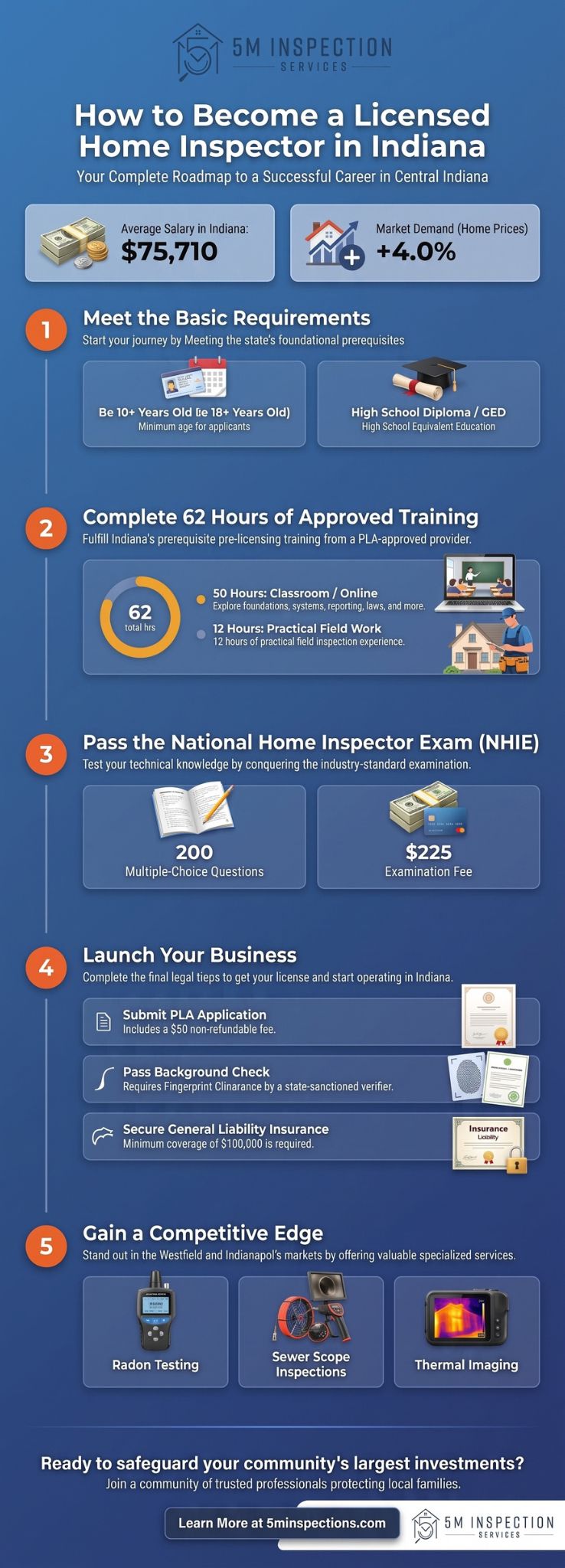
Earning an average salary of $75,710 as a licensed professional in Indiana doesn’t require a four-year degree, but it does require a meticulous eye for detail and a heart for protecting local families. In a market where home prices rose 4.0% in March 2026, the demand for certified experts has never been higher. Learning how to become a home inspector in Indiana is about more than just checking boxes; it’s about joining a community of trusted partners who safeguard our neighbors’ largest investments. Your home’s safety is our pride, and we want to help you make it yours too.
We understand that state regulations can feel like a maze. You might worry about the 60 hours of mandated classroom training and 12 hours of practical field work, or perhaps the $225 National Home Inspector Examination (NHIE) feels like a high-stakes hurdle. This guide provides a clear roadmap to your license and shows you how to launch a successful career in Central Indiana. You’ll learn exactly how to handle the $50 application process, meet the $100,000 general liability insurance requirement, and use modern tools like thermal imaging to stand out in the Westfield and Indianapolis markets.
Key Takeaways
- Navigate the Indiana Professional Licensing Agency (PLA) regulations with confidence, starting with basic age and education prerequisites.
- Complete the mandatory 62-hour training split between classroom learning and hands-on field experience to master how to become a home inspector in Indiana.
- Conquer the 200-question National Home Inspector Examination (NHIE) by focusing on the technical standards that ensure property safety.
- Build a resilient business in Central Indiana by securing essential liability insurance and establishing a formal legal entity.
- Gain a competitive edge in Westfield and beyond by offering specialized services like radon testing and sewer scope inspections.
Indiana Home Inspector License Requirements: The Legal Roadmap
The path to your license is structured to build trust with the public. As of April 2026, the Indiana Professional Licensing Agency (PLA) maintains strict oversight to ensure every inspector is ready for the field. You must be at least 18 years old and hold a high school diploma or GED to apply. These aren’t just bureaucratic hurdles; they’re the start of your professional identity. The state wants to know that you have the maturity and foundational education to handle the responsibility of evaluating a family’s future home.
Understanding how to become a home inspector in Indiana means embracing these legal requirements as the floor, not the ceiling, of your career. A professional Home inspection provides clarity during a stressful time; the state’s roadmap ensures you’re equipped to deliver that clarity. After you finish your pre-licensing education, you must pass the National Home Inspector Examination (NHIE). This exam tests your technical knowledge across hundreds of home systems, ensuring you’re prepared for the complexities of modern Indiana properties.
The Role of the Home Inspectors Licensing Board
The Licensing Board sets the “Standards of Practice” for the entire state. These rules define exactly what we inspect and how we report it. The board meets on a set schedule to review new applications and ensure existing inspectors remain compliant. Following these standards protects your reputation and your business. It shows clients in Central Indiana that you’re a professional who respects the law and their safety. When the board updates these standards, it’s usually to reflect new building technologies or safety concerns. Staying current with their meeting minutes can give you a head start on upcoming regulatory changes.
Mandatory Background Checks and Ethics
Integrity is our most valuable tool. You’ll undergo a mandatory background check, which involves submitting fingerprints through a state-sanctioned vendor. If you have a past conviction, the board requires full disclosure. They want to see that you’re honest and capable of acting as a trusted partner for homebuyers. Our work must be unbiased and objective. We aren’t there to help sell the house; we’re there to protect the person moving into it. This ethical commitment is what differentiates a certified professional from a hobbyist. Your home’s safety is our pride, and that starts with an ethical foundation that the state verifies before you ever pick up a flashlight.
Choosing the Right Training: The 62-Hour Requirement
Education is the bedrock of a trusted inspector. Indiana mandates 62 total hours of pre-licensing education from an approved provider. This isn’t a suggestion; it’s the law. The state breaks this requirement into a specific 50/12 split. You’ll spend 50 hours in a classroom or online environment learning the technical guts of a home. This curriculum covers structural systems, roofing, electrical, heating, and cooling. The remaining 12 hours must be spent in the field. This hands-on portion is where theory becomes reality. You’ll shadow a licensed Indiana home inspector to see how these systems fail in real-world conditions. Understanding how to become a home inspector in Indiana starts with choosing a program that respects these rigorous standards.
Your training must be comprehensive. A leaky roof or a double-tapped breaker isn’t just a line item on a report; it’s a safety risk for a family. We believe your education should prepare you to be a protective, community-oriented neighbor. This means mastering the technical terminology while maintaining a focus on the client’s well-being. If you’re curious about the level of detail required in a professional report, you can review our thorough inspection services to see the standard you’ll be expected to meet.
Online vs. In-Person Classroom Learning
Online learning offers incredible flexibility for career changers in Central Indiana. You can study at your own pace while balancing a current job or family life. However, in-person classroom hours often provide better networking opportunities. You’ll meet local experts and peers who understand the specific challenges of our regional climate. Regardless of the format, you must verify that your chosen school is CE-approved by the Indiana PLA. Without this official approval, your 50 hours of hard work won’t count toward your license application.
The Value of Hands-On Field Training
The 12 hours of supervised field training are where you develop your “inspector’s eye.” You’ll learn to spot common issues in Central Indiana architecture, such as foundation settlement in Indianapolis clay or moisture intrusion in Westfield crawlspaces. This phase is critical for preparing you to pass the National Home Inspector Examination with confidence. Finding a mentor in the local area is your first step toward professional proficiency. They’ll teach you how to move through a property efficiently without missing the small details that matter most. Your home’s safety is our pride, and that pride begins with the quality of your field training.
Mastering the National Home Inspector Examination (NHIE)
The National Home Inspector Examination (NHIE) is the final gatekeeper on your journey. It’s a rigorous 200-question, multiple-choice test that separates the hobbyists from the true professionals. Indiana law requires a passing score on this exam before you can even submit your license application. This isn’t just about memorizing facts; it’s about proving you have the technical competency to be a trusted partner for families in Central Indiana. You’ll have exactly four hours to complete the test in a proctored environment. The clock moves fast when you’re analyzing complex building science and professional business practices.
As of April 2026, the registration fee for the NHIE is $225 per attempt. This investment reflects the high stakes of our profession. When you’re standing in a Westfield crawlspace or inspecting a roof in Indianapolis, your clients rely on the expertise this exam verifies. Mastering how to become a home inspector in Indiana means respecting the depth of this challenge. The test covers everything from structural integrity and electrical safety to the ethics of maintaining an unbiased, objective perspective. Your home’s safety is our pride, and passing this exam is your first step toward making that safety your professional responsibility.
Study Strategies and Recommended Resources
Success requires a disciplined approach. We recommend a consistent study schedule spanning 4-6 weeks to fully digest the material. Focus your energy on high-weight categories like structural systems, electrical wiring, and HVAC mechanics. These areas often carry the most weight because they represent the highest safety risks for homeowners. Utilize official NHIE study guides and practice exams to familiarize yourself with the question phrasing. Taking multiple practice tests helps build the mental stamina needed for the full four-hour session. Don’t rush the process; thorough preparation leads to confident decisions on exam day.
What to Expect at the Testing Center
You’ll register for the exam through PSI or the designated state testing provider. On the day of your test, arrive at least 30 minutes early to handle check-in procedures. You must present two forms of valid identification, and you’ll likely be required to store all personal items in a locker. The testing environment is quiet and strictly monitored to ensure total integrity. Once you finish, your score is typically reported to the Indiana Professional Licensing Agency (PLA) automatically. A passing score is a badge of honor that proves you’re ready to protect your neighbors and build a reputable business in the Hoosier state.
Launching Your Business in Central Indiana
Getting your license is the baseline. Building a sustainable business is where your career truly begins. Once you understand how to become a home inspector in indiana, you must transition from a student to a business owner. This starts with registering your business entity, such as an LLC or Corporation, with the Indiana Secretary of State. This legal step protects your personal assets and establishes your professional identity. In a market where Indianapolis housing inventory rose 12-18% in early 2026, being ready to operate on day one is essential for capturing new opportunities.
Your reputation depends on the quality of your gear. Investing in high-quality tools isn’t optional if you want to provide thorough, unbiased reports. We recommend a professional kit that includes:
- Moisture Meters: To detect hidden leaks behind drywall or under flooring.
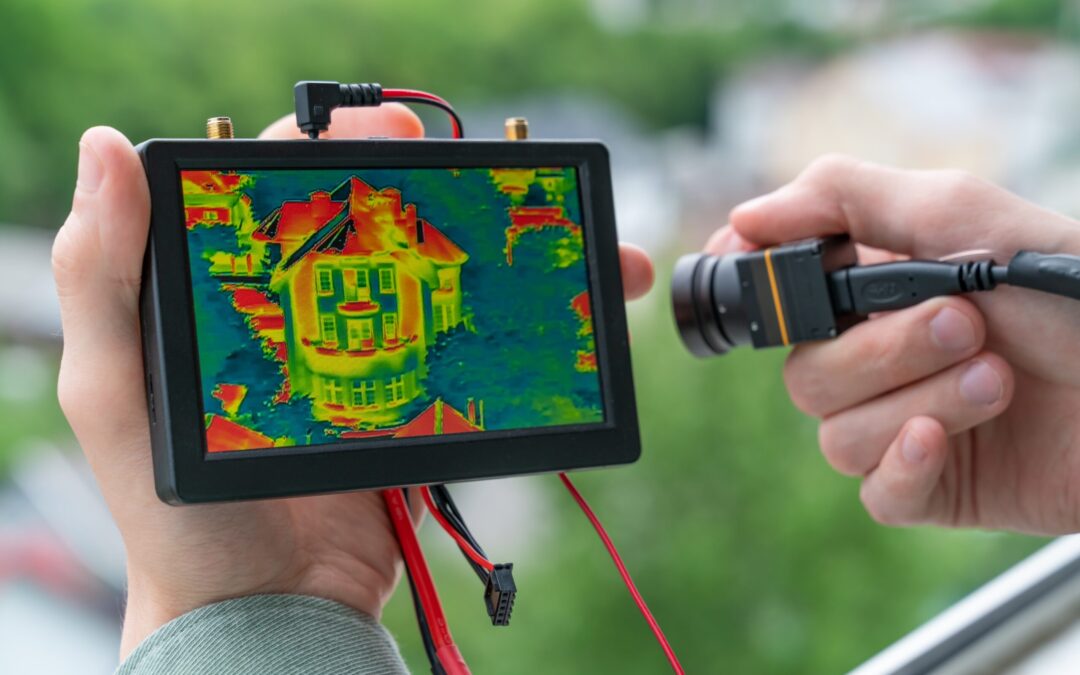
- Infrared Thermal Cameras: To identify insulation gaps and overheating electrical components.
- Combustible Gas Detectors: To ensure the safety of furnaces and water heaters.
These tools allow you to move beyond a visual-only inspection. They provide the concrete data needed for clients to make confident decisions. If you’re ready to start your journey, you can view our professional inspection equipment standards to see what the pros use.
Local Market Dynamics: Westfield to Carmel
Central Indiana is a prime market for residential property assessments. Hamilton County, specifically Westfield and Carmel, remains one of the fastest-growing regions in the state. To succeed here, you must tailor your marketing to a fast-paced environment. Real estate agents in these areas value speed and precision. Building trust through family-owned values and meticulous local service will set you apart from national franchises. We’ve found that being available via text message 24/7 mirrors the urgency of the local real estate industry and fosters long-term professional relationships.
Insurance and Liability: Protecting Your Career
Indiana law requires a minimum of $100,000 in general liability insurance. However, savvy inspectors also carry Errors & Omissions (E&O) insurance. General liability covers bodily injury or property damage during the inspection. E&O protects you if a client claims you missed a significant defect in your report. Carrying both is a hallmark of a Trusted Partner. This coverage doesn’t just mitigate risk; it provides peace of mind for you and your clients. Mastering how to become a home inspector in indiana means protecting your career as fiercely as you protect your clients’ safety. Your home’s safety is our pride, and your professional integrity is the foundation of that promise.
Elevating Your Standards: Specializations for Indiana Inspectors
Licensure is your entry ticket, but specialization is what builds a thriving business. As you research how to become a home inspector in Indiana, you’ll discover that the most successful professionals don’t stop at the state’s minimum requirements. In the 2026 market, Indiana homebuyers are increasingly seeking comprehensive “one-stop-shop” experiences. They want a single expert who can handle environmental testing, structural diagnostics, and specialized reports. This approach doesn’t just increase your revenue per inspection; it solidifies your role as a protective, community-oriented neighbor who leaves no stone unturned. Your home’s safety is our pride, and that pride is reflected in the depth of the services you provide.
The Indiana housing market in March 2026 showed a 4.0% increase in home prices compared to the previous year. With the median sale price reaching $239,400, buyers are more protective of their investments than ever. Offering bundled services like termite (WDI) inspections is essential, especially since these are often required for VA and FHA loans in the Hoosier state. Additionally, with the boom in new construction across Hamilton County, “11-month warranty inspections” have become a significant trend. These inspections occur just before a builder’s one-year warranty expires, saving homeowners from costly repairs down the road. Mastering how to become a home inspector in Indiana means staying ahead of these local market shifts.
Environmental Testing: Radon and Mold
Radon is a serious health hazard in Central Indiana due to our regional geology. It’s the second leading cause of lung cancer, yet it’s entirely colorless and odorless. Providing professional testing is vital for any inspector who wants to be a Trusted Partner. You can see how we approach Radon Testing in Carmel to understand the technical precision required. Beyond radon, becoming certified in mold sampling allows you to address indoor air quality concerns. In a climate like ours, moisture can quickly lead to microbial growth, making this a high-demand service for health-conscious families. Understanding the full scope of what professional mold sampling Indianapolis homeowners rely on entails will help you deliver the unbiased, lab-backed answers your clients deserve.
Advanced Diagnostic Tools: Sewer Scopes and Thermal Imaging
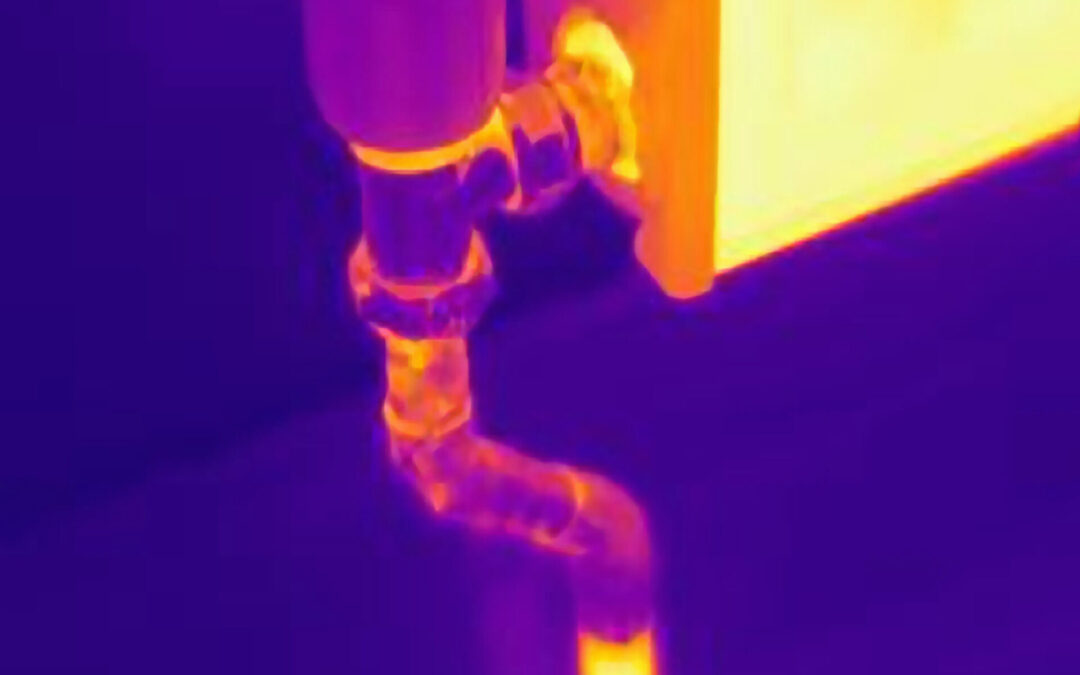
Modern technology has changed the “Standards of Practice” for elite inspectors. Sewer scope inspections are a “hidden risk” that every buyer should understand. Many older homes in Indianapolis have aging clay pipes, while new builds in Westfield can have lines obstructed by construction debris. A sewer drain camera inspection can prevent a multi-thousand-dollar disaster by revealing exactly what’s happening inside those buried lines before you close on a property. We also rely heavily on infrared thermal imaging. This tool identifies insulation gaps, hidden moisture, and overheating electrical breakers that the naked eye simply cannot see. Integrating these specialty services ensures you provide the most thorough, unbiased assessment possible, helping your clients make confident decisions about their future.
Step Into Your New Career with Confidence
Mastering how to become a home inspector in indiana is a journey of technical mastery and community service. You’ve learned about the 62-hour training requirement, the rigor of the NHIE, and the importance of localized expertise in Central Indiana. Success in this field requires more than just a license; it demands a commitment to being a protective partner for your neighbors. By specializing in high-demand services like sewer drain camera inspections and radon testing, you provide the thoroughness that modern buyers expect in 2026.
At 5M Inspection Services, we’ve been family-owned and operated since 2019. We understand the meticulous work required to ensure every client makes a confident decision. Whether you’re looking for a mentor to guide your new career or a professional inspection for your own property, we’re here to help. We remain available via text 24/7 to support our community. Contact 5M Inspection Services today to connect with our certified technical experts. Your home’s safety is our pride!
Frequently Asked Questions
How long does it take to become a home inspector in Indiana?
Most candidates complete the licensure process in two to four months. This timeline depends on how quickly you finish the 62 hours of pre-licensing education and schedule your national exam. Once you pass the test and submit your $50 fee, the Indiana Professional Licensing Agency typically processes applications within 15 to 30 days.
How much does the Indiana home inspector license cost?
You’ll pay a minimum of $275 in mandatory state and exam fees. This total includes the $225 fee for the National Home Inspector Examination and the $50 initial application fee. You must also budget for your 62-hour training course and the required $100,000 general liability insurance policy, which varies by provider.
Do I need to be a member of ASHI or InterNACHI to work in Indiana?
No, Indiana law doesn’t require membership in national organizations like ASHI or InterNACHI. However, these groups provide excellent resources for learning how to become a home inspector in Indiana. They offer technical forums and marketing tools that help you establish yourself as a trusted partner in the local real estate community.
Can I perform home inspections part-time in Indianapolis?
Yes, starting part-time is a common way to enter the industry while maintaining another career. The Indianapolis market is fast-paced, so you’ll need a flexible schedule to meet urgent inspection contingencies. Maintaining 24/7 text availability helps you capture leads and support clients even when you aren’t in the field full-time.
How much insurance coverage does an Indiana home inspector need?
Indiana requires a minimum of $100,000 in general liability insurance for all licensed inspectors. This coverage is a baseline requirement to protect the public and your business. We strongly suggest adding Errors and Omissions (E&O) insurance to safeguard your professional reputation against claims of missed defects or reporting inaccuracies.
Does Indiana require continuing education for home inspectors?
Yes, you must complete 32 hours of approved continuing education every two years to maintain your license. The renewal fee is $50 per cycle. Staying current with these hours ensures you remain a certified expert in modern building technologies and safety standards. Your home’s safety is our pride, and education is the foundation of that promise.
What is the average salary for a home inspector in Central Indiana?
As of April 2026, licensed home inspectors in Indiana earn an average annual salary of $75,710. While entry-level positions may start around $28,000, experienced professionals in the Central Indiana area often earn over $85,000. Your income grows as you build relationships with real estate agents and offer specialized diagnostic services.
Can I perform radon testing without a separate license in Indiana?
No, you need a separate certification from the Indiana Department of Health to conduct professional radon testing. While learning how to become a home inspector in Indiana covers general property conditions, environmental testing is a regulated specialty. Adding this credential allows you to provide a more thorough, unbiased service for your clients.