With radon contributing to approximately 21,000 lung cancer deaths every year, the air inside your home is a serious matter of family safety. You might feel tempted to grab a cheap charcoal canister from the hardware store, but when it comes to professional radon testing vs DIY kits Indiana homeowners often find that a small investment leads to more questions than answers. In a state where every single county has shown elevated levels, guessing with your health simply isn’t an option.
It’s natural to feel anxious when a real estate inspection is on the line or when you’re worried about long-term exposure. You need certainty, not a vague result from a consumer-grade kit that may have been sitting on a retail shelf for months. We understand that you want to protect your family and your property value without the stress of conflicting data or failed inspections.
This guide provides a definitive answer on which testing method to trust and a clear plan to handle high results without losing your peace of mind. You’ll learn the critical differences between DIY tools and certified professional equipment. We also provide a step-by-step action plan for what to do if your levels exceed the EPA action level of 4.0 pCi/L, ensuring your home remains a safe haven.
Key Takeaways
- Discover the technical differences between professional radon testing vs DIY kits Indiana and why charcoal canisters are often unreliable in local climates.
- Learn a step-by-step response plan for high readings that prioritizes family safety without causing unnecessary panic during a real estate transaction.
- Identify the most effective mitigation methods for Indiana basements, including how sub-slab depressurization creates a permanent barrier against radioactive gas.
- Get expert insights on navigating radon contingencies in Central Indiana markets like Fishers and Carmel to ensure your home sale stays on track.
- Master the “2-year rule” and learn how to monitor your system’s U-tube manometer to guarantee long-term protection for your household.
Decoding Your Indiana Radon Test Results: Professional Testing vs. DIY Kits
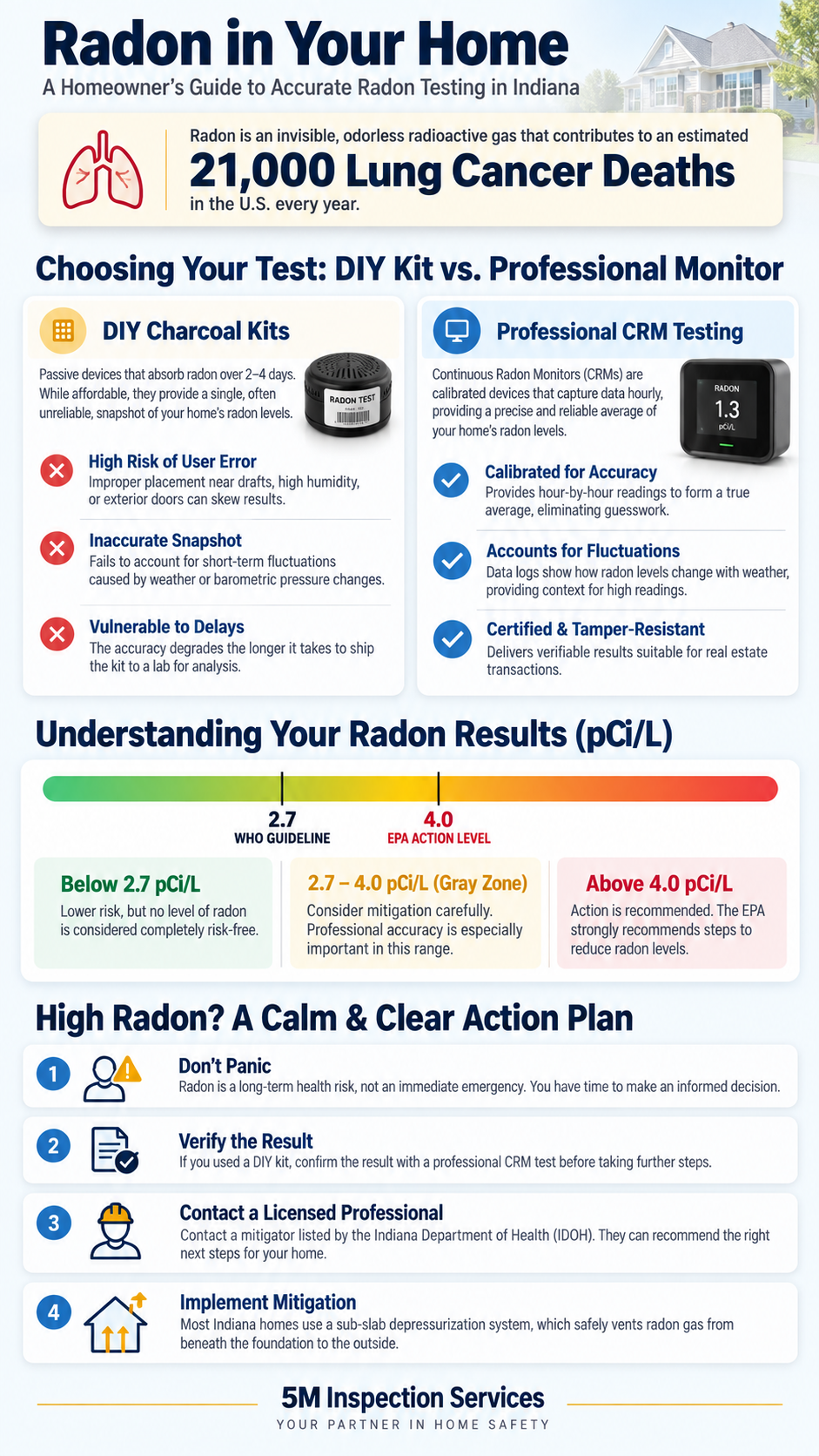
Understanding your home’s radon reading begins with a single unit of measurement: the picocurie per liter (pCi/L). This number represents the rate of radioactive decay in a liter of air. While it sounds technical, it’s the vital statistic that determines your family’s long-term health risk. When comparing professional radon testing vs DIY kits Indiana homeowners often find that the method of collection matters just as much as the final number. A decimal point of difference can be the deciding factor between a clean bill of health and a necessary home repair.
DIY test kits usually rely on charcoal canisters. These are passive devices that absorb radon gas over a 48 to 96-hour period. The reality of these kits is that they are incredibly sensitive to user error. If you place a kit too close to a drafty window, a high-humidity laundry room, or an exterior wall, the results can be skewed. Even the transit time to the lab can affect the accuracy of a charcoal kit. By the time you get your results, you’re looking at a snapshot of the past that may have been compromised by simple environmental interference.
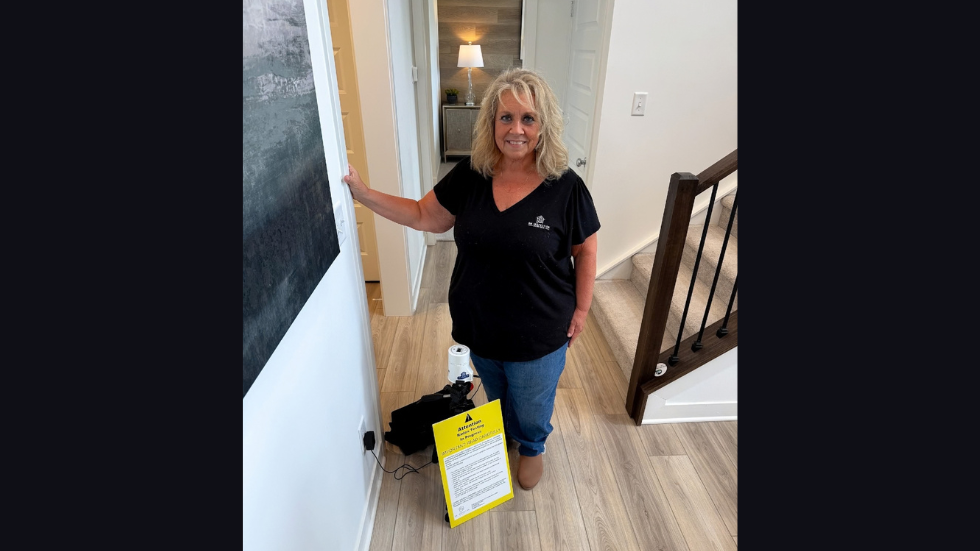
Professional testing utilizes Continuous Radon Monitors (CRM). Unlike passive kits, these devices are calibrated machines that capture data points every single hour. This allows us to see how radon levels fluctuate alongside changes in barometric pressure or household activity. We look for a precise average rather than a single, potentially distorted data point. This meticulous approach provides the certainty you need when making decisions about your property’s safety and value.
Why Indiana Geography Demands Accurate Testing
Indiana is a hotspot for radon. The state’s geography, particularly in Hamilton, Marion, and Boone counties, is classified by the EPA as Zone 1. This designation indicates a high predicted average for indoor radon levels. Our region’s clay-rich soil is dense and heavy; it traps radon gas effectively beneath your foundation until it finds a crack or a sump pump pit to enter your living space. The EPA action level of 4.0 pCi/L is a safety threshold for mitigation, but it is not a “safe” level. In fact, the World Health Organization suggests a lower threshold of 2.7 pCi/L to minimize health risks. This “gray zone” between 2.0 and 4.0 pCi/L is where professional accuracy becomes most critical for Indiana families.
Short-Term DIY Flaws vs. Professional Reliability
Accuracy depends heavily on “closed house conditions,” which means keeping windows and doors shut for at least 12 hours before and during the test. DIY users often struggle to maintain these strict conditions, leading to unreliable data. Professional radon testing Carmel Indiana is required for most real estate transactions because it includes tamper-resistant features and certified reporting. Weather spikes in Central Indiana, such as heavy rain or sudden temperature drops, can cause radon levels to surge. A professional monitor accounts for these spikes, whereas a DIY kit might simply report an alarming, but temporary, high. Understanding different Radon mitigation techniques starts with having a baseline number you can actually trust.
Immediate Steps to Take After an Elevated Radon Result
Finding out your home has high radon levels is startling. Don’t panic. Radon is a long-term health risk, not an immediate household emergency like a carbon monoxide leak or a natural gas burst. You have time to make an informed, calculated decision. When debating professional radon testing vs DIY kits Indiana homeowners often see a high number on a retail kit and fear the worst for their property value. First, verify the test conditions. If that kit sat in a humid basement corner or near a drafty window, the result might be artificially inflated or simply inaccurate.
Consult the Indiana Department of Health (IDOH) list of licensed radon mitigators if your numbers are confirmed. These professionals are trained to handle the specific geological challenges of our state. If you’re currently in the middle of a home sale, notify your real estate agent immediately. High results during a home inspection contingency period require quick, professional communication to keep the deal moving. Most Indiana buyers simply want the issue addressed by a certified pro, not a cancelled contract. If you need a definitive answer before making a major decision, our team can provide a professional radon assessment to clear up any confusion.
Confirming the Result with a Professional Re-Test
If your initial high reading came from a DIY kit, the next step is confirmation. Standard protocol often involves performing a second short-term test or averaging two tests before committing to a mitigation system. A visit from qualified home inspectors provides more than just a single data point. We use calibrated equipment that identifies hourly fluctuations, which helps determine if the high reading was a temporary spike or a consistent danger. Professional inspectors also identify structural entry points that a simple charcoal kit will always miss.
Limiting Exposure While You Wait for Mitigation
You can take small steps to limit exposure while you schedule a permanent fix. Natural ventilation is a temporary and inefficient band-aid. Opening windows is often counterproductive in Indiana winters; it can create a “stack effect” that actually pulls more radon gas into the home from the soil. Focus on reducing time spent in the basement where concentrations are highest. Inspect your foundation for visible cracks or gaps around service pipes. These are common entry points in local Indianapolis basements. For more detailed guidance on safety standards and health risks, you can consult the EPA on radon. Addressing these gaps early helps prepare your home for a more effective mitigation system installation later.
Professional Radon Mitigation: How It Works in Central Indiana
Once you’ve navigated the choice of professional radon testing vs DIY kits Indiana and confirmed elevated levels, the focus shifts to mitigation. In our region, sub-slab depressurization is the gold standard for homes with basements or slabs. This process doesn’t just “filter” the air; it changes the pressure dynamics of your entire foundation. By installing a dedicated suction point through the floor, a mitigator can redirect gas from the soil directly to the outdoors. It’s a precise mechanical solution for a geological problem.
The heart of this system is the radon fan. This specialized motor runs continuously to create a permanent vacuum beneath your home. This negative pressure ensures that the path of least resistance for radon gas is through the PVC pipe, not through your floorboards. Because many Central Indiana homes rely on sump pumps to manage high water tables, mitigators must seal the sump pit with an airtight, transparent cover. This secures the drainage system while allowing the vacuum to remain intact without affecting the pump’s vital function. We also use professional-grade polyurethane caulking to seal every visible crack in the slab, ensuring the system operates at peak efficiency.
Why DIY Mitigation Often Fails
Attempting to “DIY” a mitigation system is dangerous and often counterproductive. One major risk is backdrafting. If a fan is installed improperly, it can change the pressure balance of the home enough to pull carbon monoxide from water heaters or furnaces back into your living space. Additionally, “radon-proof” basement paint is a common myth. While it might look clean, paint cannot withstand the soil pressure that pushes gas through microscopic concrete pores. True mitigation requires pressure field extension testing. This technical diagnostic confirms that the vacuum reaches every corner of the slab, something a retail kit or a bucket of paint simply can’t do.
Integrating Mitigation with Other Home Systems
A properly installed radon system offers benefits beyond radiation safety. By constantly pulling air from beneath the slab, these systems significantly reduce soil moisture. This helps lower humidity in your basement, which directly reduces the risk of needing mold sampling Indianapolis services later. It’s also vital to ensure the system doesn’t interfere with your foundation inspection or structural health. A radon system is a mechanical home upgrade, similar to a high-efficiency HVAC. It requires professional placement to ensure it protects your family’s health while maintaining the integrity of your home’s structural and environmental systems.
Navigating the Real Estate Transaction with High Radon
Real estate transactions in Central Indiana move fast, but a high radon reading can bring a deal to a grinding halt. In markets like Westfield, Fishers, and Carmel, the radon contingency is a standard protective layer for buyers. This clause typically allows the buyer to perform a test and, if results exceed the EPA action level, request that the seller mitigate the issue. This is where the debate over professional radon testing vs DIY kits Indiana becomes most practical. Lenders and savvy buyers rarely accept results from a retail kit; they require the certified accuracy of a professional monitor to move forward with confidence.
Negotiating who pays for mitigation is a common hurdle in the Indianapolis market. While the cost of a system is often the seller’s responsibility, some agreements involve a closing credit instead. Sellers who want to avoid these last-minute surprises often choose a pre-listing inspection Indianapolis sellers trust. By identifying elevated levels before the sign goes in the yard, you maintain control over the timeline and the choice of contractor. Once a mitigation system is installed, a mandatory professional re-test is required to provide the clearance needed to close the sale.
Buyer Strategies: Demanding Professional Repairs
As a buyer, you must insist on a licensed Indiana mitigator. Don’t let a seller hire a general handyman to “patch” the problem. Proper mitigation requires specialized knowledge of pressure dynamics and local soil conditions. You should also request a third-party post-mitigation test. Having the system verified by an independent professional ensures there is no conflict of interest. Even in new construction homes in growing areas like Noblesville, radon can be an issue. Don’t assume a new build is “radon-free” just because it’s modern; the soil beneath the slab doesn’t care about the age of the house.
Seller Strategies: Disclosure and Proactive Fixing
Indiana state law is clear about disclosure. If you have a known radon test result, you must disclose it to potential buyers on the residential sales disclosure form. Being proactive is almost always cheaper than a lost sale. A home with a pre-installed, active mitigation system is often more attractive to buyers because the problem is already solved. A transferable warranty on the system can even be a strong selling point. Fixing the issue before listing prevents a buyer from using a high reading as leverage for a much larger price reduction later. To protect your transaction and your family, schedule a certified radon test before your next move.
Long-Term Safety: Life After Radon Mitigation
Installing a mitigation system is a significant victory for your family’s health, but it isn’t the final step in your safety journey. A radon system is a mechanical component of your home that requires occasional attention to remain effective. Even after a successful installation, the debate over professional radon testing vs DIY kits Indiana remains relevant for long-term monitoring. While consumer-grade digital monitors can provide daily snapshots, they don’t replace the certified accuracy required for periodic system verification. The EPA recommends re-testing your home at least every two years to ensure the vacuum beneath your slab remains sufficient as the house settles and soil conditions shift.
Your primary tool for daily monitoring is the U-tube manometer, usually found on the system’s PVC pipe in the basement or garage. This gauge is your dashboard. If the liquid levels in the two sides of the tube are even, the fan has failed or lost power. If they are offset, the system is actively creating a vacuum. Most radon fans have a reliable lifespan of 5 to 10 years, but they can wear out sooner if they are constantly fighting high moisture or debris. Checking this gauge once a month takes only seconds and provides immediate reassurance that your family is protected.
Be mindful that home improvements can inadvertently change your radon levels. Installing new energy-efficient windows or adding thick insulation can make your home “tighter.” While this is great for your energy bills, it can also trap more gas if the mitigation system isn’t properly tuned to the new airflow dynamics. Any change to the home’s “envelope” warrants a follow-up test to confirm your levels haven’t crept back up.
When to Re-Test Your Indiana Home
Significant structural changes or foundation repairs are major triggers for a professional re-test. If you decide to finish your basement, add a new room, or install a new sump pump, you may disturb the pressure field that the mitigation system relies on. Central Indiana’s extreme seasonal shifts also matter. Testing in both the dead of winter and the height of summer gives you a complete picture of your home’s performance. Winter often sees higher radon levels as the “stack effect” pulls more air from the ground into the heated living space. Testing after any work that disturbs the slab ensures the system is still functioning as intended.
A Holistic Approach to Indoor Air Quality
A safe home requires a holistic approach to environmental health. We recommend combining your radon monitoring with regular professional property assessments to catch structural issues before they become hazards. Every Indiana home should also feature working carbon monoxide detectors and sump pump alarms to handle our state’s specific environmental risks. Maintaining your mitigation system is a small price to pay for the security it provides. Radon mitigation is the single most effective way to lower lung cancer risk for non-smokers.
Take Control of Your Home’s Air Quality Today
Navigating the complexities of soil gas doesn’t have to be a source of anxiety for your family. By understanding the critical differences in professional radon testing vs DIY kits Indiana homeowners can move from confusion to a clear, actionable plan. Whether you are facing a high result during a home sale or simply want to ensure your basement is safe for your children, the right data is your best defense. We’ve seen how professional continuous monitors provide the hourly precision that retail charcoal kits simply can’t match, especially in our region’s high-risk geological zones.
At 5M Inspection Services, we treat your property with the same care and attention we’d give our own. As a locally operated, family-owned business, we provide specialized environmental testing and objective reports you can trust. We don’t just hand you a number; we give you the certainty needed to protect your home’s value and your family’s health. Schedule your professional radon test or home inspection with 5M Inspection Services today. You deserve the peace of mind that comes with expert, localized care.
Frequently Asked Questions
Is radon common in Central Indiana homes?
Elevated radon levels are found in homes across every part of the state. According to the Indiana Department of Health, homes with high concentrations exist in every county. Central Indiana is particularly prone to these issues due to its specific soil composition and glacial history. Because the gas is odorless and invisible, the only way to know if your specific property is affected is through regular testing.
What is a “safe” radon level for my family?
There is no known safe level of radon exposure. While the EPA recommends taking action at 4.0 pCi/L, they also suggest considering mitigation for levels between 2.0 and 4.0 pCi/L. The World Health Organization sets its target even lower at 2.7 pCi/L. Since radon is a leading cause of lung cancer for non-smokers, your goal should always be to reduce the concentration as much as possible.
How much does professional radon mitigation cost in Indianapolis?
The average cost for a radon mitigation system in the Indianapolis area is approximately $801. Most homeowners find that their specific costs fall within a typical range of $616 to $990. These prices depend on the size of your home and the complexity of its foundation. Labor rates for licensed mitigation specialists in our region generally range between $150 and $200 per hour.
Can I sell my home in Indiana if it has high radon?
You can certainly sell your home, but you must disclose any known radon test results on the Seller’s Residential Real Estate Sales Disclosure form. Most buyers in the current market will insist on mitigation before the sale is finalized. Choosing professional radon testing vs DIY kits Indiana provides the certified documentation you need to negotiate fairly and keep your real estate transaction on schedule.
Does a radon mitigation system run all the time?
A radon fan must run 24 hours a day, 365 days a year to remain effective. The system works by maintaining a constant vacuum beneath your slab to pull gas away before it enters your home. If the fan is turned off, radon levels can return to their original high concentrations in just a few hours. Fortunately, these fans are designed for long-term use and are very energy-efficient.
Will a radon system affect my home’s resale value?
A professionally installed system generally has a positive or neutral impact on your home’s resale value. It signals to potential buyers that the home is well-maintained and that a major health risk has been permanently addressed. In many Central Indiana neighborhoods, having an active mitigation system is seen as a standard and responsible feature. It removes a significant hurdle during the inspection phase of a sale.
How long does it take to install a professional mitigation system?
Most standard mitigation systems can be installed by a licensed professional in about three to five hours. The process involves drilling a suction hole, running PVC piping to the exterior or through the attic, and mounting the specialized fan. Larger homes or those with complex crawlspaces might take a full day. Once the installation is complete, the system begins working immediately to lower your indoor radon levels.
What happens if I ignore high radon levels?
Ignoring high levels significantly increases the long-term risk of lung cancer for everyone in your household. Radon exposure is estimated to cause 21,000 lung cancer deaths annually in the United States. The risk is cumulative, meaning the longer you breathe in the gas, the higher the danger becomes. Opting for professional radon testing vs DIY kits Indiana is the most reliable way to identify the threat and take action.