
Did you know that nearly 21% of asthma cases in the United States are directly linked to indoor dampness and mold exposure? It’s terrifying to think that the very air inside your own home might be making your family sick. You probably feel like you’re fighting a “seasonal cold” that never ends, or maybe you’ve noticed a persistent, musty odor in the basement that won’t go away. These aren’t just minor inconveniences; they are often the primary signs you need a mold inspection Indianapolis to protect your property and your peace of mind.
We understand the anxiety that comes with seeing dark spots on a wall or dealing with unexplained respiratory issues. This guide helps you bridge the gap between those nagging health symptoms and your living environment. We’ll provide a clear list of symptoms to check against, explain the critical differences between common mildew and toxic black mold, and outline an actionable path to professional testing. You deserve to know exactly what’s happening behind your drywall. By the end of this article, you’ll have the certainty needed to make informed decisions for your household’s safety and long-term health.
Key Takeaways
- Identify the science behind Stachybotrys chartarum and how mycotoxins create a toxic environment within your living space.
- Recognize the physical red flags, ranging from immediate respiratory irritation to long-term immune system fatigue that often mimics a persistent flu.
- Connect your home’s structural health to your own by identifying the specific signs you need a mold inspection Indianapolis, especially in properties with basement seepage.
- Understand why genetic factors and cumulative toxic load cause different reactions among family members living in the same house.
- Learn why professional, third-party mold sampling provides the objective data you need without the conflict of interest found in DIY kits or repair-based companies.
What is Black Mold? Understanding the Science of Mycotoxins
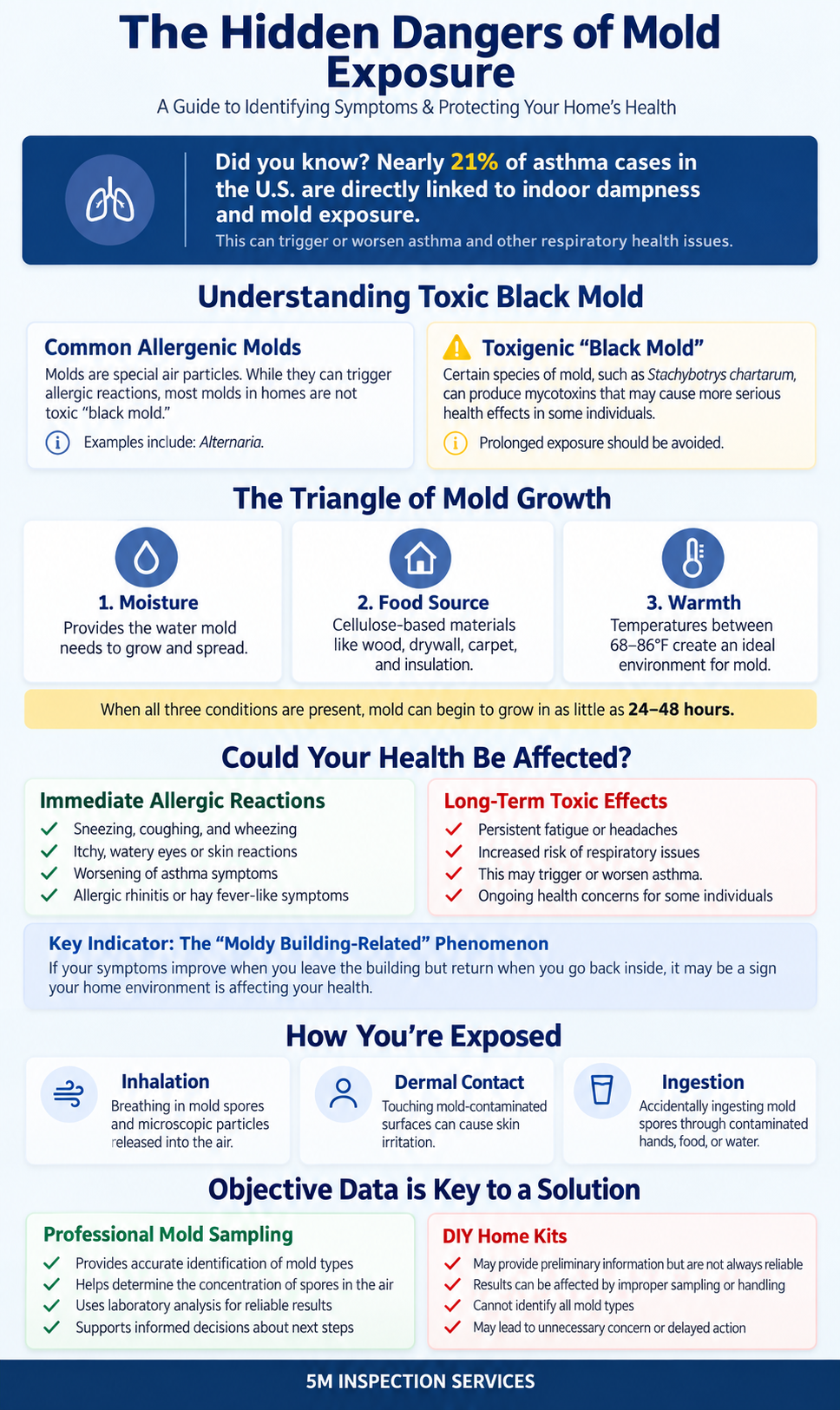
Black mold is more than just an unsightly blemish on your drywall; it is a complex biological organism with a specific chemical profile. Scientifically known as Stachybotrys chartarum, this fungus is easily identified by its dark, greenish-black color and a characteristic slimy or “wet” texture. Unlike common allergenic molds that might just cause a simple sneeze, this specific species is known for producing mycotoxins. These are secondary metabolites, essentially chemical byproducts, that the mold releases into the air to defend its territory from other microorganisms. When these toxins accumulate in a confined residential space, they can trigger a range of adverse health reactions in humans and pets.
It’s important to distinguish between toxic mold and common allergenic varieties to avoid unnecessary panic. Most molds found in homes, like Cladosporium or Penicillium, are allergenic. They are annoying but generally less aggressive. Stachybotrys, however, is considered toxigenic because of the specific mycotoxins it produces. By 2026, industry standards for indoor air quality have evolved to focus heavily on mycotoxin detection rather than just spore counts. These microscopic particles don’t stay stationary. They hitch a ride on air currents and travel through residential air ducts and HVAC systems, effectively turning your ventilation into a distribution hub for contaminants. Recognizing this invisible spread is one of the primary signs you need a mold inspection Indianapolis, especially if your family feels better when they leave the house for the day.
The Role of Humidity and Moisture in Mold Growth
Mold is an opportunist that requires only three things to thrive: food, warmth, and moisture. In Central Indiana, our environment provides all three in abundance. Once a pipe leaks or a basement seeps, mold can colonize a surface within a 48-hour window. Our region’s heavy clay soil often traps water against foundations, leading to persistent dampness in crawlspaces. During the humid summer months in Indianapolis, indoor humidity levels often spike above 60%, which is the “danger zone” for fungal growth. While surface mildew on bathroom tile is a cleaning chore, structural black mold that eats into the cellulose of your wood studs and drywall requires a more rigorous technical assessment.
How Mold Spores Enter the Human Body
Exposure typically occurs through three distinct pathways. Inhalation is the most frequent route, as airborne spores are easily breathed into the lungs in closed indoor environments. Dermal contact is another concern; skin irritation often occurs from touching contaminated porous surfaces like damp carpet or insulation. Finally, ingestion is a rare but possible risk, particularly in kitchens or pantries where mold has colonized hidden areas behind appliances. Each exposure route contributes to your body’s total toxic load, which is why objective, third-party sampling is vital for maintaining a healthy home environment.
Recognizing the Physical Symptoms of Black Mold Exposure
Identifying mold exposure is difficult because the symptoms don’t always look like a “mold problem.” Instead, they look like a lingering cold or a bad allergy season. If you find yourself constantly reaching for tissues or dealing with a scratchy throat that won’t quit, it’s time to pay attention. These physical red flags are often the first signs you need a mold inspection Indianapolis. Because mold symptoms are non-specific, they’re frequently misdiagnosed as seasonal flu or standard Indiana hay fever.
Medical experts typically categorize reactions into two groups. Immediate responses are allergic in nature, such as sneezing or watery eyes. Delayed reactions are more insidious and toxic, appearing as chronic exhaustion or neurological shifts over time. A key indicator is the “workday relief” phenomenon. If your headaches or sinus pressure vanish when you’re at the office but return within an hour of coming home, your environment is likely the culprit. These recurring patterns are definitive signs you need a mold inspection Indianapolis to ensure your family’s safety.
Respiratory and Allergic Responses
Chronic coughing and wheezing can occur even in healthy adults without a history of asthma. Unlike a typical virus, these symptoms don’t peak and resolve; they simply persist. Many residents report a heavy feeling in their chest or persistent sinus congestion that creates a “brain fog” effect. The EPA notes that potential health problems from mold can be much more severe for those with existing respiratory sensitivities. If your red, itchy eyes don’t respond to standard over-the-counter allergy medications, the cause isn’t pollen; it’s likely something growing in your walls.
Neurological and Cognitive Warning Signs
Mycotoxins can cross the blood-brain barrier, leading to symptoms that feel purely mental. You might experience unexplained fatigue that a full night’s sleep doesn’t fix. Some people describe a “mental cloudiness” or difficulty concentrating that only happens while they’re inside their home. Chronic headaches that intensify in specific areas, like a finished basement or a master bedroom, are clear indicators of a localized air quality issue. If your checklist shows a pattern of feeling better elsewhere, getting professional mold sampling can provide the objective data you need to move forward.
Skin Irritation and Dermatological Issues
Unexplained rashes or hives are common when airborne spore counts are high. These skin issues often appear without any change in your diet, soap, or laundry detergent. You might notice dry, scaly skin that worsens in high-humidity areas like the laundry room or bathroom. Mold-related skin irritation is often a secondary symptom of a high airborne spore count. To help narrow down the source, track your symptoms using the following criteria:
- Frequency: Do symptoms occur daily or only on rainy, humid days?
- Location: Are you more congested in the basement compared to the second floor?
- Relief: Do you feel significantly better after being out of the house for four hours?
Why Certain People React More Severely to Indoor Mold
It is a common and frustrating scenario: one family member is bedridden with respiratory issues while another feels perfectly fine. This discrepancy often creates doubt about whether the house is actually the problem. The reality is that every individual has a different “toxic load” threshold. Think of your body like a bucket; if it’s already filled with stress, poor diet, or other environmental pollutants, it takes very little mold exposure to make it overflow. These individual health variances are often the clearest signs you need a mold inspection Indianapolis to protect everyone under your roof.
Genetic sensitivity is a primary factor in these differing reactions. Specifically, the HLA-DR gene plays a role in how the immune system identifies and removes mycotoxins. For those with this genetic predisposition, the body doesn’t recognize mold as a threat, allowing toxins to circulate and cause chronic inflammation. Beyond genetics, pre-existing conditions like COPD or chronic bronchitis significantly lower your defense. Living in a “sick building” also carries a heavy psychological weight. The constant anxiety of not knowing if your home is hurting you can be just as draining as the physical symptoms themselves.
Risks for Infants and Young Children
Children are uniquely vulnerable to environmental toxins. They breathe more air per pound of body weight than adults do, which means they inhale a higher concentration of airborne spores in a contaminated room. There is a documented link between early mold exposure and the development of childhood asthma. Parents should be particularly watchful for croup-like coughs that seem to recur every time the weather gets damp. If your child’s breathing improves during a weekend away but worsens upon returning, these are urgent signs you need a mold inspection Indianapolis.
The Elderly and Immunocompromised Individuals
For the elderly, mold exposure can turn a minor cold into a weeks-long struggle. It complicates recovery from common respiratory illnesses and increases the risk of fungal pneumonia, a serious condition for sensitive populations in Central Indiana. In multi-generational homes, protecting the most vulnerable is a matter of professional integrity. Utilizing professional mold sampling Indianapolis provides the objective data needed to ensure the air is safe for everyone, regardless of their age or health status. We treat your family’s security as our own, offering the technical clarity you need to breathe easy again.
Connecting Health Red Flags to Your Indiana Home’s Environment
Your home’s structure and your family’s health are inseparable. In Central Indiana, our geography plays a massive role in indoor air quality because our heavy clay soil holds moisture against foundation walls for extended periods. This hydrostatic pressure leads to basement seepage, creating the perfect damp environment for fungal colonies to thrive. If you’ve noticed a sudden uptick in respiratory issues following a heavy rain, these are clear signs you need a mold inspection Indianapolis. We often find that homeowners treat the symptoms of the house with a dehumidifier while the root cause remains hidden behind the walls.
Hidden mold is particularly dangerous because it’s out of sight but not out of your lungs. It frequently colonizes the paper backing of drywall, the underside of carpets, and the interior of window casings where condensation pools. Because air moves through your home in a specific way, even mold in a remote corner can affect every room. This is why a foundation inspection is often the first step in a comprehensive environmental assessment. If you don’t stop the water intrusion at the source, the mold will simply return after every cleaning.
The Basement and Crawlspace Connection
Indianapolis basements are prime territory for Stachybotrys growth due to the combination of darkness and consistent moisture. Many residents ignore a “musty” smell, thinking it’s just how old basements should smell. However, if you can smell it, the microbial volatile organic compounds (mVOCs) are already airborne and circulating. We’ve seen many cases in Carmel where poor yard grading directs rainwater toward the foundation rather than away from it. This simple landscaping flaw can lead to massive indoor mold issues that persist for years. The “Stack Effect” then pulls this contaminated air from the crawlspace or basement upward into your main living areas as warm air escapes through the attic.
HVAC Systems as Spore Distributors
Your heating and cooling system can either be your best friend or your worst enemy. During our humid Indiana summers, condensation naturally forms on A/C coils. If the system isn’t draining properly, it becomes a perfect mold nursery. Once mold takes hold in the unit, the blower fan distributes spores into every bedroom. While regular filter changes help, they can’t stop spores that are already living inside the ductwork. For a total air quality check, many of our clients also include radon testing Carmel Indiana to ensure their home is safe from both biological and radioactive threats.
Don’t let uncertainty about your home’s air quality cause unnecessary stress. If you suspect your environment is affecting your health, it’s time to get professional mold sampling from a team that prioritizes your family’s well-being. We provide the technical clarity you need to take the next step with confidence.
The Role of Professional Mold Sampling in Protecting Your Family
Many homeowners turn to DIY mold kits found at big-box stores when they first suspect a problem. These kits are notoriously misleading. A typical “petri dish” test simply catches spores that are naturally present in every environment, often producing a “positive” result that causes unnecessary panic. Conversely, they frequently miss hidden colonies that aren’t currently releasing spores into that specific spot. If your family is experiencing the respiratory red flags discussed earlier, these are the definitive signs you need a mold inspection Indianapolis to get real, scientific answers rather than a guess in a plastic dish.
Professional sampling provides a comprehensive view of your home’s ecosystem. We utilize calibrated air pumps to pull specific volumes of air through collection media, allowing us to calculate the exact concentration of spores per cubic meter. We also perform swab or tape-lift sampling to identify the specific species growing on a surface. This data is then sent to an accredited laboratory. The resulting report compares your indoor air to the outdoor baseline, identifying if the levels inside are statistically higher than they should be. Understanding these spore counts is the only way to know if your headaches or fatigue are truly linked to your home environment.
Why Objective Testing Matters
There is a significant danger in hiring a remediation company to perform your initial “free” inspection. These companies profit from finding problems and selling expensive repair services. At 5M Inspection Services, we provide unbiased, third-party data because we don’t perform remediation. Our goal is your peace of mind, not a construction contract. A professional mold sample is a legal and scientific document that provides the certainty needed for remediation or real estate negotiations. By maintaining this professional distance, we ensure our findings are objective and reliable.
Next Steps After a Positive Mold Test
If the laboratory report confirms an elevated spore count or the presence of toxigenic species like Stachybotrys, you have a clear roadmap for action. You can use this professional report to hire a certified remediation contractor, ensuring they focus on the specific areas identified in our assessment. It’s vital to address the moisture source, such as foundation seepage or a roof leak, before any cleaning begins. Without fixing the water intrusion, the mold will return. Taking this measured, technical approach protects your health and your home’s long-term value.
Don’t leave your family’s safety to chance or a cheap store-bought kit. Schedule your professional mold sampling with 5M Inspection Services today. We are here to help you bridge the gap between your health concerns and your home’s environmental reality.
Take Control of Your Home’s Air Quality Today
Your health and your home are fundamentally linked. When persistent respiratory issues or unexplained fatigue start to dictate your daily life, it’s time to look deeper than the surface. We have explored how mycotoxins travel through HVAC systems and why Indiana’s heavy clay soil makes our basements particularly vulnerable to fungal growth. Recognizing these signs you need a mold inspection Indianapolis is the first step toward reclaiming your health and ensuring your property remains a safe haven for your loved ones.
At 5M Inspection Services, we treat your family’s safety as a matter of professional integrity. As a local, family-owned business, we provide objective, third-party testing with no repair conflict of interest. You receive comprehensive digital reports delivered with speed and precision, giving you the facts without a remediation sales pitch. Don’t let uncertainty linger in your living space. Protect your family’s health with professional mold sampling from our dedicated team today. You deserve the peace of mind that comes with knowing exactly what is in the air you breathe.
Frequently Asked Questions
How long does it take to get sick from black mold exposure?
Reaction times vary based on your individual immune system and the concentration of spores in your air. Some people experience allergic responses like sneezing or itchy eyes within 48 hours of exposure. For others, it takes weeks of cumulative exposure before chronic symptoms like fatigue or brain fog become noticeable enough to cause concern.
Can black mold symptoms go away once the mold is removed?
Most individuals see a significant improvement in their health once the moisture source is fixed and the mold is professionally removed. Removing the trigger allows your immune system to reset and begin the healing process. However, those with extreme genetic sensitivity may require a longer recovery period to clear lingering inflammation from their system entirely.
What does black mold smell like in a house?
Black mold typically emits a pungent, earthy odor often described as “wet socks” or decaying organic matter. This scent comes from microbial volatile organic compounds (mVOCs) released during the mold’s active growth cycle. If you notice this smell in your basement or crawlspace, it is one of the primary signs you need a mold inspection Indianapolis.
Is black mold more dangerous than other types of mold?
While Stachybotrys chartarum is famous for producing mycotoxins, many other “non-toxic” molds still cause severe allergic reactions and respiratory distress. The danger depends more on the concentration of spores and your personal health history than the color of the mold itself. Scientific sampling is the only way to determine the actual risk level in your living space.
Can I test for black mold myself with a store-bought kit?
Retail petri dish kits are generally unreliable because they lack the controlled environment and technical calibration needed for accurate results. These kits often show a “positive” result just by catching common outdoor spores, which leads to unnecessary fear. Professional air sampling is the most reliable way to confirm the signs you need a mold inspection Indianapolis and get a quantified report.
Does homeowners insurance cover mold testing and removal in Indiana?
Coverage typically depends on the root cause of the moisture. Most Indiana policies cover mold if it resulted from a “sudden and accidental” event, like a burst pipe or a failed water heater. However, mold caused by long-term humidity, poor maintenance, or ground seepage is often excluded. We recommend reviewing your specific policy riders with your insurance agent for clarity.
What is the most common symptom of mold in the home?
Upper respiratory irritation is the most frequent red flag reported by homeowners. This includes persistent sneezing, a chronic “dry” cough, and sinus congestion that doesn’t respond to standard medication. These symptoms often intensify when you are in specific damp areas of the house and improve significantly when you spend time in a different environment.
Should I move out of my house if I find black mold?
Evacuation is rarely necessary for small areas of growth, but large-scale infestations may require temporary relocation for infants or immunocompromised individuals. Professional testing helps you make this decision by identifying the exact spore counts in your primary living areas. Knowing the data allows you to protect your family without making a reactive, high-stress decision based on fear.