Thermal imaging is a non-invasive technique that uses infrared technology to detect heat emissions from objects and turn them into a picture a person can read. Instead of depending on visible light, a thermal camera picks up infrared radiation and converts temperature differences into an image. That single idea explains most of what the technology can and cannot do.
Thermal Imaging in Plain Language
Thermal imaging is the process of converting infrared radiation, which is heat, into visible images that show how temperature is distributed across a surface. Energy the human eye cannot see becomes a picture where warmer and cooler regions are distinguishable at a glance.
The technique travels under several names. Infrared thermography, often shortened to IRT, is a measurement and imaging method in which a thermal camera detects infrared radiation. In everyday conversation, people may refer to the equipment as a FLIR camera, because these cameras see heat instead of light.
- It works without touching the object being examined.
- It produces a picture of temperature distribution rather than a photograph of visible light.
- It relies on long-wave infrared radiation instead of visible light.
How a Thermal Camera Turns Heat Into a Picture
The process breaks into three understandable stages: something emits heat, a camera detects it, and the camera renders the result as an image. No part of that sequence requires the camera to touch the surface or to light it up.
The object emits infrared radiation
Objects emit heat energy in the form of infrared radiation. That energy is invisible to human eyes, but it is always present. Thermal imaging works by detecting the infrared radiation emitted by objects and using those emissions as its raw input.
The camera detects that energy without contact
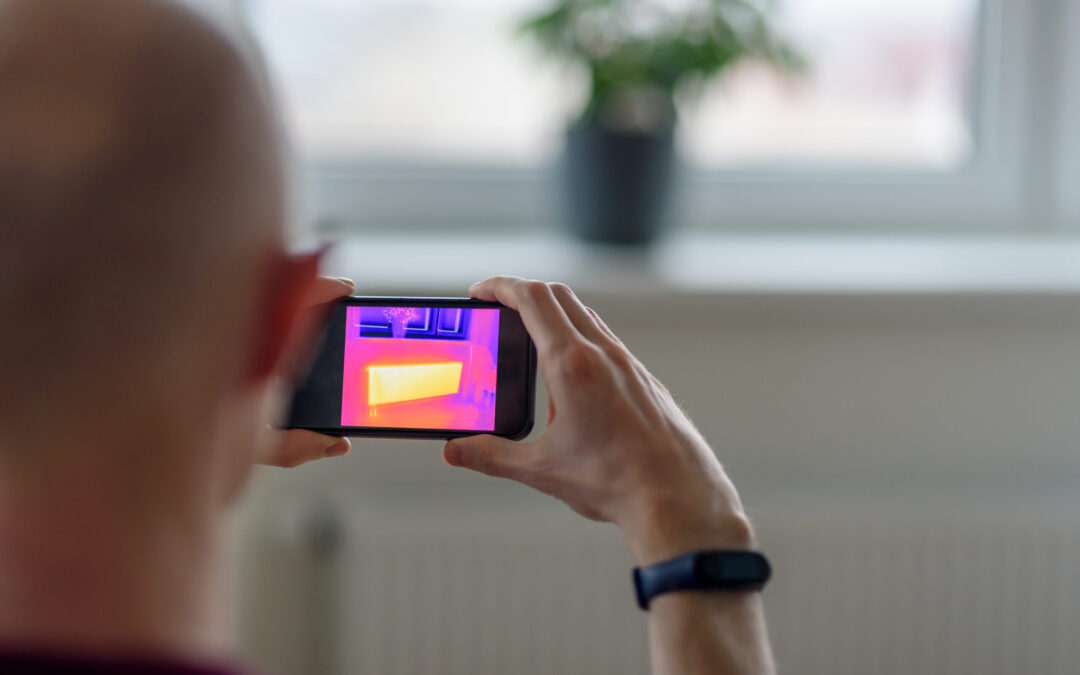
A thermal camera is a non-contact device. It detects infrared energy and converts it into a visual image without physically touching what it is pointed at. Because it does not depend on visible light, thermal imaging can acquire temperature maps quickly and remains useful in low visibility environments.
The result is a thermogram
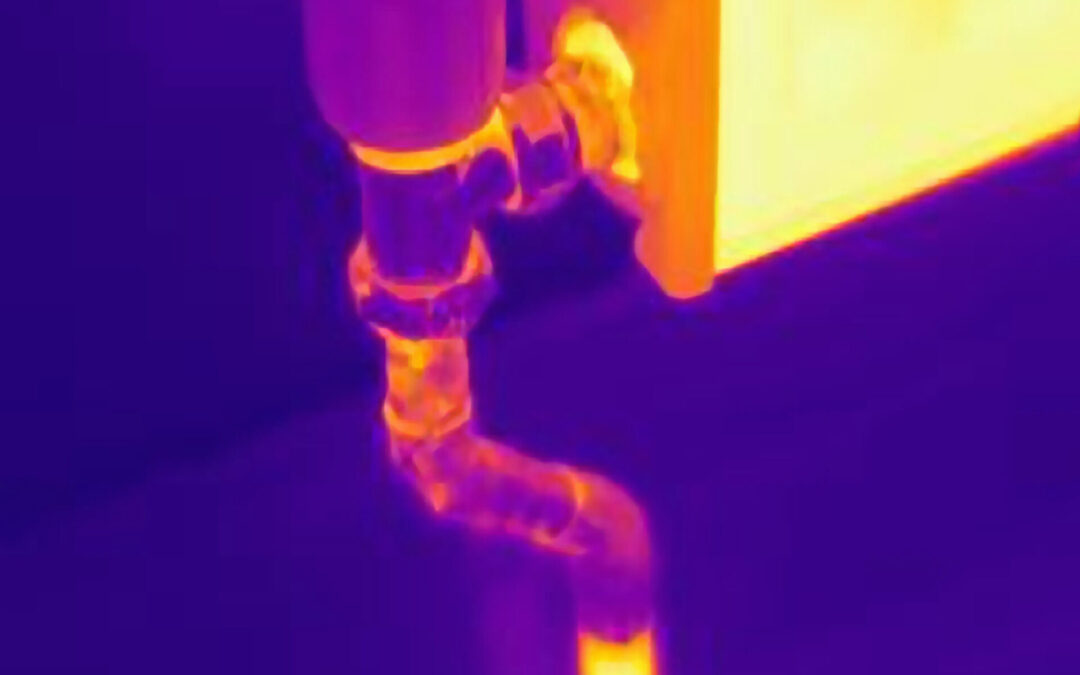
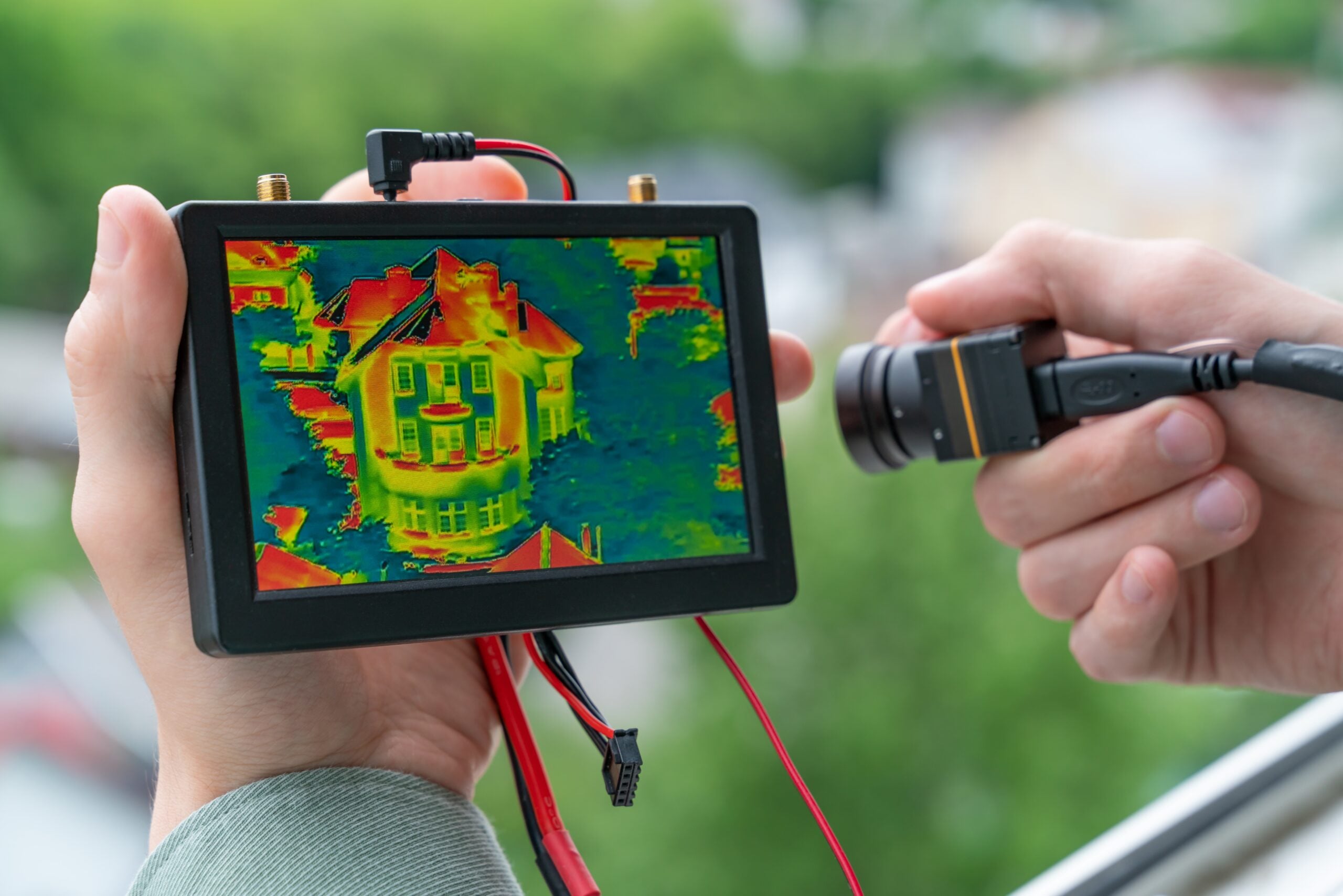
The image a thermal camera produces is called a thermogram. It depicts the spatial distribution of temperature, meaning the picture is organized around relative warmth and coolness rather than reflected light. Hotter areas appear differently from cooler areas, and that contrast is what makes the image readable.
Why Thermal Imaging Is Called Non-Invasive
Non-invasive means nothing has to be opened, dismantled, or disturbed to gather the reading. An inspector points a camera at a wall, a ceiling, or a piece of equipment and captures the heat pattern that is already there. The building is not altered in any way by the process.
The same property is what keeps expectations realistic. A thermal camera reads temperature patterns at surfaces. The image shows where temperature differs from surrounding areas, not why it differs. Explaining the why is the job of the person holding the camera, and that is where training and experience matter.
A Short Glossary of Thermal Imaging Terms
Vendors, inspectors, and researchers do not always use identical wording, so a quick reference helps when you are reviewing a report.
| Term | What it means |
|---|---|
| Thermal imaging | Converting infrared radiation into visible images that show the distribution of temperature |
| Infrared radiation | Heat energy emitted by objects, invisible to the human eye |
| Thermal camera | A non-contact device that detects infrared energy and converts it into a visual image |
| Thermogram | The image produced by thermal imaging, showing relative temperature across a surface |
| Infrared thermography (IRT) | A measurement and imaging technique in which a camera detects infrared radiation |
| FLIR camera | A common shorthand for cameras that see heat instead of light |
If a report uses a term that is not listed here, ask the inspector to explain how they define it before drawing conclusions from the image.
Where Thermal Imaging Is Used
Temperature maps have value in a wide range of settings. The technology enables quick acquisition of temperature information and performs well where visibility is poor, which is why it turns up well beyond building diagnostics.
- Long-range surveillance, where infrared imaging captures scenes without visible light.
- Earth and planetary sciences, where radiation patterns are converted into images for feature extraction and analysis.
- Agricultural and field research, where temperature maps support analysis of crops and terrain.
- Residential and commercial property evaluation, where surface temperature patterns support a broader inspection.
How Thermal Imaging Fits Into a Home Inspection
In a home inspection, thermal imaging is a supporting tool rather than a replacement for a trained eye and a complete walkthrough. It gives the inspector a temperature map of surfaces, and that map can point toward areas that deserve a closer look with other methods.
What a thermal scan can show
A thermal scan shows where one area of a surface is warmer or cooler than the space around it. Those differences appear as patterns in the thermogram. On an exterior wall, a ceiling, or around a fixture, a pattern that stands out from its surroundings is a signal worth investigating further.
What a thermal scan cannot do on its own
A thermal scan cannot confirm what caused a temperature difference. A cooler patch is just a cooler patch until someone verifies the reason. That verification step is why a thermal image belongs inside a larger inspection process rather than standing alone as a verdict.
Conditions in the home at the moment of the scan also shape what the camera records. A scan is a snapshot of one set of conditions, so it helps to ask your inspector what they observed, what the pattern suggested, and what they recommend confirming. Anyone reviewing thermal images without that context should treat the pictures as prompts for questions, not as finished answers.
Reading the Image Is the Real Skill
Hardware quality matters, but interpretation decides whether a thermal scan is useful. Infrared thermography is described as a measurement and imaging technique, and the measurement half of that phrase is easy to overlook. Two inspectors can capture similar images and reach different conclusions depending on their understanding of the property and the conditions.
When you receive thermal images, useful questions include which surfaces were scanned, what the inspector compared each pattern against, and whether any finding needs a follow-up method. A clear answer to those questions tells you more than the colors in the picture ever will.
Frequently Asked Questions
What is the difference between infrared and thermal imaging?
Infrared refers to the radiation itself, the invisible heat energy objects emit. Thermal imaging is the process of detecting that radiation and converting it into a visible image. Thermal imaging is a type of infrared imaging, so the two terms overlap heavily in practice, and many sources use them interchangeably.
Can I use my phone as a thermal camera?
Thermal cameras are built around sensors that detect infrared energy, and that hardware is not part of every phone. Some devices can work with add-on thermal accessories, but capability varies by model and manufacturer. Check the specifications for your exact device before assuming it can capture a thermogram.
What can you see with thermal imaging?
You see temperature distribution. Hotter areas and cooler areas of a surface appear differently, producing a map of relative warmth. That map can be captured quickly and remains useful in low visibility conditions. What you are viewing is heat, not visible light, so the image looks unlike a normal photograph.
Is thermal imaging safe and non-invasive?
Thermal imaging is non-invasive and non-contact by design. The camera detects infrared radiation that an object is already emitting, so nothing is injected, opened, or disturbed during the scan. Equipment and surfaces are simply observed. Anyone with concerns about a specific device or procedure should ask the operator to explain the method first.
Does a thermal image prove there is a problem?
No. A thermogram shows temperature differences at surfaces, and a difference is a clue rather than a diagnosis. Confirming the cause usually requires additional inspection methods and judgment about the property. Treat thermal images as a starting point for investigation and ask your inspector what they verified beyond the scan itself.