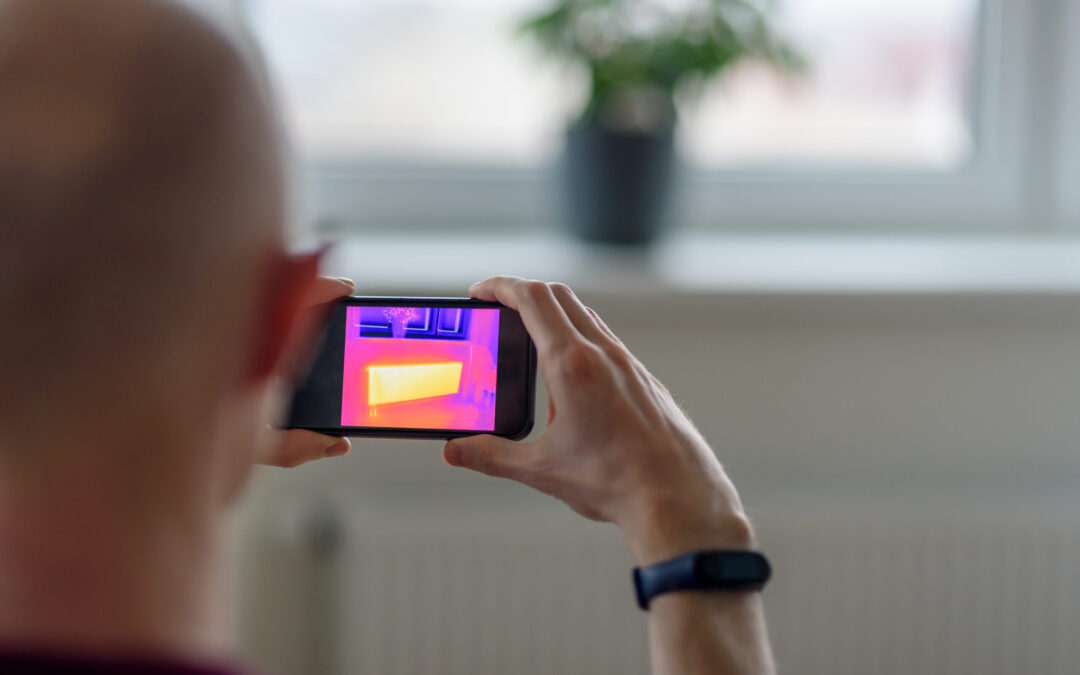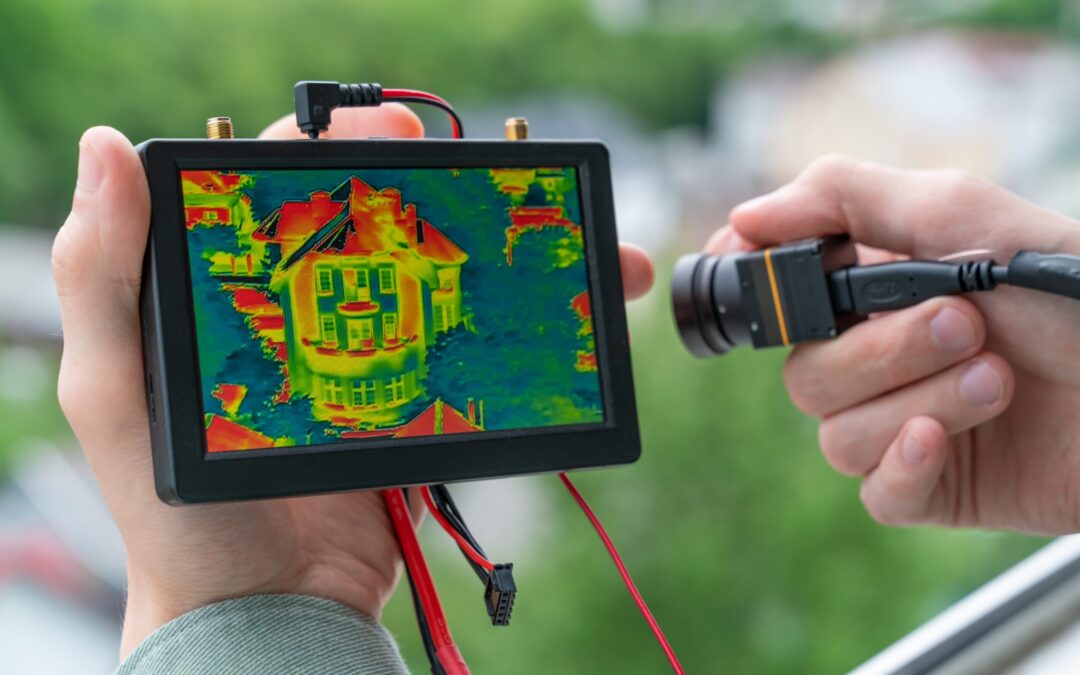
A thermal imaging camera detects thermal radiation rather than light, which is why it can show very subtle temperature differences across everything in view. Point one at a wall that looks perfectly uniform and you may see warm patches, cool streaks, and odd shapes that were invisible a second earlier. In a home inspection, those temperature patterns are clues about what is happening inside the building assembly: missing insulation, air leaking through a seam, water soaking into drywall, or a circuit running hotter than it should.
This article covers what thermal imaging can realistically detect during a home inspection, what it cannot do, and why the inspector’s interpretation matters as much as the camera itself.
How Thermal Imaging Works During an Inspection
An infrared camera is built around a sensor that reads temperature differences rather than visible light. That is the entire principle behind the technology, and it explains both its strengths and its limits.
- The camera measures surface temperature only. It cannot see through solid materials such as drywall, siding, brick, or plywood.
- What it detects is a temperature difference between one surface area and another. A wall stud, a missing batt of insulation, a water-saturated patch of drywall, and a leaky duct can all create those differences.
- Because the camera reads surfaces, an inspector uses it as a screening tool. An anomaly on the screen tells you where to look closer with other tools and hands-on verification.
- Thermal imaging is also used to monitor dangerous changes in temperature, which is why electrical panels and mechanical equipment are common places to scan.
Put simply, the camera does not hand you a diagnosis. It hands you a map of where the thermal envelope or a system is behaving differently than expected.
What Thermal Imaging Can Detect in a Home
Insulation failures and abnormal heat loss are two of the areas where infrared scanning is especially useful, and both show up constantly in residential inspections. The list below covers the findings that turn up most often.
Missing, Settled, or Compressed Insulation
Where insulation is absent or has pulled away from the framing, the interior surface temperature drifts closer to whatever the outdoor temperature is doing. On a cold day those areas read cooler; on a hot day they read warmer. The camera shows this as a patch or band that stands out from the surrounding wall or ceiling, often in a shape that follows the framing cavities. It is one of the clearest findings an infrared scan can produce, and it is difficult to spot by eye once drywall is up.
Air Leaks and Drafts Around Doors, Windows, and Penetrations
Air moving through a gap changes the temperature of the surface it passes over, and the camera picks up that streaking pattern. Common locations include exterior door frames, window perimeters, electrical outlets and switch plates on exterior walls, recessed light fixtures, attic hatches, and the top plates of walls bordering an attic. These findings matter because air leakage drives both energy loss and comfort complaints in rooms that never seem to stay warm.
Moisture Intrusion and Hidden Water
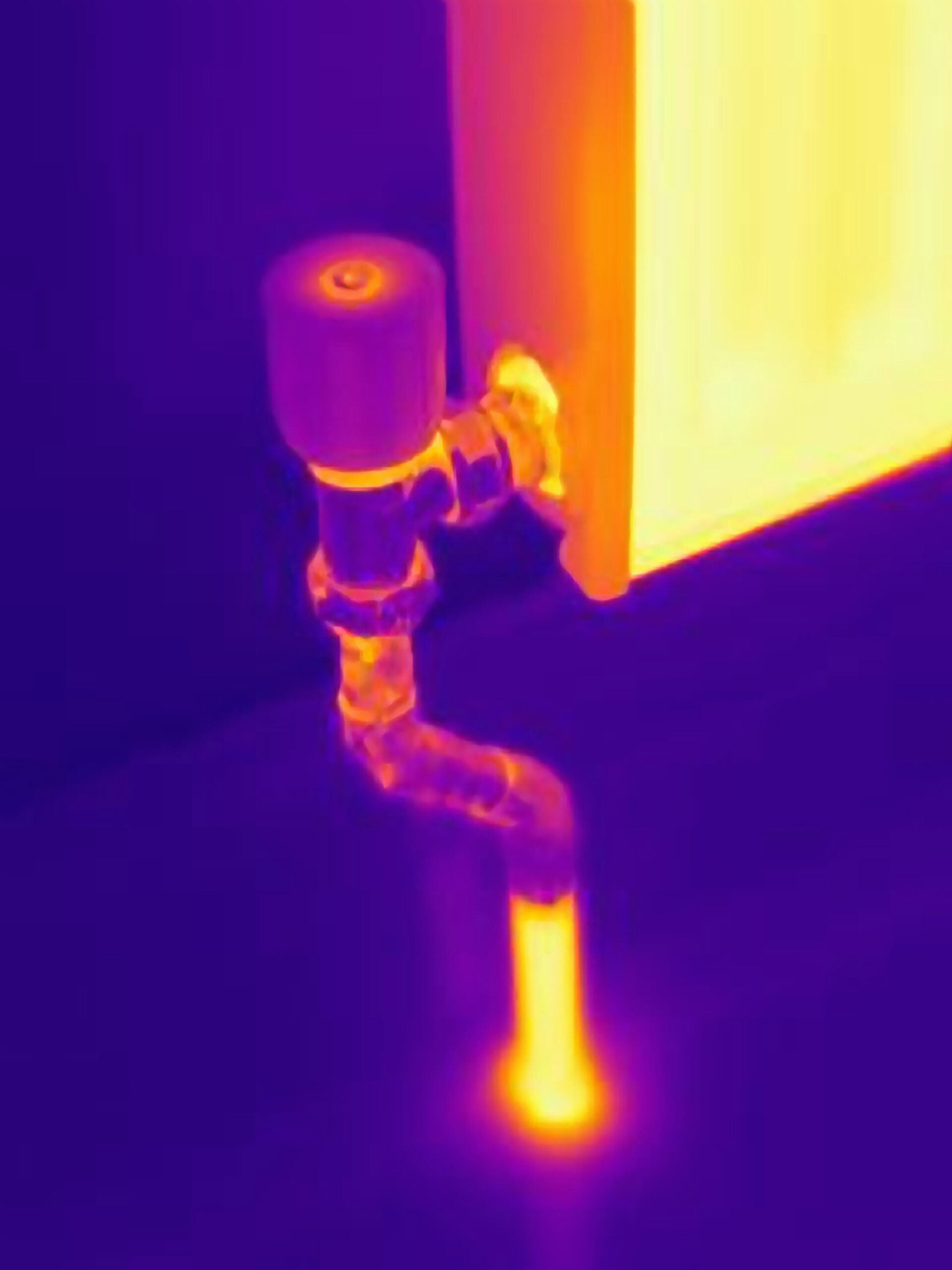
Wet building materials tend to run cooler than dry ones as moisture evaporates from the surface, so a damp patch of drywall or subfloor often appears as an irregular cool area. This is where thermal imaging earns its reputation for finding hidden leaks, but it is also where care is required. A cool patch is an anomaly, not proof of water. A thorough inspector confirms it with a moisture meter before calling it a leak, because insulation gaps and ductwork can produce similar patterns. Thermal imaging is especially effective at identifying leaks and abnormal heat loss in systems that move steam or hot water, which is why boiler and hydronic heating lines are worth scanning.
Electrical Hot Spots
Loose connections, overloaded circuits, and failing breakers generate heat, and heat shows up immediately on an infrared camera. An inspector scanning a service panel is looking for one breaker or conductor that reads warmer than its neighbors under similar load. That kind of temperature change is exactly what thermal imaging was designed to monitor. A warm breaker is not a diagnosis of a code violation or a fire, but it is a legitimate reason to have a licensed electrician evaluate the circuit before closing.
Plumbing and HVAC Leaks
Supply lines run behind walls and under slabs, and a slow leak can soak a cabinet base or a ceiling cavity for months without showing a stain. Infrared scanning frequently reveals the temperature signature of that hidden water. On the mechanical side, duct leaks and missing duct insulation appear as temperature loss along a run, particularly at joints, boots, and connections in unconditioned attic space. Steam and hot water leaks in heating systems fall into the same category.
Roof, Attic, and Window Performance
From inside an attic, thermal imaging can reveal ceiling bypasses where conditioned air escapes into the attic, wet roof decking, and sections of the roof structure where insulation coverage has gaps. On windows, a unit that reads noticeably different from its neighbors may have a failed seal or a performance problem. None of these findings replace a visual roof inspection or a window inspection, but they direct attention to specific areas.
A Quick Reference: What Shows Up on Screen
| Home component | What the camera typically reveals |
|---|---|
| Walls and ceilings | Patches or bands of different surface temperature where insulation is missing or settled |
| Doors, windows, outlets | Streaking or concentrated temperature differences from air movement |
| Drywall, subfloor, ceilings below bathrooms | Irregular cooler areas that suggest moisture and require meter confirmation |
| Electrical panel | One breaker, conductor, or connection reading warmer than comparable circuits |
| Ductwork and plumbing lines | Temperature loss along a run, or the signature of a hidden leak |
| Roof structure and attic | Ceiling bypasses, wet decking, and gaps in insulation coverage |
What Thermal Imaging Cannot Do
Setting realistic expectations is part of an honest inspection. Thermal imaging has hard limits that no camera model or operator skill can overcome.
- It cannot see through walls or solid materials. Any claim otherwise misrepresents the technology.
- It measures surface temperature only. It does not measure internal or core temperature of a wall cavity, a pipe, or a person.
- It cannot confirm a defect by itself. A temperature difference always has more than one possible cause, which is why meters, probing, and visual inspection still matter.
- It does not replace a standard home inspection. An infrared scan adds information to a visual inspection; it does not substitute for one.
- It cannot detect a problem that produces no temperature difference at the time of the scan. Conditions inside and outside the home affect how much contrast the camera can pick up.
Why Interpretation Matters as Much as the Camera
Two inspectors can scan the same room and reach different conclusions, because reading an infrared image is a skill built on understanding how buildings work. A cool rectangle on a ceiling could be missing insulation, a duct running through the space, a shadow from furniture, or a leak. A warm spot near a panel could be a loose connection or simply a circuit carrying more load than the one beside it. The valuable part of the scan is the follow-up: confirming with a moisture meter, checking the attic above that ceiling, or testing the circuit under load. That verification step is what separates a meaningful finding from a colorful picture.
Asking Your Inspector About Thermal Imaging
Infrared scanning is offered in different ways by different companies. In some inspections it is part of the standard walkthrough, and in others it is an add-on service. If you are buying or selling a home in Central Indiana, where summer heat and winter cold create strong temperature differences across the building envelope, it is reasonable to ask upfront whether thermal imaging is included and whether the inspector uses it on the electrical panel, the attic, and the exterior walls as a matter of routine. Ask how findings are verified and how they will be documented in the report. A clear answer to those questions tells you more about the value of the scan than the camera’s specifications ever will.
Frequently Asked Questions
Can thermal imaging see through walls?
No. Thermal imaging cameras measure surface temperature only and cannot see through solid materials such as drywall, siding, or brick. What they can do is reveal temperature differences on the surface of a wall, ceiling, or floor. Those differences often point to conditions behind the surface, such as missing insulation or moisture, but the camera itself only reads what is visible to it.
Does thermal imaging detect mold?
It does not detect mold directly. What it can reveal is a cooler, irregular area that suggests moisture is present in a building material. Mold needs moisture to grow, so locating a hidden moisture source is a useful first step. Confirming mold growth requires a separate assessment, and confirming the moisture requires testing the material with a moisture meter.
Can thermal imaging find a hidden plumbing leak?
Often it can point to one. A slow leak changes the surface temperature of the material around it, so the affected area may show up as an anomaly on the camera. However, the image alone does not confirm water. An inspector verifies the finding with a moisture meter or by inspecting the area directly before calling it a leak.
Does thermal imaging work in warm weather?
It works, but the results depend on there being a temperature difference to read. When indoor and outdoor temperatures are similar, surfaces show less contrast and findings become harder to distinguish. Inspectors account for this by adjusting their approach or scanning when conditions provide better contrast, such as during a hot afternoon or a cold morning.
Is thermal imaging included in a standard home inspection?
It varies by inspection company and by the scope of the inspection you order. Some inspectors include infrared scanning as part of their routine process, while others offer it as an add-on service. If hidden moisture, insulation gaps, or electrical hot spots are concerns for you, ask your inspection company directly whether thermal imaging is included before you book.