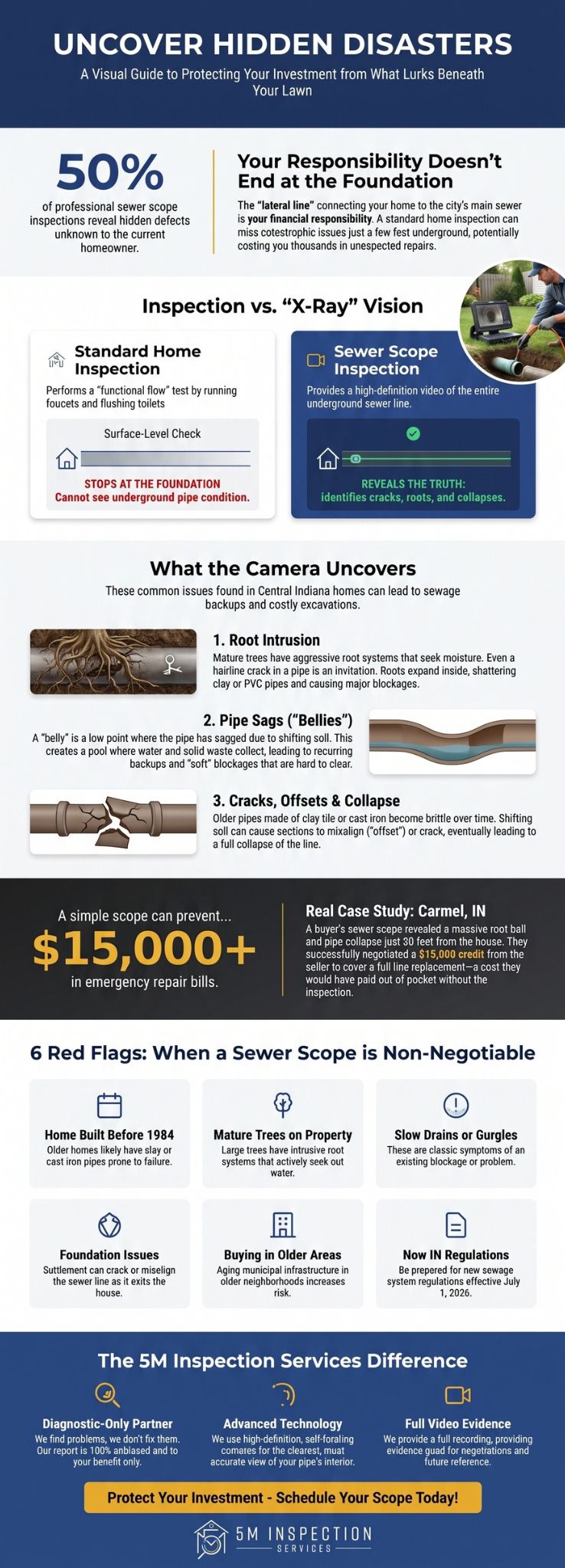
Did you know that approximately 50% of inspections involving professional sewer scoping reveal hidden defects that the current homeowner didn’t even know existed? It’s easy to assume everything is fine when the sinks drain and the toilets flush during a walkthrough. You’re likely focused on the roof and the HVAC, trusting that the home’s bones are solid. We understand that uncertainty. It’s stressful to invest your life savings into a property while wondering if a massive repair bill is lurking just a few feet underground.
This article shows you how a specialized camera inspection acts as a vital “X-ray” for your home’s most expensive hidden system. You’ll discover how to uncover underground disasters before they become your financial burden. We’ll also break down why standard home inspections stop at the foundation, how Central Indiana’s aging infrastructure puts older homes at risk, and what the new July 1, 2026 Indiana sewage system regulations mean for your investment’s security.
Key Takeaways
- Learn why the “lateral line” connecting your home to the city main is your financial responsibility and how to protect it.
- Understand the critical difference between a standard home inspection’s “functional flow” test and a high-definition video evaluation.
- Identify when sewer scoping is non-negotiable, especially for Central Indiana homes built before 1984 or those with mature landscaping.
- Discover how a simple diagnostic check can prevent repair bills exceeding $15,000 by catching pipe sags and root intrusions early.
- Gain peace of mind with unbiased reporting from a diagnostic-only partner that never profits from the repairs they uncover.
What is Sewer Scoping? Unveiling the “Invisible” Lateral Line
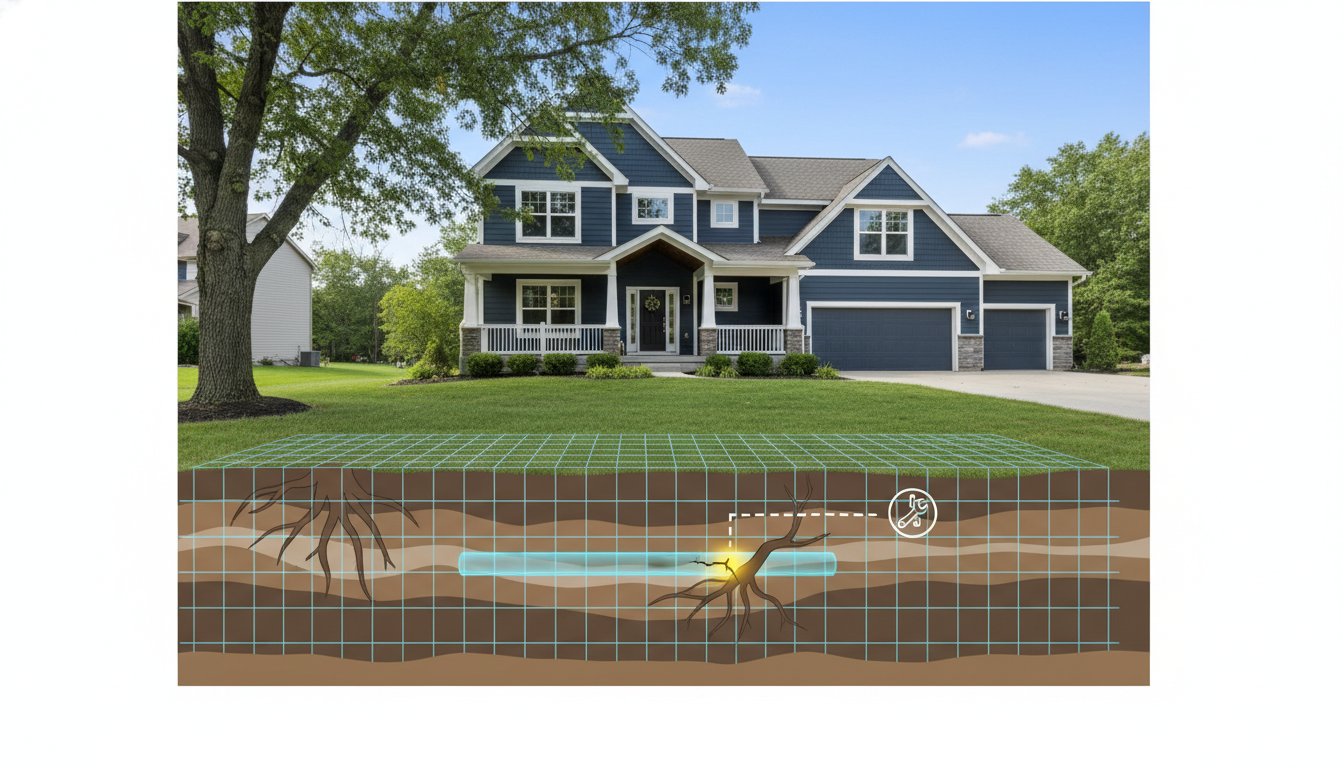
Think of sewer scoping as a medical-grade diagnostic for your home’s digestive system. While a standard home inspection verifies that water flows down the drain, it cannot tell you where that water goes once it leaves the house. A sewer scope is a high-definition video evaluation of the underground waste line. This pipe, specifically called the “lateral line,” is the bridge between your home’s internal plumbing and the municipal main or septic system.
Standard home inspections generally stop at the foundation wall. An inspector might run the faucets for twenty minutes to check for “functional flow,” but this is only the first step. If there’s a blockage or a collapse forty feet out in the yard, a simple flow test might not reveal it until after you’ve moved in. Utilizing a sewer drain camera inspection is the only way to see what’s actually happening beneath the soil.
The Property Owner’s Responsibility
A common misconception among buyers in Central Indiana is that the city maintains everything outside the house. This isn’t the case. As a homeowner, you own the lateral line until it connects to the municipal main. This ownership often extends under the sidewalk and out into the middle of the street. In older Indianapolis neighborhoods, these lines are frequently made of clay tile or cast iron. Over decades, the soil shifts and tree roots seek out the moisture inside these aging pipes.
Municipal “main line” maintenance doesn’t touch your private lateral pipe. If that line fails, you’re responsible for the excavation and repair costs. These projects can quickly become a financial nightmare, especially if they require cutting into public asphalt. Choosing a diagnostic scope is a protective measure. It’s a small investment in certainty that prevents a massive, unexpected bill down the road.
The Technology Behind the Camera
The equipment used for this process is highly specialized. Professionals use rugged, flexible CCTV drain cameras that can navigate multiple 90-degree turns and travel long distances through the waste system. These fiber-optic boro-scopes are built to withstand the harsh environment of a sewer line while providing a crystal-clear image of the interior pipe walls.
Quality equipment features self-leveling camera heads. This is vital for accurate orientation. Without it, an inspector might struggle to tell if a root is entering through the top of the pipe or if a “belly” (a sag in the line) is collecting standing water at the bottom. We provide a full video recording of the entire run. This digital evidence is an objective record of the pipe’s condition. It’s a powerful tool during real estate negotiations, allowing you to show sellers exactly where the issues lie rather than just reporting a vague concern.
Case Study: How a Sewer Scope Saved a Carmel Buyer $15,000
A seemingly perfect 1990s home in a mature Carmel neighborhood often hides a secret. During a recent walkthrough, a prospective buyer noticed the water drained perfectly. There were no gurgles and no slow sinks. However, they chose to include sewer scoping as part of their due diligence. The high-definition camera traveled only thirty feet before the screen went dark. It had hit a massive wall of roots and a significant pipe collapse.
The inspection revealed a severe “belly” in the line and aggressive root intrusion from a nearby silver maple. Because this issue was caught before closing, the buyer successfully negotiated a $15,000 credit for a full line replacement. Without this diagnostic step, that cost would have landed squarely on their shoulders months after move-in. This proves that “perfect” drainage during a brief walkthrough is often a misleading indicator of a system’s true health.
The Silent Threat of Root Intrusion
Central Indiana is home to beautiful, mature maples and oaks. These trees possess aggressive root systems that constantly seek moisture. Even the smallest hairline crack in a pipe acts as an invitation. Once inside, roots act like a slow-motion chainsaw. They expand with incredible force, eventually shattering clay or PVC pipes from the inside out. Root intrusion is a primary cause of sewer failure in 2026. If you’re considering a home in an established neighborhood, a professional sewer scope is the only way to confirm your yard isn’t a ticking financial time bomb.
Identifying “Bellies” and Offsets
A “belly” is a low point in a sewer line where the pipe has sagged. This creates a pool where standing water and heavy debris collect. Over time, these low spots lead to recurring backups and “soft” blockages that eventually harden into total system failures. Our team follows the Sewer Scope Inspection Standards of Practice to ensure every sag is documented with precision.
Shifting Indiana soil is often the culprit behind these structural failures. When the earth moves, pipe segments can “offset” or completely disconnect. These gaps allow sewage to leak into the surrounding soil, which further destabilizes the ground and accelerates the collapse. Catching these offsets early allows you to address the problem while it’s still a manageable repair rather than a total excavation project. We provide the objective data you need to make an informed decision before signing the final papers.
Home Inspection vs. Sewer Scoping: Why You Need Both
A standard Buyer’s Home Inspection is the cornerstone of any property transaction. It provides a comprehensive overview of the roof, the electrical systems, and the structural integrity of the foundation. However, even the most thorough home inspector cannot see through solid earth or concrete slabs. They evaluate the plumbing that is visible in the basement, crawlspace, or under the sinks. If the pipes aren’t leaking in the house and the water drains away, they mark it as “functional.” This baseline assessment is vital, but it leaves a massive gap in your protection: the underground line.
Think of it as a tiered safety strategy. While the home inspection checks the “bones” of the house, sewer scoping provides a specialized diagnostic for the system that carries waste away. These two services work in tandem to ensure no hidden liability follows you past the closing table. Integrating environmental testing, such as mold sampling Indianapolis residents rely on for air quality, further completes this protective shield by addressing risks that are often invisible to the naked eye.
The “Functional Flow” Myth
Many buyers believe that if a toilet flushes perfectly during a walkthrough, the sewer system is in good health. This is a dangerous assumption. A sewer line can be 90% blocked by roots or debris and still pass a basic sink-drain or “functional flow” test. The remaining 10% of the pipe diameter is often enough to handle a few gallons of water during a 20-minute inspection. However, once a family moves in and begins daily laundry, dishwashing, and showers, that 10% capacity quickly fails. Visual confirmation through a camera is the only way to distinguish a healthy pipe from one that is on the verge of a total backup.
Managing the Inspection Timeline
Your due diligence period is usually short, often lasting only seven to ten days. Efficiency is critical during this window. We recommend bundling your specialized evaluations to avoid the stress of coordinating multiple contractors. Scheduling pipe cameras nearby during your primary home inspection ensures you have all the data you need at once. This “one-stop-shop” approach provides a cohesive look at both the structural and environmental health of the property. It respects your time and ensures that if a problem is found, you still have days left on your clock to get repair estimates and negotiate with the seller before your contingency expires.
6 Red Flags: When Sewer Scoping is Non-Negotiable
Certain properties carry a much higher risk profile than others. While we recommend sewer scoping for every transaction, there are specific “red flags” where skipping this diagnostic is an unacceptable gamble. If you are looking at a home in an established neighborhood or even a brand-new development, identifying these warning signs early can save you from a catastrophic backup on your first week of ownership.
- Homes built before 1984: This era predates the widespread use of modern PVC. These properties often rely on clay tile or cast iron, both of which are prone to structural failure.
- Mature trees within 20 feet: As we discussed with the Carmel case study, roots are relentless. Large oaks and maples have root systems that extend far beyond their canopy.
- New construction: It sounds counterintuitive, but new pipes are frequently crushed by heavy machinery or obstructed by construction debris like grout or wood scraps.
- Lush, green patches: If one section of the lawn is significantly greener or “spongey” compared to the rest, it often indicates a leak is fertilizing the grass from below.
Age and Material Vulnerabilities
Indianapolis has a rich history, but that history is buried in aging infrastructure. Homes from the mid-20th century might still utilize “Orangeburg” pipe. These lines are essentially wood fibers bound with tar. They were never meant to last forever, and by 2026, most are reaching a state of total collapse. Cast iron pipes also present unique challenges. Over time, they develop internal scaling and corrosion. This creates a jagged surface that catches debris, leading to recurring “soft” blockages that eventually require expensive hydro-jetting or replacement. Even early PVC lines from the 1980s need a close look. Poorly glued joints can separate as the ground settles, allowing soil to enter the line.
Environmental and Yard Indicators
Indiana’s climate plays a significant role in pipe health. Our intense freeze-thaw cycles cause the heavy clay soil to expand and contract with incredible force. This movement puts immense pressure on underground connections, often leading to offsets or fractures. Inside the home, pay attention to your senses. Persistent “sewer gas” odors near basement floor drains or laundry tubs suggest a breach in the system. Similarly, if multiple fixtures are draining slowly at the same time, the problem isn’t a simple clog in the sink trap. It’s likely a systemic issue deep in the lateral line. Don’t wait for a total backup to take action. You can schedule your sewer scope inspection today to get a clear, high-definition view of what’s happening beneath your yard.
The 5M Difference: Professional Scoping for Central Indiana
Choosing a partner for your property evaluation is about more than just equipment. It’s about trust. As a family-owned business rooted in the local community, we approach every sewer scoping job as if we were inspecting a home for our own family. We understand the high stakes of Central Indiana real estate. Our mission is to provide you with the technical certainty you need to move forward with confidence. We combine rigorous technical proficiency with a protective, neighborly perspective that national firms simply can’t match.
We leverage modern, high-definition video technology to provide a clear view of your property’s underground health. This isn’t just about identifying problems for buyers. For sellers, integrating a scope into a pre-listing inspection Indianapolis strategy is a brilliant move. It removes the “fear of the unknown” for prospective buyers and allows you to address any issues on your own terms before the house even hits the market. You receive the video evidence directly on your device, ensuring total transparency throughout the process.
Unbiased Expertise You Can Trust
One of the most significant advantages of working with our team is our commitment to unbiased reporting. We are diagnostic specialists, not repair contractors. We don’t perform the repairs we uncover. This means we have zero financial incentive to “find” issues that don’t exist. Our focus is purely on the objective condition of the pipe. Our rigorous internal training and methodology align with the highest professional standards, including those required for becoming a home inspector in Indiana. We deliver “no fluff” reports that prioritize clarity, giving you the facts you need to take immediate action.
Booking Your Total Property Evaluation
We make it easy to protect your investment by offering comprehensive service bundles. You can seamlessly add sewer scoping to your Buyer’s Home Inspection or Pre-Listing Inspection package. This holistic approach ensures that every critical system, from the roof peak to the lateral sewer line, is thoroughly evaluated in a single visit. Once the inspection is complete, we help you interpret the video findings so you can share them with licensed contractors for accurate repair quotes if needed. Don’t leave your financial future to chance. Schedule your 5M Sewer Scope Inspection today!
Secure Your Future with Underground Certainty
Investing in a home is one of the most significant decisions your family will ever make. Don’t let a hidden pipe failure turn your dream into a financial burden. We’ve seen how the aging infrastructure in Central Indiana and the aggressive root systems of mature neighborhoods can lead to repairs exceeding $15,000. By choosing sewer scoping, you gain the objective data needed to negotiate with confidence and protect your savings from the unexpected.
As a family-owned and operated business since 2019, we treat your property with the same care we’d give our own. Our reports follow certified InterNACHI professional standards, ensuring you receive a meticulous evaluation every time. Because we provide unbiased diagnostic-only reports and don’t perform repairs, you can trust our findings are completely objective. We’re here to be your detail-oriented partner throughout this journey.
Protect your investment: schedule your Sewer Scope with 5M Inspection Services now!
We’re ready to help you move forward with the peace of mind you deserve.
Frequently Asked Questions
How much does a sewer scope inspection typically cost in Central Indiana?
Industry data shows that a standard sewer scope inspection generally costs between $125 and $500 in the Central Indiana market. When you choose to bundle this service as an add-on to a standard home inspection, the cost often ranges between $100 and $250. These prices vary based on the complexity of the access point, such as using an existing cleanout versus pulling a toilet or accessing the line from a roof vent.
Is a sewer scope necessary for brand-new construction homes?
Yes, it’s a vital step for new builds. New sewer lines are frequently compromised by heavy construction machinery driving over the yard or by contractors flushing debris like mortar, grout, and wood scraps down the drains during the finishing phases. Verifying the integrity of the line before your builder’s warranty expires ensures you aren’t left with a crushed or obstructed pipe once the construction crew leaves.
What happens if the camera finds a blockage or a broken pipe?
We document the exact location and depth of the defect using a digital locator. You’ll receive a high-definition video recording and a written report that clearly identifies the problem area. This objective evidence is a powerful tool for negotiating repairs with a seller or getting accurate quotes from contractors. Because we are a diagnostic-only firm, our findings are completely unbiased and focused solely on your protection.
How long does a professional sewer scope inspection take to complete?
A professional evaluation typically takes between 30 and 60 minutes to complete. The total time depends on the accessibility of the main cleanout and the length of the lateral line leading to the municipal connection. We prioritize efficiency to ensure you receive your digital report and video feed quickly, which is essential when you’re working within a tight inspection contingency window.
Can I perform a sewer scope inspection myself with a rented camera?
While you can rent equipment, it often lacks the precision required for a real estate transaction. Professional cameras feature self-leveling heads and high-resolution sensors that identify hairline cracks or early root intrusion that rental units might miss. Most importantly, professional gear includes a “sonde” or locator that tells you exactly where a break is buried, preventing unnecessary digging in your yard.
Will a sewer scope inspection damage my pipes?
No, the process is entirely non-invasive and safe for all pipe materials, including older clay tile and cast iron. The camera head is rounded and designed to glide smoothly through the waste line without causing structural stress. It’s a gentle diagnostic method that provides a clear view of the system’s interior without the need for any digging or invasive measures.
What is the difference between a sewer scope and a septic inspection?
A sewer scope focuses exclusively on the interior condition of the lateral pipe connecting the home to the waste system. A septic inspection is a broader evaluation of the septic tank itself, its internal baffles, and the health of the absorption or drain field. If the home you’re buying uses a septic system, both evaluations are necessary to ensure the entire waste management process is functioning correctly.
How often should I have my sewer lines scoped if I already own the home?
We recommend that homeowners with mature landscaping or properties older than 20 years consider sewer scoping every 2 to 3 years. This proactive approach allows you to catch minor issues like internal scaling or small root intrusions before they escalate into a total system failure. Regular monitoring is a cost-effective way to maintain your home’s value and avoid the stress of a sudden sewage backup.