
Waiving your home inspection in a market as fast-paced as Indianapolis isn’t a competitive edge; it’s a six-figure gamble you can’t afford to lose. With local homes moving in an average of just 13 days, the pressure to rush the process is intense. You deserve to know exactly what is behind the drywall before you commit your life savings. This expert-backed first time home buyer inspection checklist Indianapolis is designed to replace that anxiety with professional certainty. We understand that the fear of hidden repair costs can turn an exciting milestone into a significant source of stress.
It’s a common mistake to assume an appraisal covers the same ground as an inspection. An appraisal determines market value for your lender. It ensures the home is worth the $320,000 median sale price, but it rarely uncovers hidden safety issues. An inspection determines safety for you. You shouldn’t rely on a lender’s valuation to find structural defects or outdated electrical panels. The emotional benefit of a professional inspection is the certainty it provides. You’ll know exactly what you’re buying before the keys change hands. A professional home inspection gives you the confidence to understand the property’s condition, identify potential risks, and make an informed purchasing decision.
You’re right to be cautious about the structural integrity and environmental safety of your potential new home. Our 2026 guide provides a clear roadmap to help you navigate everything from foundation stability to specialized radon and sewer scope testing. We will break down which red flags are minor fixes and which ones should send you back to the negotiating table. By the end of this article, you’ll have a comprehensive understanding of the local Indy landscape. This ensures you close on your property with total peace of mind and your future budget fully protected.
Key Takeaways
- Indianapolis weather puts unique stress on property systems. Learn how to identify climate-related wear and tear before it becomes your financial burden.
- Protect your investment by knowing exactly what to look for in foundation grading and structural health.
- Utilize this first time home buyer inspection checklist Indianapolis to verify that HVAC, electrical, and plumbing systems meet modern safety standards.
- Discover why specialized tests like radon sampling and sewer scopes are essential for Central Indiana homes to avoid massive, hidden repair bills.
- Gain the clarity needed to interpret your inspection report and distinguish between minor cosmetic flaws and major structural deal-breakers.
Why an Indianapolis-Specific Checklist Matters for First-Time Buyers
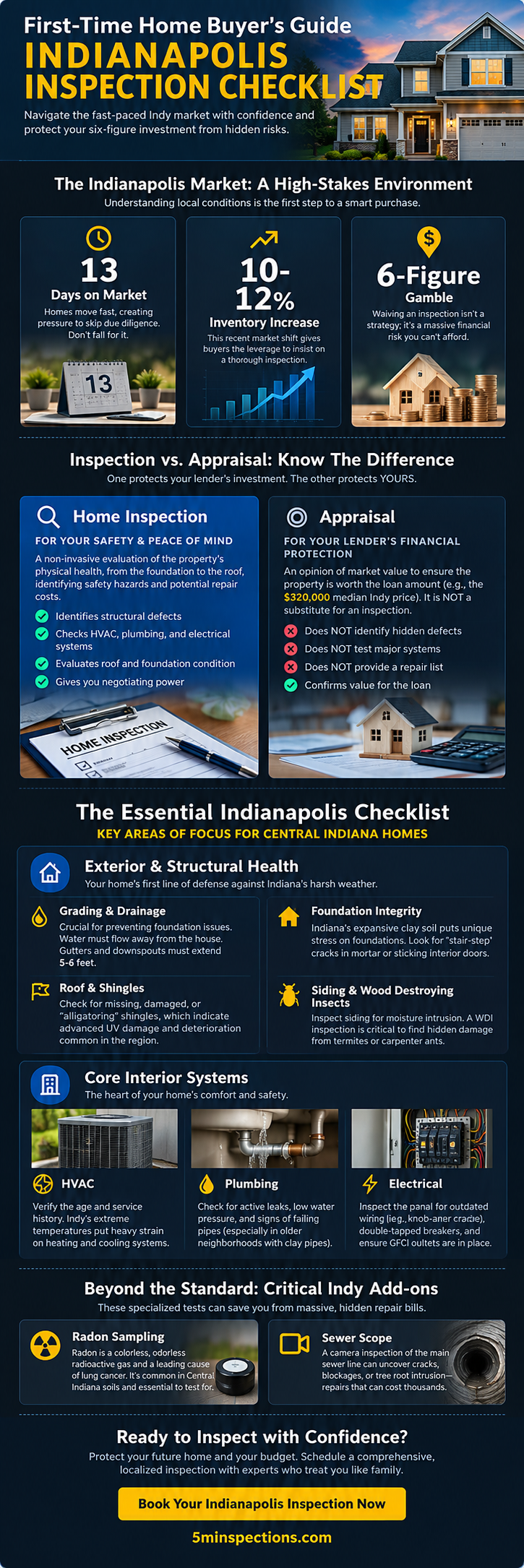
A home inspection is more than a formality; it’s a protective, non-invasive evaluation of a property’s physical health. In the 2026 Indianapolis market, inventory has increased by 10-12% over the previous year. This shift gives you the leverage to insist on thorough due diligence. While the market remains competitive with a 13-day average on market, rushing the process is a risk you don’t need to take. Understanding What is a home inspection? helps you realize its true purpose. It’s a forensic look at the systems that keep your family safe. We act as your collaborative partner to ensure your investment is sound.
Indianapolis weather is notoriously hard on home systems. Our humid summers and freezing winters create a relentless freeze-thaw cycle. This environment stresses foundations and causes roofing materials to deteriorate prematurely. A generic guide won’t address the specific ways Central Indiana’s clay soil expands or how “alligatoring” shingles indicate local UV damage. Your first time home buyer inspection checklist Indianapolis needs to account for these regional factors. We identify these technical concerns early so you aren’t surprised by expensive repairs after closing. Our goal is to provide the professional certainty you need to move forward.
Inspection vs. Appraisal: Clearing the Confusion
It’s a common mistake to assume an appraisal covers the same ground as an inspection. An appraisal determines market value for your lender. It ensures the home is worth the $320,000 median sale price, but it rarely uncovers hidden safety issues. An inspection determines safety for you. You shouldn’t rely on a lender’s valuation to find structural defects or outdated electrical panels. The emotional benefit of a professional inspection is the certainty it provides. You’ll know exactly what you’re buying before the keys change hands.
The ‘Family-Owned’ Advantage in Central Indiana
Local inspectors bring a protective, neighborly perspective to your transaction. We understand regional building codes and the common issues found in specific Indianapolis neighborhoods. Whether it’s the aging clay pipes in older districts or the specific grading issues in newer suburban developments, localized knowledge is irreplaceable. This family-owned approach translates to more thorough, meticulous reporting. We treat your potential home as if we were moving our own families into it. This accountability ensures that no detail is overlooked during the stress of your first purchase.
Exterior and Structural Health: The Indianapolis Foundation Checklist
The exterior of your potential home is its first line of defense against the elements. It’s the most critical part of any first time home buyer inspection checklist Indianapolis because it protects the structural integrity of the entire building. We start from the ground up. We examine the grading to ensure water flows away from the foundation. In Central Indiana, poor drainage is a leading cause of basement seepage and structural shifting. We also verify the condition of gutters and downspout extensions. These components must move water at least five to six feet away from the house. Without proper management, water pools against the foundation walls, leading to hydrostatic pressure and eventual failure.
Our inspection includes a meticulous review of the siding for moisture intrusion or pest damage. We specifically look for signs of Wood Destroying Insects (WDI). Termites and carpenter ants can compromise the home’s framing without being visible to the untrained eye. We also look for cracks in the brickwork or foundation. These often suggest significant soil movement. Understanding the home buying process involves recognizing these physical risks early. If you spot these issues, it doesn’t always mean the deal is dead, but it does mean you need professional guidance before signing.
Foundation and Grading in Clay Soil
Central Indiana’s clay soil is notoriously unstable. It expands when wet and contracts during dry spells. This constant movement puts immense stress on concrete foundations. You should look for signs of structural stress like ‘stair-step’ cracks in mortar joints or interior doors that stick in their frames. These are classic indicators that the house is shifting. For a deeper dive into these issues, read our foundation inspection guide. We help you determine if a crack is a minor settlement or a major structural failure.
Roofing and Exterior Protective Barriers
The roof takes the brunt of Indianapolis wind and hail. We check for missing shingles and ‘alligatoring’—a pattern of cracks caused by intense UV exposure. Midwest asphalt shingles have a finite lifespan. We identify ‘end of life’ signs like granule loss or curling edges. Proper flashing around chimneys and vents is also vital. These metal barriers prevent leaks in the most vulnerable areas of the roof. If you’re concerned about the exterior health of a property, our Buyer’s Home Inspection provides the technical clarity you need. We ensure your protective barriers are actually doing their job.
Interior Systems: HVAC, Plumbing, and Electrical Safety
Once we move inside, the focus shifts to the mechanical heartbeat of the home. Your first time home buyer inspection checklist Indianapolis must prioritize the systems that provide comfort and safety during our extreme seasonal shifts. We don’t just check if the lights turn on; we evaluate the technical integrity of the electrical, plumbing, and HVAC systems. For example, testing the furnace and A/C for a proper temperature differential, or Delta T, is essential. This measurement confirms the system is actually cooling or heating the air effectively, rather than just blowing it. We also verify the age and safety of the water heater, paying close attention to the Temperature and Pressure Relief (TPR) valve. A malfunctioning TPR valve is a significant safety hazard that can lead to catastrophic tank failure.
Our interior evaluation is designed to protect your family and your finances. We meticulously inspect plumbing under sinks and in crawlspaces for active leaks or hidden corrosion. In older Indy homes, these issues often hide behind cabinet doors or beneath floorboards. We also examine the electrical panel for outdated brands or dangerous double-tapped breakers. A double-tap occurs when two wires are connected to a single breaker not designed for it, which creates a persistent fire risk. These technical details are exactly what you need to know before moving from an offer to a closing.
HVAC Systems in the Midwest Climate
In Indianapolis, a 20-year-old furnace is a major negotiation point. These units work overtime during sub-zero winters. We prioritize testing the heat exchanger for cracks. Even a small fissure can leak deadly carbon monoxide into your living space. We also ensure the A/C condenser outside is level and free of debris. A tilted unit can cause premature compressor failure, leading to an expensive replacement shortly after you move in. This level of detail is a core part of a first time home buyer inspection checklist Indianapolis.
Electrical and Plumbing Red Flags
Older Indianapolis neighborhoods often contain outdated electrical components that don’t meet 2026 safety standards. We verify GFCI protection in all wet areas, including kitchens, baths, and laundry rooms, to prevent accidental shocks. Testing water pressure and drainage speed in all fixtures is equally vital. Slow drains or low pressure can indicate deeper clogs or failing supply lines. Identifying these red flags early allows you to request repairs or credits during the inspection response period, keeping your post-closing budget intact.
Beyond the Standard Inspection: Critical Indianapolis Add-ons
A standard home inspection covers the visible and accessible components, but it has limits. In Central Indiana, some of the most expensive and dangerous threats are completely invisible to the naked eye. This is why your first time home buyer inspection checklist Indianapolis must expand beyond the basics. We recommend specific environmental and structural add-ons to ensure your family’s health and your financial security. These tests identify risks that a standard evaluation simply isn’t designed to find. It’s about being meticulous for your sake. We don’t just look at the surface; we look for the hidden issues that could impact your quality of life.
We also include mold sampling and Termite (WDI) evaluations in our comprehensive approach. Mold thrives in our humid Midwest summers. It often hides in dark corners of basements or beneath attic insulation. Identifying these moisture issues early prevents respiratory health problems and structural rot. Termites are another silent threat to wood-framed homes. They can cause thousands in damage before you ever see a single bug. Our team uses modern methodology to find these hidden risks. We act as your watchful, detail-oriented partner to ensure your new home is truly a safe haven.
The Hidden Risk of Radon in Central Indiana
Radon is a colorless, odorless radioactive gas that seeps into homes through foundation cracks. Central Indiana, particularly areas like Carmel and Indianapolis, is known for high naturally occurring radon levels. Because of our local geology, every first-time buyer needs a professional radon test before closing. If levels are high, mitigation systems can be installed to vent the gas safely outside. It’s a technical solution for a serious health risk. We prioritize this testing because we take the responsibility of your property safety seriously. We want you to breathe easy in your new living space.
Sewer Scopes: Why You Can’t Skip the Underground
A standard home inspection stops at the house exit. This leaves the main sewer line a total mystery. In older Indianapolis suburbs, main lines are often made of clay or Orangeburg pipe. These materials are prone to root intrusion, offsets, and total collapse. A sewer inspection uses a high-resolution camera to navigate the line all the way to the city tap. This simple check can save you from a $10,000 disaster shortly after moving in. Many buyers don’t realize that the homeowner is responsible for the line until it hits the city main. We provide the visual proof you need to avoid a massive repair bill.
Adding these specialized tests to your first time home buyer inspection checklist Indianapolis provides the ultimate peace of mind. We believe in being a protective partner during your purchase. If you’re ready to secure your future home with a comprehensive evaluation, you can book your Buyer’s Home Inspection with us today. We provide the technical proficiency and localized care you deserve.
Navigating the Report: What to Do After the Inspection
Receiving your inspection report is the moment of truth in your home buying journey. It’s often a dense document filled with technical terminology, high-resolution photos, and detailed observations. Don’t let the length of the report intimidate you. A professional evaluation is designed to be exhaustive. Your primary task is to distinguish between minor cosmetic flaws and significant safety or structural defects. This is the stage where your first time home buyer inspection checklist Indianapolis transforms from a guide into a powerful negotiation tool. We prioritize digital accessibility, ensuring you receive your report quickly so you can meet your contract’s response deadlines. In a market where homes sell in an average of 13 days, every hour counts for your protection.
If a specific finding seems unclear or overwhelming, you should consult with your top-rated home inspectors to clarify the technical details. We don’t just provide data; we act as your protective partner. We explain the severity of issues like foundation shifting or outdated electrical panels in plain English. This clarity allows you to approach the seller with confidence. You’ll know exactly which items are deal-breakers and which are simple weekend projects. Our goal is to frame the property’s condition in the context of your long-term financial security and personal safety.
Prioritizing Repairs: Safety vs. Maintenance
Focus your attention on the ‘Big Three’: the foundation, the roof, and the core mechanical systems (HVAC, plumbing, and electrical). These are the pillars of a sound investment. You shouldn’t let small maintenance items, such as a dripping faucet or a torn window screen, derail a solid deal. When navigating the 2026 market, use a clear framework for your repair requests. You can either ask the seller to hire a licensed professional for specific repairs or request a financial credit. Credits are often the superior choice for buyers. They give you total control over the quality of the contractors and materials used for the fix.
Final Walkthrough and Closing Confidence
Your inspection report is more than a hurdle to clear; it’s a roadmap for your future home maintenance. Use the summary as a guide for what to monitor during your first year of ownership. Before you sign the final papers, perform a meticulous final walkthrough. Verify that all agreed-upon repairs were completed correctly and that no new issues have emerged. This final step helps ensure the seller has completed the agreed-upon repairs and commitments before closing. Moving into your first home should be a moment of pure celebration. Keeping your inspection report accessible will help you plan future maintenance, track repairs, and protect your investment long after closing. By following a thorough first time home buyer inspection checklist Indianapolis, you can close with greater confidence that your new home has been thoroughly evaluated and that you understand its condition.
Secure Your Future Home with Professional Certainty
Navigating the 2026 real estate market requires more than just a keen eye; it demands a technical partner dedicated to your family’s safety. By utilizing this first time home buyer inspection checklist Indianapolis, you’ve already taken the first step toward avoiding costly structural and environmental surprises. Remember that Central Indiana’s unique clay soil and high radon levels make specialized testing a necessity rather than an option. You deserve a clear, forensic look at your potential investment before you commit your life savings. We prioritize your protection by identifying technical red flags that others might miss.
At 5M Inspection Services, we treat your property with the care and attention of a protective neighbor. As a family-owned, locally operated business, our team of licensed and experienced home inspectors is committed to providing thorough, reliable evaluations. Since 2019, we have served families across Indianapolis, Westfield, Carmel, and Fishers with unwavering professional integrity. We provide detailed digital reports delivered with modern speed to help you meet urgent closing deadlines. Don’t leave your financial security to chance. Schedule your comprehensive Indianapolis home inspection with 5M Inspection Services today! We are ready to help you move into your first home with total confidence and peace of mind.
Frequently Asked Questions
How much does a home inspection cost in Indianapolis in 2026?
Industry averages for a home inspection in Central Indiana typically vary based on the square footage and age of the property. Larger or older homes require more time for a meticulous evaluation of structural and mechanical systems. You should also consider the cost of essential add-ons like radon testing or sewer scopes to ensure a truly comprehensive first time home buyer inspection checklist Indianapolis. We recommend requesting a specific quote tailored to your potential home’s unique characteristics.
Should I be present during the home inspection?
We highly recommend that you attend at least the final hour of the inspection. This allows us to walk you through our findings in person and explain technical red flags with familial warmth. You’ll see the issues firsthand, which makes the detailed digital report much easier to digest later. It’s the best way to ask questions and gain the professional certainty you need before closing.
What are the most common home inspection deal-breakers in Indiana?
The most significant deal-breakers usually involve the “Big Three”: foundation, roof, and core mechanicals. In Indianapolis, significant structural shifting caused by expansive clay soil is a common concern for buyers. Other major issues include outdated electrical panels that pose fire risks or high radon levels that require professional mitigation. We help you distinguish between these major safety defects and minor maintenance items.
How long does a professional home inspection take for an average Indy home?
A thorough home inspection typically takes between 2 and 3 hours to complete. This duration depends on the size of the house and the complexity of its systems. We take the time necessary to be watchful and detail-oriented. We ensure every accessible corner from the crawlspace to the attic is properly evaluated for your protection.
Do I really need a sewer scope for a newer home in Westfield?
Yes, a sewer scope is vital even for new construction in suburbs like Westfield. We often find crushed lines, bellies, or construction debris inside the main lines of brand-new properties. These issues can lead to immediate backups once you move in. Identifying these underground problems early ensures the builder or seller takes responsibility for the repair before you take ownership.
What happens if the inspector finds mold in the attic?
If we identify mold during our evaluation, we focus on finding the moisture source that allowed it to grow. This often involves checking for roof leaks or improper bathroom fan ventilation. We use modern methodology to sample the area and provide technical proof of the issue. We then recommend professional remediation to ensure your family’s respiratory health is protected.
Can a home fail an inspection in Indiana?
No, a home cannot fail a professional inspection. Our report is an objective evaluation of the property’s condition at a specific point in time, not a pass or fail grade. You use the information we provide to decide if the home meets your personal standards. We give you the facts so you can negotiate repairs or walk away with your deposit intact.
How soon after the inspection will I receive my report?
We understand the fast-paced nature of the Indianapolis market and prioritize modern digital speed. You will typically receive your comprehensive, photo-rich report within 24 hours of the inspection. This quick turnaround ensures you have ample time to review our findings and meet your contract’s response deadlines. We remain available to clarify any technical details after you’ve had a chance to read it.