Most buyers think a home inspection is a pass or fail test, but in our local market, the real deal-killers are often the issues you never saw coming. Whether it’s the shifting clay soil of Central Indiana or the invisible threat of radon, a single report can change everything. Understanding what to expect during a home inspection Indianapolis families rely on is the only way to protect your investment from expensive hidden repairs.
It’s natural to feel anxious about the negotiation process or confused by specific local risks like the updated 2026 radon disclosure laws. You want certainty before you sign on the dotted line, and you deserve a technical expert who treats your safety as a point of personal integrity. This guide identifies the critical structural, systemic, and environmental issues that act as true deal-breakers in 2026. You’ll discover which red flags are non-negotiable, how to handle a negative report, and how to navigate the new building codes with confidence. We are here to provide the clarity you need to make an informed decision and secure your future home with total peace of mind.
Key Takeaways
- Learn why there is no such thing as a “failed” inspection and how Indiana law defines the “Major Defects” that truly matter.
- Identify structural red flags specific to Central Indiana, from expansive clay soil foundation issues to roofing damage caused by local weather patterns.
- Uncover invisible environmental hazards like Radon gas and mold that act as silent deal-killers in Indianapolis real estate transactions.
- Understand what to expect during a home inspection Indianapolis professionals conduct when evaluating high-cost invisible systems like main sewer lines and termite activity.
- Discover a strategic framework for categorizing your inspection report into safety, structural, and maintenance priorities to streamline your negotiations.
The Pass/Fail Myth: Understanding Indiana Home Inspection Standards
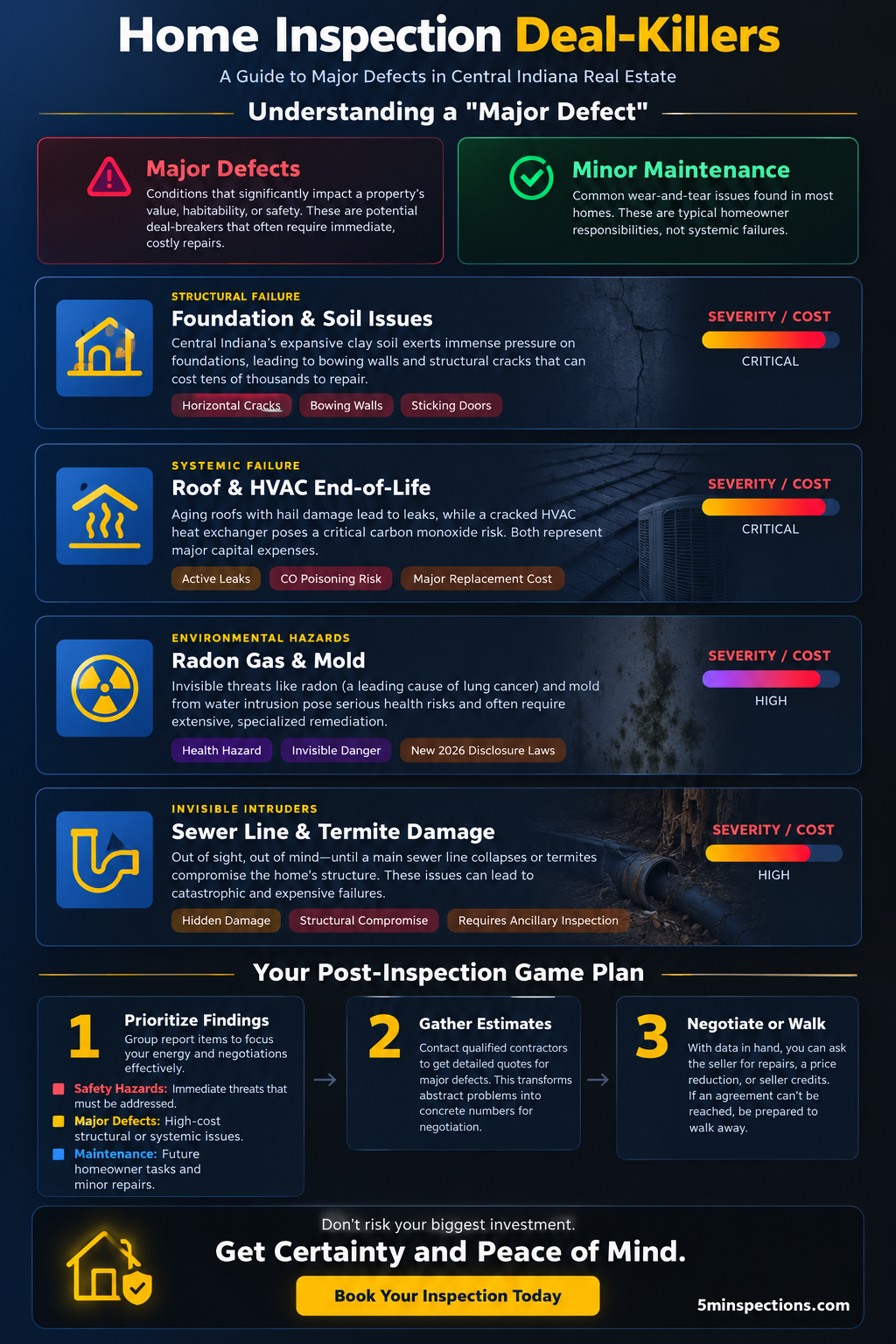
Many buyers enter a real estate transaction expecting a simple “yes” or “no” from their inspector. In reality, a home inspection is an objective, visual assessment designed to give you a clear picture of a property’s health at a specific moment in time. To understand what is a home inspection? you must view it as a discovery tool rather than a final grade. Indiana law and professional standards define a “Major Defect” as a condition that significantly impacts the property’s value, habitability, or safety. This definition is the benchmark we use to evaluate every system in the house.
Whether a house “fails” is actually a subjective decision that only you can make. Your personal risk tolerance and budget determine if a discovery is a deal-breaker or just a weekend project. While a leaking faucet is a nuisance, a cracked heat exchanger or a failing foundation is a systemic failure. These critical issues often stop a mortgage in its tracks because lenders require the collateral to be safe and structurally sound. Understanding what to expect during a home inspection Indianapolis families rely on means learning to separate cosmetic flaws from these high-stakes risks.
The Role of the Indiana Home Inspector
At 5M Inspection Services, we act as your unbiased, third-party technical experts. We don’t have a stake in whether the sale closes; our only commitment is to your family’s security. Remember that our work is non-invasive. We don’t tear down drywall or pull up flooring. Instead, we use modern methodology and professional proficiency to identify visible evidence of hidden problems. We position ourselves as your protective partner, meticulously documenting the home’s condition so you don’t accidentally buy a “money pit” disguised as a dream home.
Minor Maintenance vs. Safety Hazards
Distinguishing between simple wear and tear and systemic neglect is vital for a smooth negotiation. Minor maintenance items, like a loose doorknob or a cracked outlet cover, are common in almost every lived-in home. Safety hazards are different. A “double-tapped” breaker in the electrical panel might look like a small oversight, but it’s a fire hazard that requires immediate professional attention. We help you categorize these findings. We look for patterns of neglect that suggest larger systemic failures, ensuring you know exactly which items are safety-critical and which are just part of being a homeowner. Knowing what to expect during a home inspection Indianapolis professionals conduct ensures you aren’t blindsided by these technical distinctions.
Structural and Systemic Deal-Killers in Central Indiana
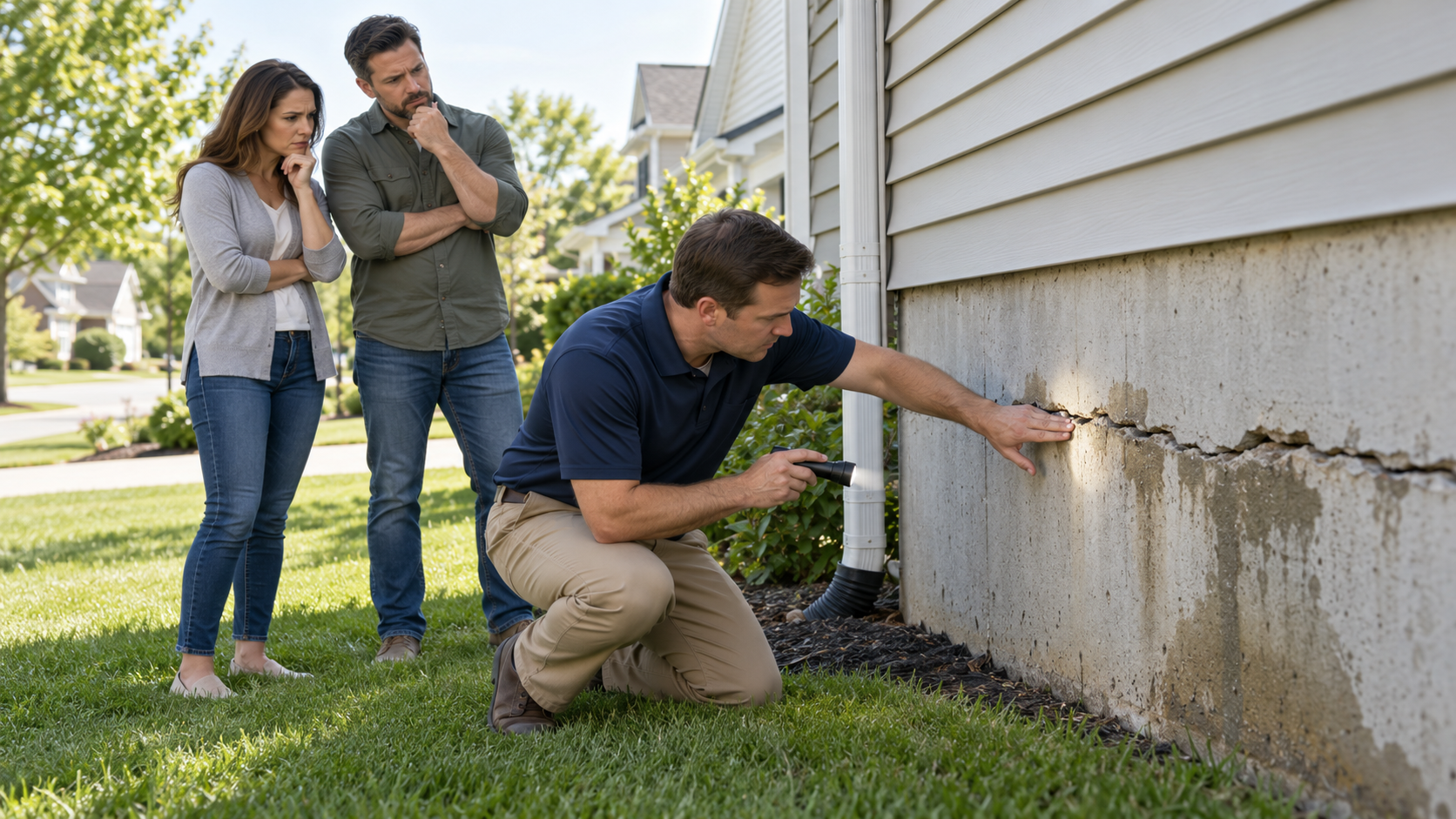
Central Indiana sits on a unique geological challenge that every homebuyer must understand. The expansive clay soil common in our region undergoes a dramatic “shrink-swell” cycle. During wet seasons, this clay expands and exerts immense pressure on basement walls. In dry summers, it shrinks away, leaving foundations unsupported. This pressure often leads to bowing walls or significant structural cracks. Understanding foundation inspection details is crucial because these aren’t just cosmetic issues; they are systemic failures that can cost tens of thousands to remediate.
What to expect during a home inspection Indianapolis residents book is a deep dive into these local risks. Beyond the dirt, we look at the sky. Indianapolis weather is notoriously hard on roofs. Aging shingles, improper flashing, and hidden hail damage can lead to active leaks that compromise the home’s interior. A comprehensive home inspection checklist always prioritizes the roof for a reason. Replacing a roof is a major capital expense that can quickly kill a real estate deal if the seller isn’t willing to negotiate.
Inside the mechanical room, the HVAC system tells a story of either meticulous care or total neglect. We look for cracks in the heat exchanger, which is a critical safety failure. Such cracks can allow carbon monoxide to enter your living space, making the unit an immediate “fail” for safety. We also check for inefficient venting and signs that a unit has reached the end of its functional life.
Foundation Stress and Clay Soil Dynamics
The pressure of Indiana clay is relentless. Homeowners should look for stair-step cracks in brickwork or interior doors that no longer latch. While some vertical settlement cracks are normal, horizontal cracks or inward bowing walls indicate structural instability. If you’re worried about a specific property’s integrity, scheduling a Buyer’s Home Inspection can provide the technical clarity you need to proceed with confidence.
Plumbing and Electrical Safety Standards
Electrical systems in older Indianapolis neighborhoods often contain outdated components that insurers simply won’t cover. Panels manufactured by Federal Pacific or Zinsco are notorious fire hazards. We also frequently find “double-tapped breakers” in newer developments in Westfield and Carmel. This happens when two wires are connected to a single-pole breaker, creating an overload risk. Knowing what to expect during a home inspection Indianapolis professionals conduct ensures you catch these hazards before they become your liability.
Plumbing is another area where hidden costs lurk. Polybutylene piping, common in homes built between 1978 and 1995, is prone to sudden, catastrophic failure. Aging galvanized lines in historic homes can lead to low water pressure and eventual lead contamination. We also verify that GFCI protection is present in all wet areas. Kitchens, bathrooms, and garages must have these life-saving devices to meet modern safety standards and protect your family from electrical shock.
Environmental Fails: Radon, Mold, and Water Intrusion
Environmental health is often the invisible deal-breaker in Central Indiana real estate. While structural issues are easier to spot, the air you breathe and the moisture in your crawlspace can pose significant long-term risks. Understanding what to expect during a home inspection Indianapolis professionals perform means looking beyond the walls to the invisible threats that could impact your family’s safety. While Indiana’s official home inspection standards require a thorough visual check of the property’s systems, specialized environmental testing is often necessary to uncover the most serious health hazards.
Indiana High Radon Risk: A Silent Deal-Killer
Central Indiana is designated as a “Zone 1” high-risk area by the EPA. This means our local geography has a high potential for elevated Radon levels. Radon is a colorless, odorless gas that is the second leading cause of lung cancer. Effective July 1, 2026, Indiana Senate Bill 61 requires sellers to provide a radon warning statement before a purchase agreement is signed. This law highlights why radon testing Carmel Indiana families rely on is so critical. If testing reveals levels at or above the EPA action level of 4.0 pCi/L, a mitigation system is strongly recommended to protect the home’s inhabitants. We treat these findings with the urgency they deserve, ensuring you have the data needed to negotiate for a safe environment.
Water intrusion is the primary catalyst for environmental failure. In Indianapolis neighborhoods, poor grading and drainage are the most common culprits for wet basements. If the ground slopes toward the foundation, heavy rains will inevitably find their way inside. This isn’t just a nuisance; it’s a systemic failure that leads to rot and air quality degradation. We look for high moisture readings and visual evidence of past flooding, such as efflorescence on basement walls or stained baseboards, to ensure you aren’t walking into a damp nightmare that compromises your family’s health.
Mold and Moisture Management
Mold thrives in the humid, dark environments of Indiana crawlspaces and attics. Sump pump failures or inadequate ventilation can turn these spaces into breeding grounds for spores. When we perform mold sampling Indianapolis residents trust, we aren’t just looking for visible growth. We identify the source of the moisture to prevent the problem from returning. “Failing” an air quality test can have serious health implications, especially for children or those with respiratory issues. We help you understand the severity of the findings and whether they represent a simple cleaning task or a major remediation project. Knowing what to expect during a home inspection Indianapolis experts provide gives you the power to negotiate for a healthy, safe living environment before you commit to a purchase.
The Invisible Deal-Breakers: Sewer Lines and Termite Damage
A standard home inspection is a visual assessment of what can be seen. It doesn’t include looking underground or behind finished walls. This is why the most expensive repairs often go undetected during a basic walkthrough. If you want to know what to expect during a home inspection Indianapolis buyers can trust, you must look at the systems that are out of sight. A main sewer line failure or a hidden termite infestation can cost thousands of dollars to remediate; yet these issues are frequently excluded from standard reports.
Lenders for VA and FHA loans recognize these risks. They often require a specialized Wood Destroying Insect (WDI) inspection before they will approve a mortgage. We provide these technical evaluations to ensure your investment is protected from the ground up. By combining a standard assessment with specialized testing, we offer the certainty you need to move forward without fear of hidden systemic failures. Our goal is to serve as your protective partner, catching the problems that others might miss.
Sewer Scope Failures in Older Neighborhoods
Homes in historic areas like Broad Ripple and downtown Indy are high-risk for sewer failures. These neighborhoods often feature clay or even collapsed Orangeburg pipes made of bituminized fiber. Over decades, mature tree roots seek out the moisture in these lines, creating blockages or total collapses. A “belly” in the line, where the pipe sags and collects debris, is another common fail that leads to catastrophic backups. Our sewer inspection guide explains how high-definition cameras identify these risks before they become a basement disaster. Look for slow drains or gurgling sounds as early warning signs of a failing main line.
Termites (WDI) and Structural Integrity
Termites are a persistent threat in Central Indiana. They can compromise the structural integrity of a home long before they are visible in the living area. We meticulously search crawlspaces and basements for mud tubes; these are the protected tunnels termites use to travel from the soil to the wood. We also look for “frass,” which is a collection of termite droppings that often looks like small piles of sawdust. Understanding what to expect during a home inspection Indianapolis professionals perform means knowing that WDI damage can hide behind finished basement walls, making professional detection vital. For those selling a property, a pre-listing inspection Indianapolis sellers rely on can identify these pests early, allowing for treatment before a buyer ever steps foot in the home.
Don’t leave your future to chance by skipping these critical specialized tests. Protect your family and your finances by booking a Sewer Scope and Termite Inspection today to ensure your new home is truly safe from the inside out.
How to Handle a “Bad” Inspection Report in the Indianapolis Market
Receiving a lengthy inspection report can feel overwhelming, but a thick document doesn’t always mean a property is a “money pit.” In fact, a detailed report is a sign of a meticulous inspector who takes your family’s security seriously. When you see red flags, the first step is to stay calm and review the summary with your technical expert. Understanding what to expect during a home inspection Indianapolis families rely on means knowing that the report is a tool for clarity, not a reason for panic. We provide a comprehensive breakdown so you can move from anxiety to informed action.
The second step involves categorizing every finding into a hierarchy of importance. We help you separate issues into three clear buckets: safety hazards, structural failures, and general maintenance. Safety hazards like “double-tapped” breakers or high radon levels require immediate attention. Structural failures, such as the foundation bowing common in Indiana’s clay soil, are high-cost items that impact the home’s long-term viability. Maintenance items are simply the “to-do” list for your first year of homeownership. By organizing the report this way, you can prioritize your negotiations without getting distracted by minor cosmetic flaws.
Prioritizing Repairs and Negotiations
In a competitive market, you must focus your negotiation energy on “deal-killers.” Issues like foundation instability, roof failures, or unmitigated radon are your primary targets. You have two main paths: requesting the seller fix the issue or asking for a closing credit. While having the seller handle repairs seems easier, they may choose the cheapest possible fix. A closing credit gives you the power to select your own contractors and ensure the work meets your standards. For those on the other side of the transaction, providing a pre-listing report can actually give sellers the upper hand by disclosing issues upfront and removing the “surprise” factor that kills deals.
The 5M Advantage: Meticulous and Protective
At 5M Inspection Services, we treat your property transaction as if it were our own family’s move. Our family-owned approach is rooted in traditional values and personal integrity. We don’t just deliver a PDF and disappear. We offer constant digital accessibility to answer your questions during the high-stress negotiation period. A “bad” report isn’t a failure; it’s a powerful shield that protects you from making a catastrophic financial mistake. Knowing what to expect during a home inspection Indianapolis professionals conduct ensures you have a roadmap for future maintenance and the peace of mind that comes from total transparency. We are your watchful, detail-oriented partners, committed to ensuring your new home is a safe haven for years to come.
Secure Your Investment with Informed Certainty
Managing a property transaction doesn’t have to be a source of constant anxiety. By understanding the distinction between simple maintenance and systemic deal-killers, you transform a technical report into a powerful negotiation tool. You now know that identifying structural foundation stress, invisible radon gas, and hidden sewer failures is the only way to truly protect your family’s future. Knowing what to expect during a home inspection Indianapolis families can trust gives you the leverage needed to secure a fair deal and a safe home.
Since 2019, 5M Inspection Services has served Indianapolis, Westfield, Carmel, and Fishers with a commitment to professional integrity. As a family-owned, locally operated business run by Chris and Morgan Markham, we treat every property with the same care and attention we’d give our own family. From expert environmental testing for radon and mold to specialized sewer scopes, we provide the meticulous detail you deserve. Don’t leave your investment to chance. Book Your Meticulous 5M Home Inspection Today and move forward with total peace of mind. We are ready to help you buy with confidence.
Frequently Asked Questions
Can a house fail a home inspection in Indiana?
No, a home inspection is not a pass or fail test. It is an objective evaluation of the home’s condition on the day of the assessment. While the report identifies major defects and safety issues, the decision to move forward belongs entirely to the buyer. You should use the findings to determine if the property’s risks align with your budget and risk tolerance.
What are the most common home inspection deal-breakers in Indianapolis?
Common deal-breakers in the local market include foundation instability from expansive clay soil, aging roofs with hail damage, and high radon levels. Invisible issues like collapsed sewer lines or active termite infestations also frequently halt transactions. Understanding what to expect during a home inspection Indianapolis experts provide helps you identify these high-cost systemic failures before they become your financial burden.
Is a seller required to fix everything on a home inspection report?
Sellers are not legally required to fix every item found in a report. In Indiana, the inspection is a tool for negotiation rather than a mandatory repair list. You can request repairs, ask for a closing credit, or accept the home as-is. However, lenders for FHA or VA loans may require specific safety or structural repairs before they will approve the mortgage.
How much does a radon mitigation system cost in Indiana?
The cost of installing a radon mitigation system varies based on the home’s foundation type and square footage. While we provide precise testing to identify the risk, the remediation is handled by specialized contractors rather than inspectors. Most systems involve a vent pipe and fan to pull gas from beneath the slab. We recommend getting multiple quotes from licensed mitigation professionals if your test results exceed the EPA action level of 4.0 pCi/L.
Should I get a sewer scope if the house is newer?
You should definitely consider a sewer scope even for a newer home. Construction debris, heavy machinery traffic, and soil settling can cause bellies or offsets in brand-new lines. Identifying these issues early prevents catastrophic backups and ensures the main line was installed correctly. It’s a small investment that protects you from one of the most expensive repairs in residential real estate.
What happens if termites are found during the inspection?
If termites or other wood-destroying insects are found, we document the evidence in a specialized WDI report. This discovery doesn’t have to kill the deal, but it does require professional treatment to stop the infestation. You can typically negotiate with the seller to cover the cost of treatment and any necessary structural repairs before closing. Prompt action prevents the pests from causing further damage to the home’s integrity.
Can I be present during the 5M home inspection?
We strongly encourage you to be present during the final portion of the 5M home inspection. Walking through the property with your inspector allows you to see the technical details firsthand and ask specific questions about the home’s health. This interaction provides the professional clarity you need to feel confident in your decision-making process. We treat your potential home with the same meticulous care we would give our own.
How long does a typical Central Indiana home inspection take?
A typical home inspection in Central Indiana takes between two and four hours. The exact timing depends on the square footage, the age of the structure, and the complexity of its systems. Knowing what to expect during a home inspection Indianapolis professionals perform means planning for a thorough, meticulous assessment that doesn’t rush through the details of your future investment. We take the time necessary to ensure every corner is checked.