The attic is rarely visited, yet it can reveal important information about a home’s roof, insulation, ventilation, wiring, moisture control, and structural framing. Ceiling stains, uneven temperatures, or musty odors inside the living space may have a clearer source above the ceiling.
Indianapolis homes face cold winters, warm summers, precipitation, and repeated temperature changes. These conditions can expose weaknesses in roofing, insulation, ventilation, and moisture management.
An attic inspection is usually part of a full residential inspection and focuses on visible, accessible conditions without damaging building materials. 5M Inspection Services includes attic insulation, ventilation, and accessible structural components within its published general home inspection scope.
What Is an Attic Inspection?
An attic inspection is a visual evaluation of the accessible space between your home’s ceiling and roof. We may evaluate roof framing, decking, insulation, ventilation, exhaust ducts, visible electrical components, moisture patterns, and signs of pest activity.
At 5M Inspection Services, we assess the attic alongside the roof, electrical, HVAC, plumbing, foundation, and interior areas so we can consider how attic findings may relate to the rest of the home.
Our goal is to identify visible concerns, explain what they may mean, and recommend further evaluation when necessary.
Why Attics Require Special Attention in Indianapolis
Indianapolis homes experience large seasonal temperature changes. In winter, warm indoor air can move into the attic through ceiling gaps and penetrations. In summer, attic heat can increase cooling demand.
Moisture from roof leaks, indoor air movement, or improperly vented exhaust ducts may contribute to:
- Uneven indoor temperatures
- Damp or compressed insulation
- Condensation on roof decking
- Mold-like discoloration
- Ice dams near the roof edge
- Higher heating or cooling demand
- Premature deterioration of roof materials
During an inspection, we look for visible signs of moisture, ventilation problems, air leakage, and insulation issues that may affect attic performance.
What Can an Attic Inspection Reveal?
Roof Leaks and Moisture Intrusion
One of the most important parts of an attic inspection is checking for signs of water entry, such as stains, wet insulation, rusted fasteners, softened wood, or mold-like growth.
A stain does not always mean the leak is active, so we consider its location, pattern, and surrounding materials before recommending next steps.
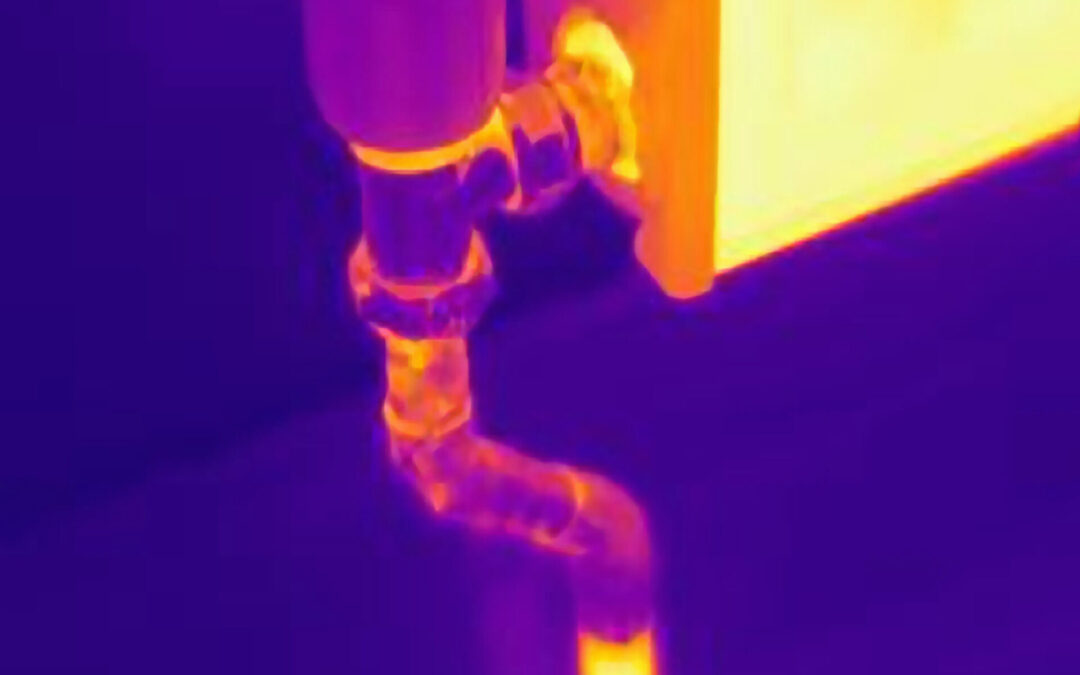
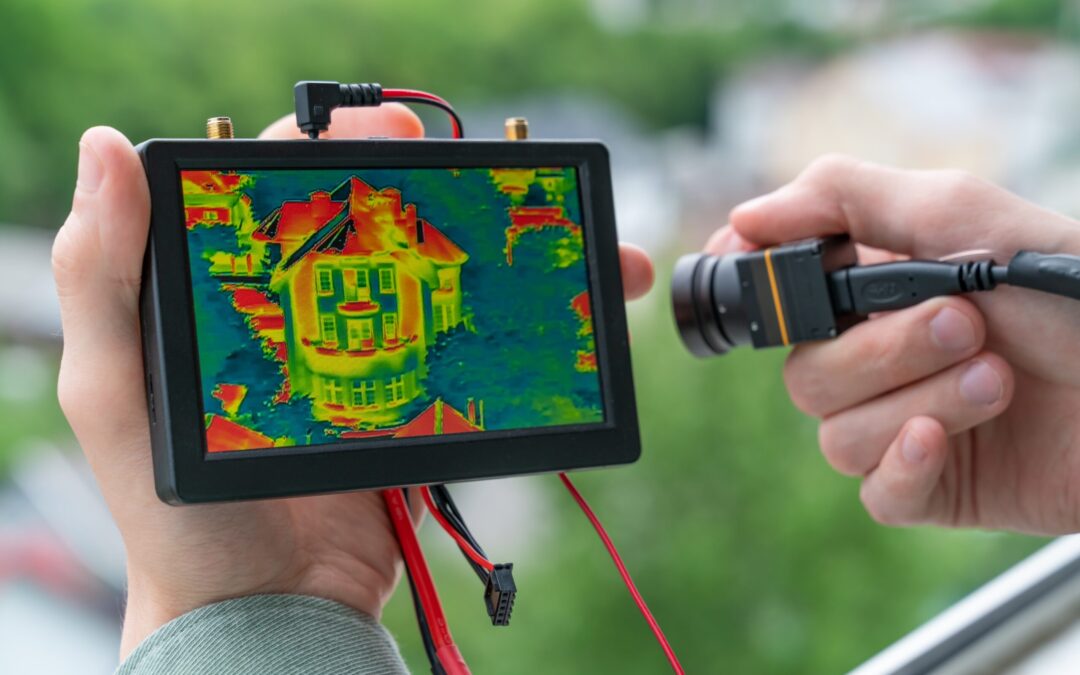
When the source is unclear, infrared thermal imaging may help us identify temperature differences that deserve a closer look.
Insulation Condition and Coverage
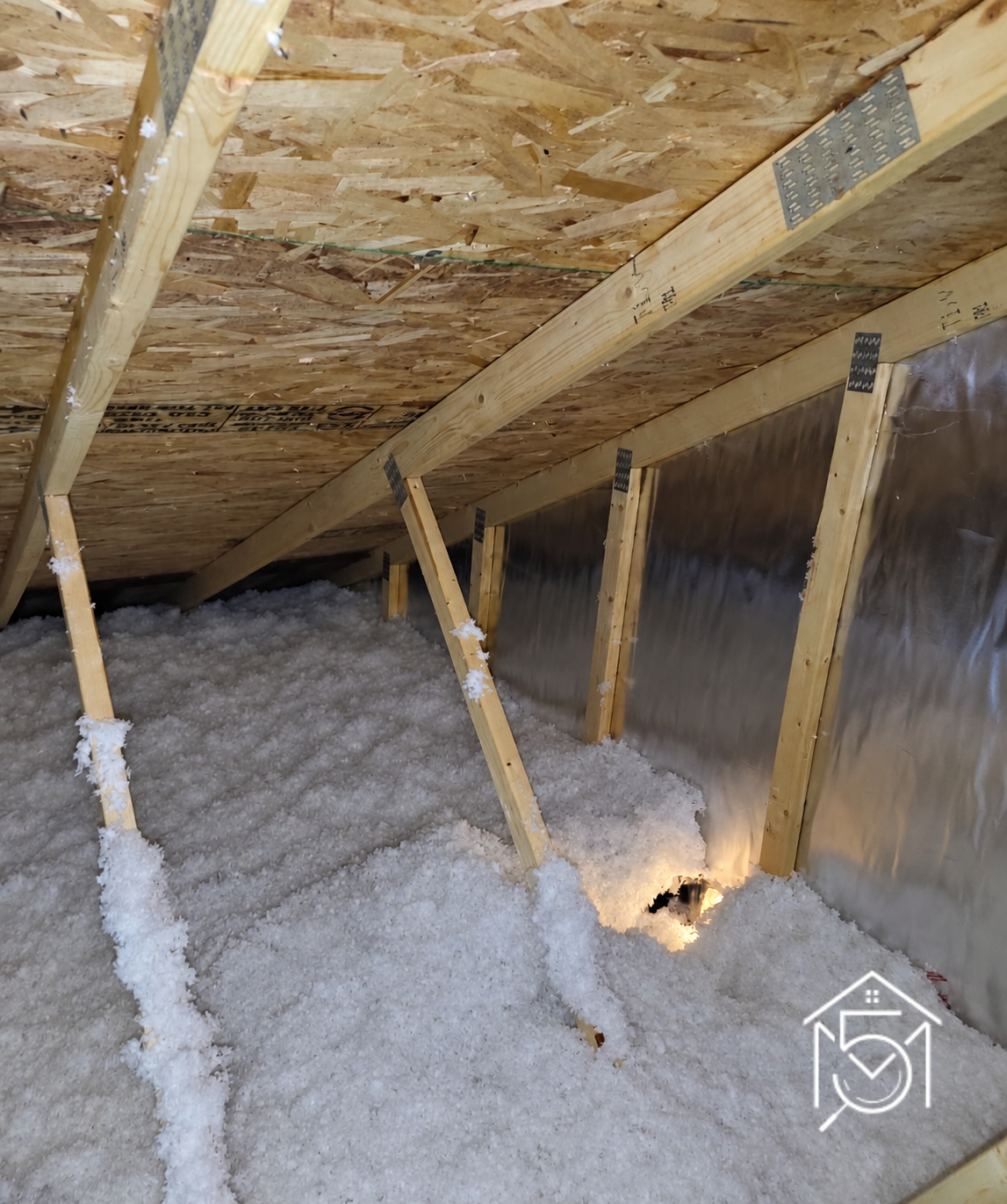
Attic insulation helps slow heat transfer between your living space and the roof area. During an inspection, we look for visible issues such as missing or uneven insulation, compression, moisture damage, contamination, and blocked ventilation openings.
Wet, displaced, or poorly installed insulation may not perform as intended, and gaps around attic access points or ceiling penetrations can contribute to air loss.
A standard attic inspection can identify visible deficiencies, while detailed air-leakage testing or energy modeling requires separate services.
Ventilation and Exhaust Problems
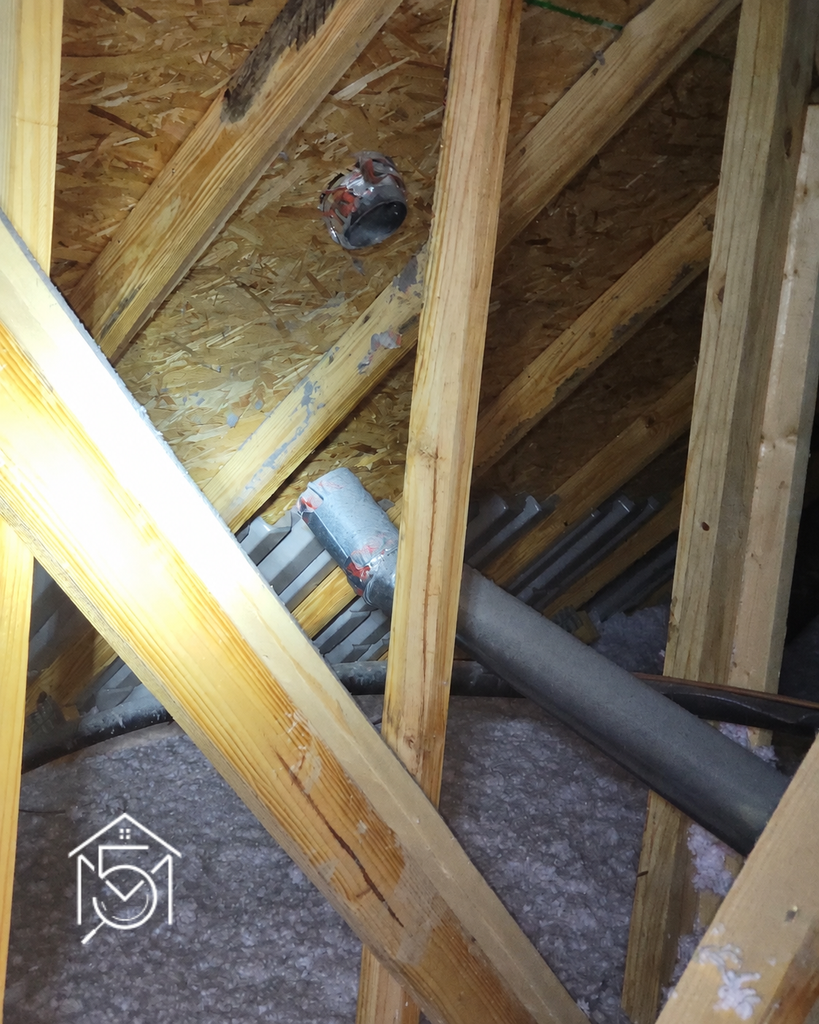
Attic ventilation helps control heat and moisture. During an inspection, we look for issues such as blocked soffit vents, missing baffles, damaged screens, covered airflow paths, and signs of excess moisture.
Bathroom fans, kitchen exhausts, and clothes dryers should generally vent outdoors. If a duct is disconnected or routed into the attic, warm, humid air can contribute to condensation, wet insulation, wood damage, or mold-like growth.
If visible conditions suggest possible fungal contamination, mold and fungi testing may provide more specific information.
Roof Framing and Structural Concerns
The attic exposes framing that cannot normally be seen from finished rooms, including rafters, trusses, ceiling joists, bracing, roof decking, and structural connections.
We may identify visible concerns such as:
- Cracked or damaged framing
- Sagging roof decking
- Cut or altered trusses
- Missing bracing
- Separated connections
- Moisture-damaged wood
- Fire damage
- Unprofessional repairs
A home inspection does not include structural engineering calculations. If we see a significant concern, we may recommend further evaluation by a qualified structural engineer or contractor.
Electrical and Fire-Safety Concerns
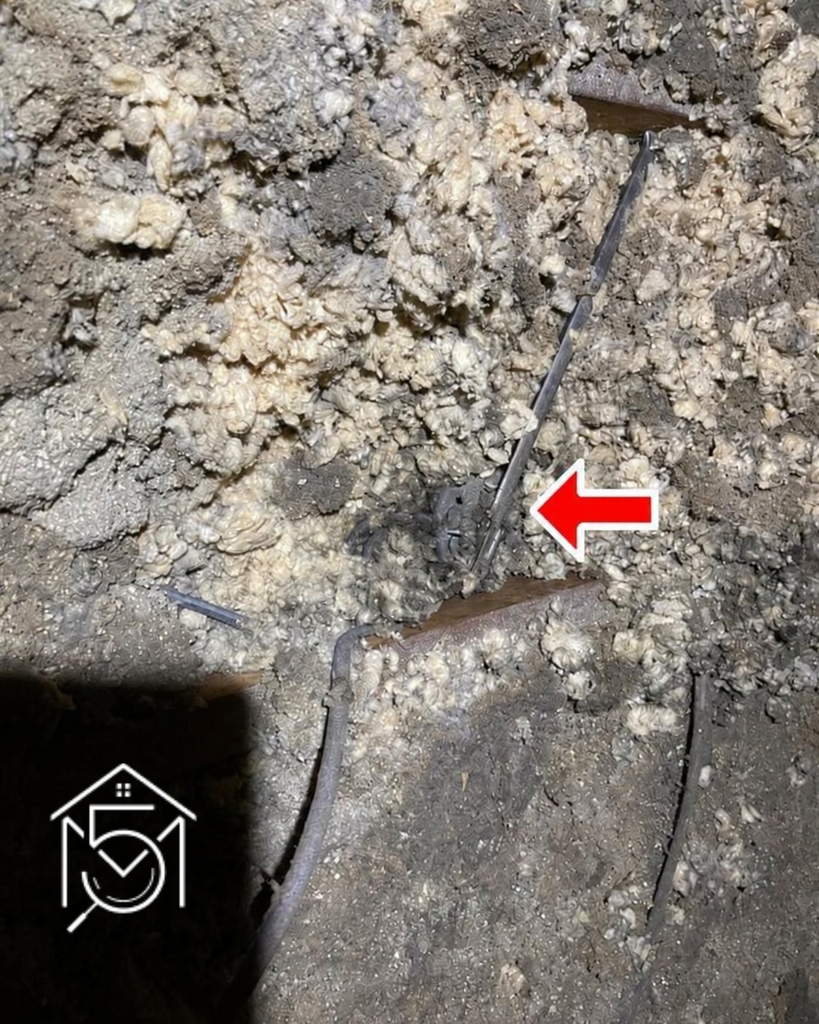
Electrical wiring often passes through attic spaces. Visible concerns may include open junction boxes, exposed wire splices, damaged cable, unsupported wiring, improper extension-cord use, or unsafe conditions around recessed lighting.
Inspectors evaluate visible components but generally do not remove insulation or trace concealed wiring. Significant defects may require a licensed electrician.
Pest and Rodent Activity
Attics may provide shelter for rodents, birds, insects, or other animals. Signs can include droppings, nesting materials, tracks through insulation, damaged vent screens, chewed wiring, disturbed insulation, or visible entry openings.
If we find evidence of animal or insect activity, we will document the visible conditions and may recommend further evaluation when appropriate.
When the damage appears consistent with termites or other wood-destroying insects, a separate wood-destroying insect inspection may be recommended.
Common Attic Findings and What They May Indicate
| Attic finding | Possible cause or concern |
| Dark stains on roof decking | Current or previous roof leak |
| Damp insulation | Water intrusion or condensation |
| Mold-like discoloration | Persistent moisture or limited airflow |
| Blocked soffit vents | Restricted attic ventilation |
| Frost beneath roof decking | Warm, moist indoor air entering the attic |
| Exhaust duct ending in the attic | Improper bathroom or dryer venting |
| Uneven insulation | Reduced thermal performance |
| Cut or altered truss | Possible structural modification |
| Rusted roofing nails | Elevated attic humidity |
| Rodent droppings | Pest entry or infestation |
| Open electrical junction box | Electrical safety concern |
A visible symptom does not always confirm its exact cause. The attic should be evaluated with the roof, ceilings, HVAC system, electrical system, and other parts of the home.
How an Attic Inspection Fits Into a Residential Inspection
An attic inspection is most useful when we compare attic findings with conditions elsewhere in the home.
For example, roof damage may relate to staining beneath the roof deck, uneven insulation may explain a cold upper-floor room, and improper exhaust ducting may contribute to bathroom humidity.
Our Indianapolis home inspection checklist explains how the attic connects with the roof, electrical, plumbing, HVAC, and interior systems.
At 5M Inspection Services, we evaluate accessible attic components as part of the broader residential inspection so you get better context for how findings may relate to the rest of the home.
What Happens During an Attic Inspection?
Access and Safety Assessment
The inspector first determines whether the attic can be entered safely. Access may be limited by a small opening, low clearance, excessive heat, exposed wiring, fragile framing, stored items, pest activity, contaminated insulation, or a lack of safe walking surfaces.
Depending on the conditions, the inspector may enter the attic, inspect from the access opening, or use another safe observation method. Any important limitations should be documented in the report.
Visual Evaluation and Reporting
During the attic inspection, we review visible and accessible insulation, ventilation, framing, roof decking, exhaust ducts, wiring, moisture patterns, repairs, and signs of pests.
The inspection is non-destructive, so we do not remove insulation, dismantle equipment, or open finished surfaces. Access and existing insulation can limit what we are able to observe.
Older and Newly Constructed Homes
Older Indianapolis Homes
Older homes may contain several generations of construction, renovation, and repair work. Common attic findings may include older wiring, multiple insulation types, previous roof leaks, abandoned ducts, improvised repairs, or bathroom fans added without proper exterior venting.
Age alone does not indicate serious defects, but older materials and later modifications may require closer evaluation.
Newly Constructed Homes
New homes can also have attic issues, including missing or uneven insulation, blocked soffit vents, disconnected exhaust ducts, missing baffles, construction debris, damaged framing, or poorly sealed roof penetrations.
Our new construction phase inspections provide an independent review at key stages of the build and can help identify visible workmanship concerns before closing or before components are covered.
Understanding the Limits of an Attic Inspection
An attic inspection provides useful information, but it cannot reveal every hidden condition. A standard inspection generally does not:
- Remove insulation
- Open walls or ceilings
- Dismantle equipment
- Perform structural calculations
- Guarantee that no concealed leak exists
- Identify every hidden pest opening
- Provide laboratory mold identification
- Complete a full energy audit
- Certify compliance with every building code
The findings are based on visible and accessible conditions at the time of inspection. If an area cannot be reached safely, that limitation should appear in the report.
How Attic Findings Can Affect a Home Purchase
Attic findings can help buyers separate routine maintenance from conditions that may require immediate attention.
Limited insulation may become a future improvement project. A disconnected bathroom fan may require duct correction. Roof-decking stains may justify evaluation by a roofing contractor. Altered trusses may require a structural engineer. Pest evidence may support a separate pest inspection.
A residential inspection is not a pass-or-fail test. It gives buyers information for negotiations, repairs, specialist evaluations, and maintenance.
When Should an Attic Inspection Be Completed?
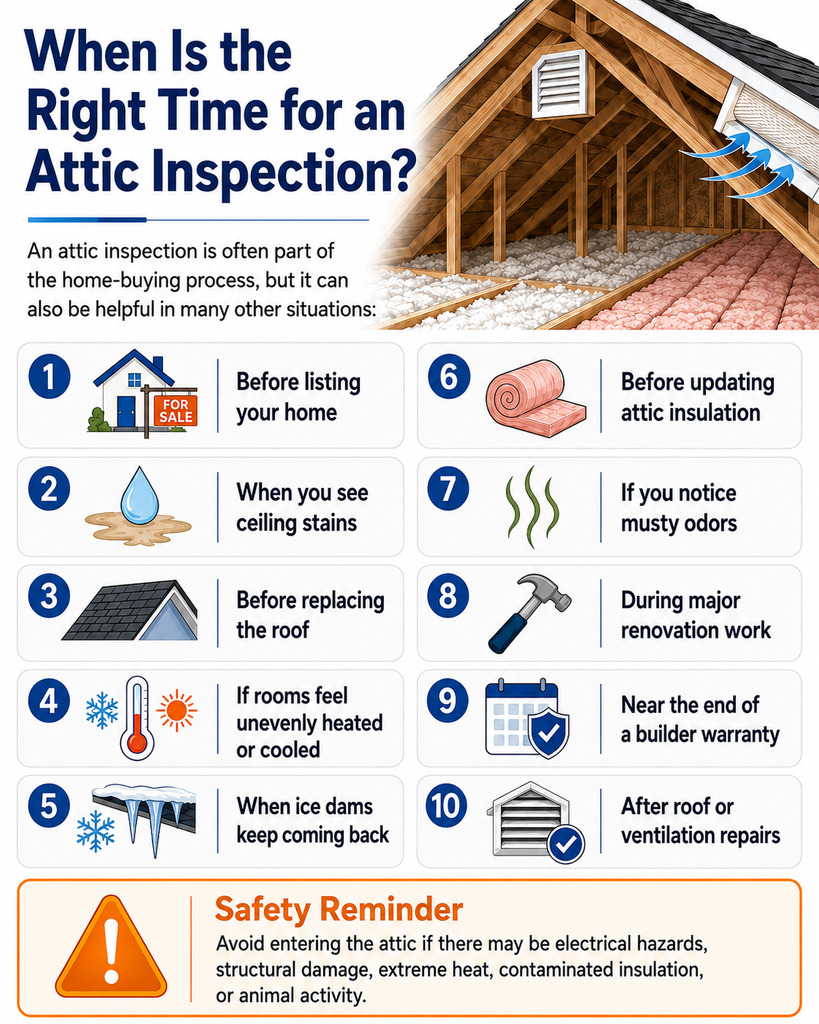
An attic evaluation is normally included when purchasing a home, but it may also be useful when:
- Preparing to sell
- Investigating ceiling stains
- Planning roof replacement
- Experiencing uneven temperatures
- Noticing recurring ice dams
- Replacing attic insulation
- Detecting musty odors
- Completing major renovations
- Approaching the end of a builder warranty
- Verifying roof or ventilation repairs
Homeowners should avoid entering an attic when electrical hazards, structural damage, extreme temperatures, contaminated insulation, or animal activity may be present.
Choosing a Professional Residential Inspection
The quality of an attic inspection depends on safe access, careful observation, and an understanding of how roofing, insulation, ventilation, framing, electrical systems, and interior conditions work together.
When choosing an inspector, consider Indiana licensing, local experience, inspection scope, report quality, photos, and how clearly they explain any limitations.
At 5M Inspection Services, we provide Indianapolis home inspection services for buyers, sellers, and homeowners. Our residential inspections include accessible attic components as part of a broader evaluation of the home’s major systems.
Final Thoughts
An attic inspection can reveal signs of roof leaks, damaged insulation, poor ventilation, unsafe wiring, altered framing, improper exhaust venting, moisture, and pest activity.
Because many of these conditions are hidden from the living areas, they can be easy to miss but may still affect comfort, safety, roof performance, and future maintenance.
While no residential inspection can uncover every hidden defect, evaluating the accessible attic can give you a much clearer picture of the home’s condition.
If you are buying, selling, or maintaining a home, you can request a residential inspection with 5M Inspection Services so we can evaluate the attic along with the home’s other visible and accessible systems.
Frequently Asked Questions
What does an attic inspection include?
An attic inspection generally includes the visible and accessible insulation, ventilation, roof framing, roof decking, exhaust ducts, wiring, moisture evidence, and signs of pest activity.
Is an attic inspection included in a residential inspection?
Yes. At 5M Inspection Services, we include accessible attic insulation, ventilation, and structural components as part of our residential home inspection.
Can an attic inspection identify a roof leak?
It may reveal staining, damp insulation, damaged wood, or other signs that could be related to a roof leak. However, a visual inspection cannot guarantee that every concealed or intermittent leak will be found.
Does an inspector move attic insulation?
Generally, no. During a standard inspection, we do not remove or significantly disturb insulation. This means some conditions beneath the insulation may remain inaccessible.
Why is attic ventilation important in Indianapolis?
Proper attic ventilation helps manage heat and moisture. When combined with effective insulation and air sealing, it may help reduce condensation, wet insulation, mold-like growth, and conditions associated with winter ice dams.