Radon is a hidden concern you may not think about when buying or living in a home because you cannot see, smell, or detect it without proper testing. However, radon levels inside a home can change throughout the year depending on weather conditions, HVAC use, and foundation conditions.
Because radon is a naturally occurring gas that enters homes from the soil below, changes in pressure, airflow, and ground conditions can affect how much radon enters and remains inside a property.
If you own or are buying a home in Indianapolis, it’s important to understand that a single radon measurement reflects the conditions during that specific testing period. At 5M Inspection Services, we use professional radon testing to help you understand the radon levels in the home and determine whether additional steps may be worth considering.
What Causes Radon Levels to Change in Homes?
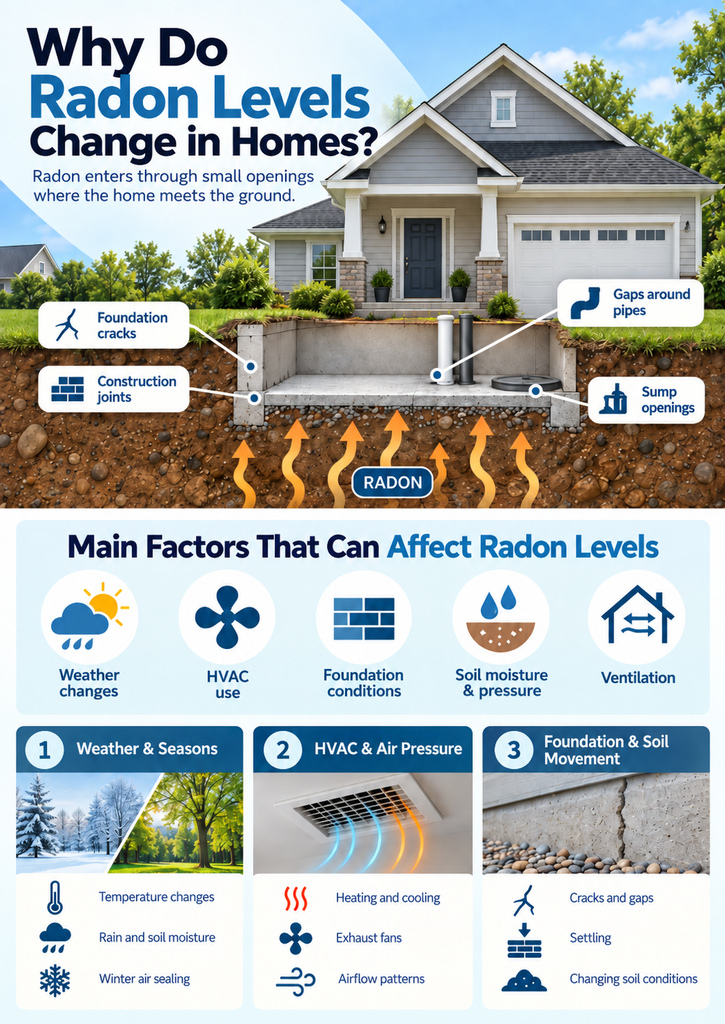
Radon enters homes through small openings and gaps connected to the ground, including foundation cracks, construction joints, sump openings, and other areas where soil meets the structure.
Once inside, radon levels can increase or decrease depending on several environmental and building-related factors.
The most common factors affecting radon levels include:
- Weather changes
- Heating and cooling system use
- Foundation conditions
- Soil moisture and pressure changes
- Home ventilation patterns
Understanding these factors can help you better interpret your radon test results.
Weather Conditions and Seasonal Changes
Weather plays a major role in how radon moves through the soil and enters a home.
During colder months in Indianapolis, homeowners typically keep windows closed and run heating systems more frequently. This can reduce natural ventilation and create pressure differences that may draw more soil gases into the home.
Changes in weather can affect radon levels because of:
- Temperature differences between indoor and outdoor air
- Ground moisture changes
- Soil pressure variations
- Increased home air sealing during winter
Heavy rain can also influence radon movement by changing soil conditions around the foundation. When soil becomes saturated, radon may move through available pathways into the home.
This is why radon readings taken during different seasons may vary.
HVAC Use and Indoor Air Pressure
Heating and cooling systems can influence how air moves throughout a home.
When HVAC systems operate, they can create differences between indoor and outdoor air pressure. These pressure changes may affect how soil gases enter through openings in the foundation.
Factors that may influence radon movement include:
- Running heating systems
- Operating exhaust fans
- Home ventilation patterns
- Air sealing improvements
For example, a tightly sealed home may have less natural airflow, which can allow radon to accumulate if it enters the building.
Regular maintenance of HVAC systems improves overall indoor comfort, but it does not replace the need for professional radon testing.
Foundation Conditions and Soil Movement
The condition of a home’s foundation can also affect radon entry points.
Radon can enter through small openings such as:
- Foundation cracks
- Floor cracks
- Construction joints
- Sump pump openings
- Gaps around pipes and utilities
Over time, soil movement, settling, and changes in moisture conditions can affect these areas.
Older Indianapolis homes may have different foundation characteristics than newer construction. During a residential inspection, we evaluate accessible foundation areas to help you better understand the visible condition of the property.
However, a visual inspection alone cannot determine radon levels. Testing is required to measure the actual concentration inside the home.
Why Radon Levels May Vary Between Tests
It is normal for radon readings to fluctuate.
A variety of conditions can influence test results, including:
- Time of year
- Recent weather patterns
- Home occupancy habits
- Ventilation changes
- HVAC operation
A short-term test measures radon levels during a specific testing period. It does not represent every possible condition a home may experience throughout the year.
For this reason, it is more useful to focus on proper testing procedures and the conditions in your own home rather than comparing one result with the results from another property.
When Should Indianapolis Homeowners Consider Radon Testing?
Radon testing can be valuable in several situations.
Buying a Home
If you are buying a home, you may want to include radon testing as part of the inspection process because radon cannot be detected by sight, smell, or taste.
Testing before closing allows buyers to understand the home’s current radon level and make informed decisions.
Purchasing an Older Home
Older homes may have aging foundation materials, previous repairs, or different construction methods that can create additional entry points for soil gases.
Testing helps identify whether radon levels are elevated regardless of the home’s age.
After Renovations or Foundation Changes
Changes to a home can affect airflow and foundation conditions.
Homeowners may consider testing after:
- Basement renovations
- Foundation repairs
- Major HVAC changes
- Improvements that increase home sealing
If you are purchasing a newly built home, you may also consider a new construction inspection to evaluate accessible components and major systems before closing.
How Professional Radon Testing Works
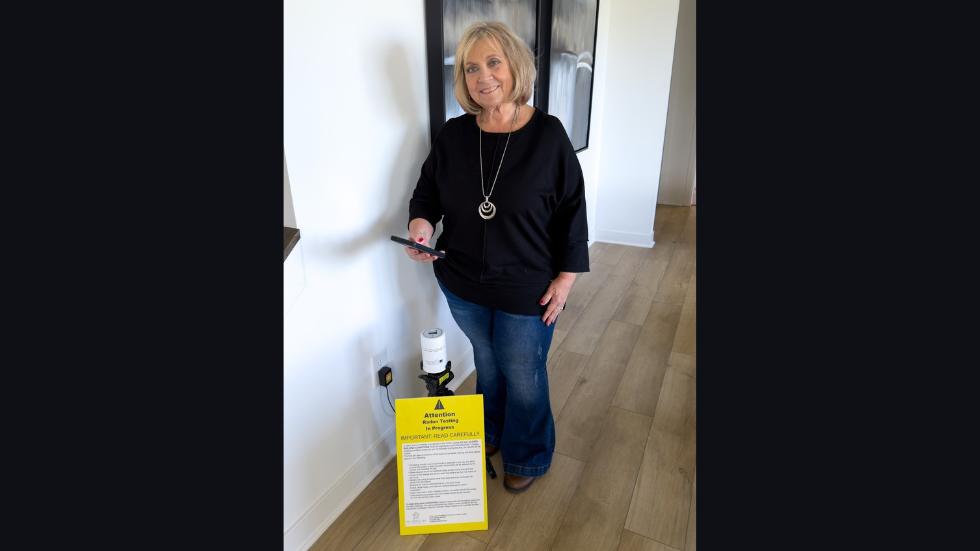
When we perform professional radon testing, we use specialized equipment to measure radon levels over a specific testing period.
Our testing process generally includes:
- Placing a radon monitor in an appropriate testing area
- Recording radon levels during the testing period
- Reviewing the collected data
- Providing results and recommendations if needed
The testing location and duration depend on the property conditions and testing requirements. Radon testing is often performed as an additional service alongside a complete home evaluation.
What Radon Testing Can and Cannot Tell You
Radon testing provides important information, but it has limitations.
A radon test can:
- Measure current radon levels
- Identify whether levels are elevated during testing
- Help homeowners decide whether further action is needed
A radon test cannot:
- Predict exact future radon levels
- Identify every possible entry point
- Replace a complete home inspection
- Guarantee that levels will remain unchanged forever
Because conditions can change over time, proper testing provides the best understanding of current radon conditions.
Final Thoughts
Radon levels in Indianapolis homes can change because of weather conditions, HVAC operation, and foundation conditions. While these factors may influence radon movement, professional radon testing is the most reliable way to measure the actual level inside a home.
For buyers and homeowners, understanding current radon conditions can provide useful information when making decisions about property safety and maintenance. Combining radon testing with a professional residential inspection can give you a more complete understanding of the property’s condition.
At 5M Inspection Services, we provide professional radon testing and Indianapolis home inspection services to help you better understand the property before making important decisions.
Ready to learn more about your home? Contact us today to schedule your inspection or radon test.
Frequently Asked Questions
Do radon levels change throughout the year?
Yes. Radon levels can change due to weather, soil conditions, ventilation, and HVAC use.
Is winter the best time for radon testing?
Winter testing can sometimes show higher readings because homes are often closed and less ventilated, but radon testing can be performed throughout the year.
Does a new home need radon testing?
Yes. New homes can still have elevated radon levels depending on soil conditions and construction details.
Can HVAC systems increase radon levels?
HVAC operation can influence indoor air pressure and airflow patterns, which may affect how radon enters and circulates inside a home.
Should home buyers test for radon?
Yes. Radon testing can help you understand the home’s current radon level and make a more informed decision before closing.
How long does a radon test take?
A standard professional radon test requires a minimum of 48 hours of continuous monitoring. During the testing period, closed-house conditions are maintained to help provide a representative measurement.