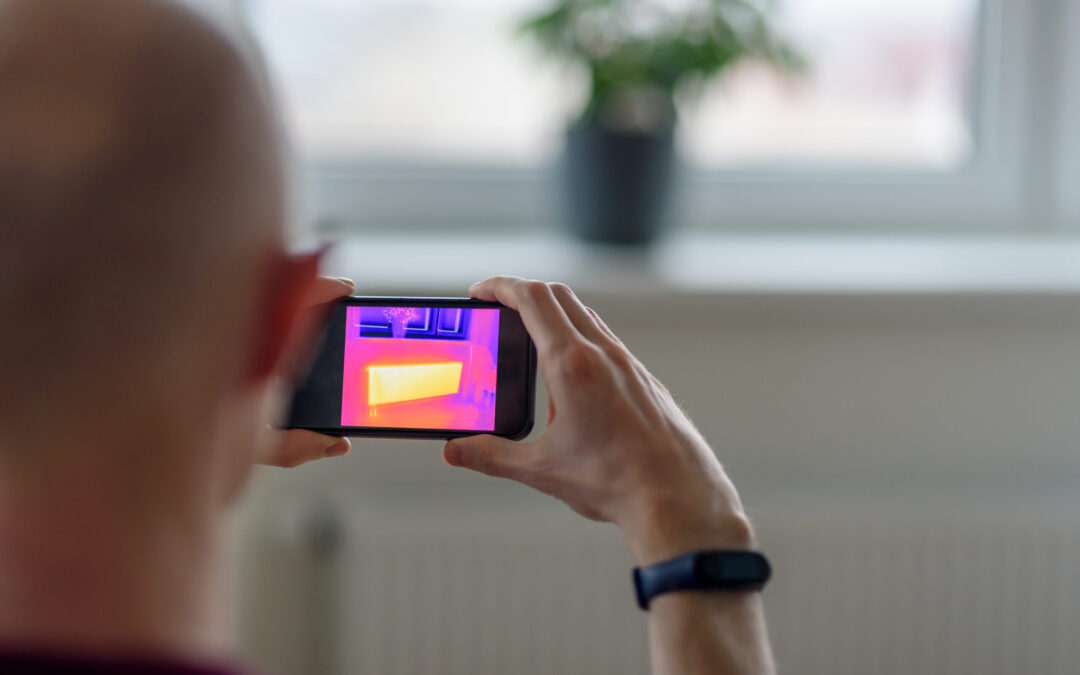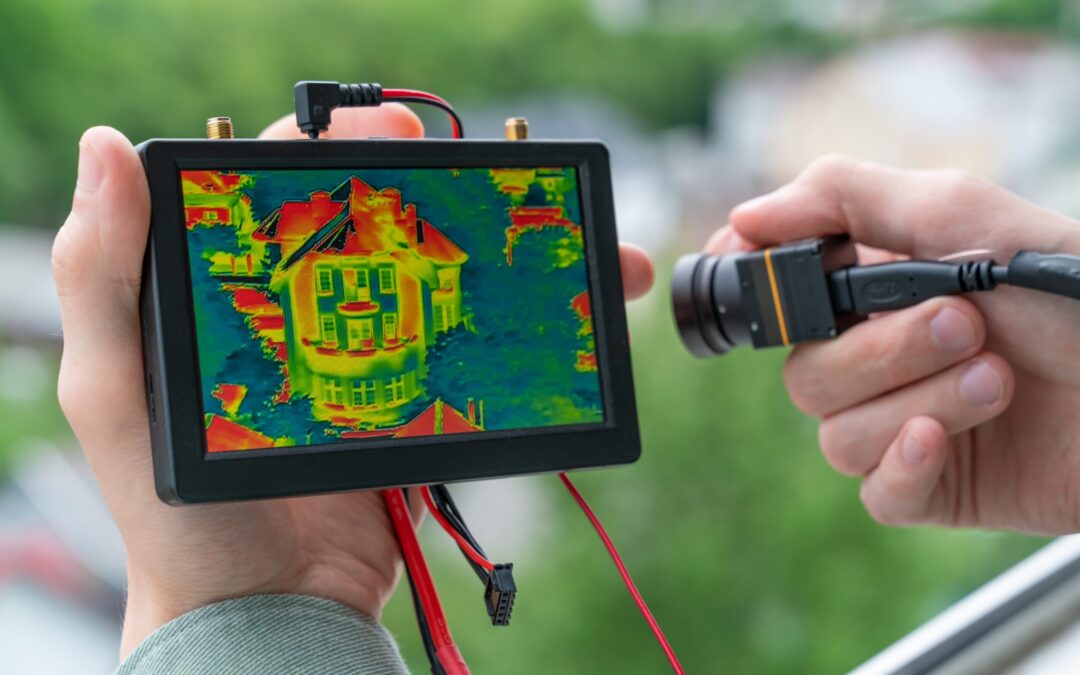
Thermal imaging, also called infrared scanning or IR, uses a specialized camera to detect surface temperature patterns throughout a home. A normal photograph records light; a thermal camera records heat. That difference lets a trained inspector read a wall, ceiling, or floor and see variations that never show up visually, and those variations often point to hidden moisture, missing insulation, air leaks, or electrical trouble.
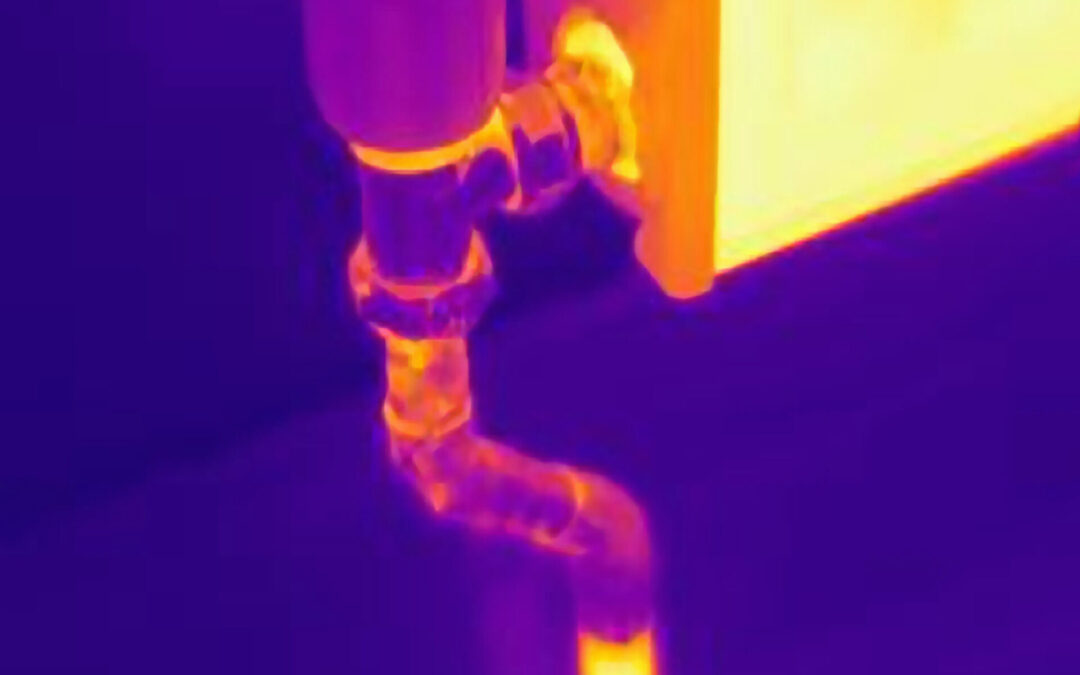
The technology does not see through walls the way people sometimes imagine. It reads the surface temperature of whatever the lens is pointed at and displays those readings as a gradient scale. Lighter colors on that scale signify areas that are more hot, while darker colors represent cooler spots. The inspector’s job is to work out what those warm and cool patterns mean in the context of the rest of the house.
How Thermal Imaging Cameras Work
Thermal imaging is heat imaging. It uses technology that looks at warm and cold heat signatures across a surface and turns them into a visual map. The cameras work by detecting heat signatures and displaying them as a gradient scale, with lighter colors signifying areas that are more hot. Nothing has to be opened, cut, or removed to take the reading, which is why the process is described as non-destructive.
Because the camera measures temperature differences rather than moisture or electricity directly, an image is a starting point rather than a final answer. A wall can read cold for many reasons, and moisture is only one of them. A careful inspector confirms what the camera suggests with a moisture meter, a closer visual look, or another diagnostic tool before calling something a defect.
What Thermal Imaging Can Reveal During a Home Inspection
An infrared scan is used to spot small but key changes in temperature in different areas of a house and to identify problematic areas that deserve a closer look. Findings usually fall into a few familiar categories.
Hidden Moisture and Water Intrusion
Wet building materials typically sit at a different temperature than the dry materials around them. That difference can appear as an irregular cool patch on a ceiling, wall, or floor, which is why thermal imaging is often used as a first pass for locating possible leaks. The camera cannot confirm moisture by itself. If a reading suggests water, the inspector can verify with a moisture meter, because a cold spot could just as easily be missing insulation, a duct, or framing.
Missing or Uneven Insulation
Insulation problems are among the most common findings an infrared scan surfaces, largely because they are invisible during a normal walkthrough. Areas where insulation is missing, compressed, or uneven tend to show up as temperature patterns that differ from the surrounding building envelope. Because the camera reads surface temperature patterns, an inspector can often map where insulation coverage changes, giving a homeowner a clearer idea of where energy may be escaping.
Air Leaks and Drafts
Non-destructive inspections with a thermal camera can help isolate cold and warm air infiltration and exfiltration issues so improvements can be made. Air moving into or out of a house changes the temperature of nearby surfaces, and that change is exactly what the camera is built to detect. Locating those spots matters because air sealing is often a simpler fix than living with the energy costs of an unresolved leak.
Electrical Hot Spots
Electrical problems are another area where thermal imaging earns a place in a home inspection. Loose connections, overloaded circuits, and failing components tend to run warmer than they should, and that warmth can appear as an unusually hot area on the gradient scale. Heat at a panel, outlet, or fixture is not proof of a defect on its own, but it is a legitimate reason to bring in a licensed electrician for a closer evaluation.
What Thermal Imaging Cannot Do
Thermal imaging is sometimes oversold, so the limits are worth stating clearly. The cameras detect temperature differences and nothing more. If they are used to detect moisture, they may be right or they may be wrong, since a wall could be cold for many unrelated reasons.
- It does not see through walls, floors, or ceilings.
- It cannot measure moisture directly, so readings need confirmation with other tools.
- It does not replace a full visual inspection of the roof, foundation, plumbing, electrical system, and structure.
- It produces images that require interpretation, which is why training and experience matter as much as the camera.
Used well, thermal imaging narrows the search. Used poorly, it produces alarming pictures with no follow-up. The value comes from pairing the scan with an inspector who knows how to verify what the camera is showing.
How a Thermal Scan Fits Into a Standard Home Inspection
A thermal scan can be built into a residential inspection or offered as an add-on, depending on how an inspection company structures its services. It works best alongside the rest of the inspection rather than as a stand-alone visit, because the inspector is already walking the house, checking systems, and building a picture of how the home performs.
Adding a thermal imaging scan is often described as a way to take some of the guesswork out of whether moisture or water issues are lurking in a house you are buying. That applies across property types, including condos, single family homes, townhouses, and multifamily buildings. The scan is not a guarantee that nothing was missed, and no inspection is, but it adds a documented look at areas a visual walkthrough cannot fully assess.
Common Findings and What Happens Next
The table below shows how a camera reading usually translates into a next step. In every case, the image prompts a closer look rather than closing the question on its own.
| Condition | What the camera may show | Typical next step |
|---|---|---|
| Possible moisture intrusion | Irregular cooler patches on walls, ceilings, or floors | Confirmation with a moisture meter and a closer visual check |
| Missing or uneven insulation | Surface temperature patterns that differ from surrounding areas | Insulation repairs or an energy evaluation |
| Air leaks | Temperature changes near gaps in the building envelope | Air sealing and weatherization work |
| Electrical hot spots | Unusually warm areas at panels, outlets, or fixtures | Evaluation by a licensed electrician |
Questions to Ask Before You Add a Thermal Scan
A short conversation before booking tells you a lot about how useful the scan will be.
- Is thermal imaging included in the inspection, or is it an add-on service?
- Will the inspector confirm camera findings with other tools, such as a moisture meter?
- How will thermal images and their locations be documented in the report?
- What training or certification does the inspector hold for infrared work?
Costs vary by company, property size, and scope, so ask for current pricing directly rather than relying on numbers you find online. Requirements for inspectors also differ from state to state, so you should verify credentials with the relevant licensing authority or professional association in your area.
Thermal Imaging Helps Beyond the Buying Process
Sellers and current homeowners use infrared scanning too. A pre-listing scan can surface moisture or insulation issues before they appear in a buyer’s inspection and complicate a sale. For someone already living in the house, a scan can help explain a stubborn cold room, an unexplained utility bill, or a stain that keeps returning. Because the process is non-destructive, it is a low-risk diagnostic step to take before committing to opening up a wall.
In Central Indiana, homeowners in Westfield, Indianapolis, Carmel, Fishers, Noblesville, and Zionsville can request thermal imaging as part of a full residential inspection from a local provider that also offers radon testing, sewer scopes, mold testing, new construction phase inspections, and pool and spa inspections. Bundling services into a single visit is usually simpler than scheduling several separate contractors.
Frequently Asked Questions
Is thermal imaging worth it in a home inspection?
It depends on the house and what you want to learn. Thermal imaging is most useful when you want a non-destructive look at areas that are hard to assess visually, such as insulation coverage, air leaks, and potential moisture. It cannot confirm every problem on its own, so treat it as a diagnostic tool that supports the rest of the inspection, not a replacement for it.
What are the downsides of thermal imaging?
The main downside is interpretation. The cameras detect temperature differences, and a cold or warm spot can have several causes. A wall could be cold because of moisture, missing insulation, a duct, or framing, so a finding is not proof of a defect until it is confirmed. Images also need an experienced inspector to read them correctly.
Can thermal imaging detect water leaks?
It can point toward them. Wet materials usually read at a different temperature than dry ones, so an inspector may see an irregular patch that warrants a closer look. The camera does not measure moisture directly, so a moisture meter or another tool is used to confirm. If moisture is confirmed, the next step is finding and fixing the source.
Does every home inspection include thermal imaging?
Not always. Some inspection companies include an infrared scan in their standard residential inspection, while others offer it as an add-on. If thermal imaging matters to you, ask before booking and confirm how findings are documented in the report. Pricing and scope vary by company, so request current details directly.
Will a thermal scan find every hidden problem?
No. Thermal imaging narrows the search for moisture, insulation gaps, air leaks, and electrical hot spots, but it does not see through building materials or guarantee that nothing was missed. It works best alongside a full visual inspection of the roof, structure, plumbing, and electrical systems, and some findings still require a specialist to evaluate.