
What if the most expensive mistake you ever make is buried six feet under your beautiful new backyard? It’s a stressful thought, but for many homeowners, a $15,000 repair bill for a collapsed main line is only one flush away from becoming a reality. A professional sewer inspection is the only way to see through the illusion of a perfect home and audit the one system that costs the most to fix. Many homes built before the 1980s rely on clay or cast iron pipes that are now reaching the end of their 50 to 75 year lifespan, making this technical assessment a critical step for your financial protection.
We understand the pressure of a tight home buying timeline and the frustration of trying to separate a plumber’s sales pitch from an objective inspection. You deserve total certainty about the condition of your waste line before you commit to a property. This guide will show you exactly how to identify hidden red flags and use high-definition video reports to save thousands on underground repairs. We will walk through the latest AI-assisted camera technology and the municipal ordinances you must understand to avoid a backyard excavation disaster.
Key Takeaways
- Understand why standard home inspections stop at the drain and how fiber-optic technology audits your home’s most expensive hidden system.
- Learn how high-definition cameras and Sonde transmitters pinpoint the exact location and depth of underground pipe defects.
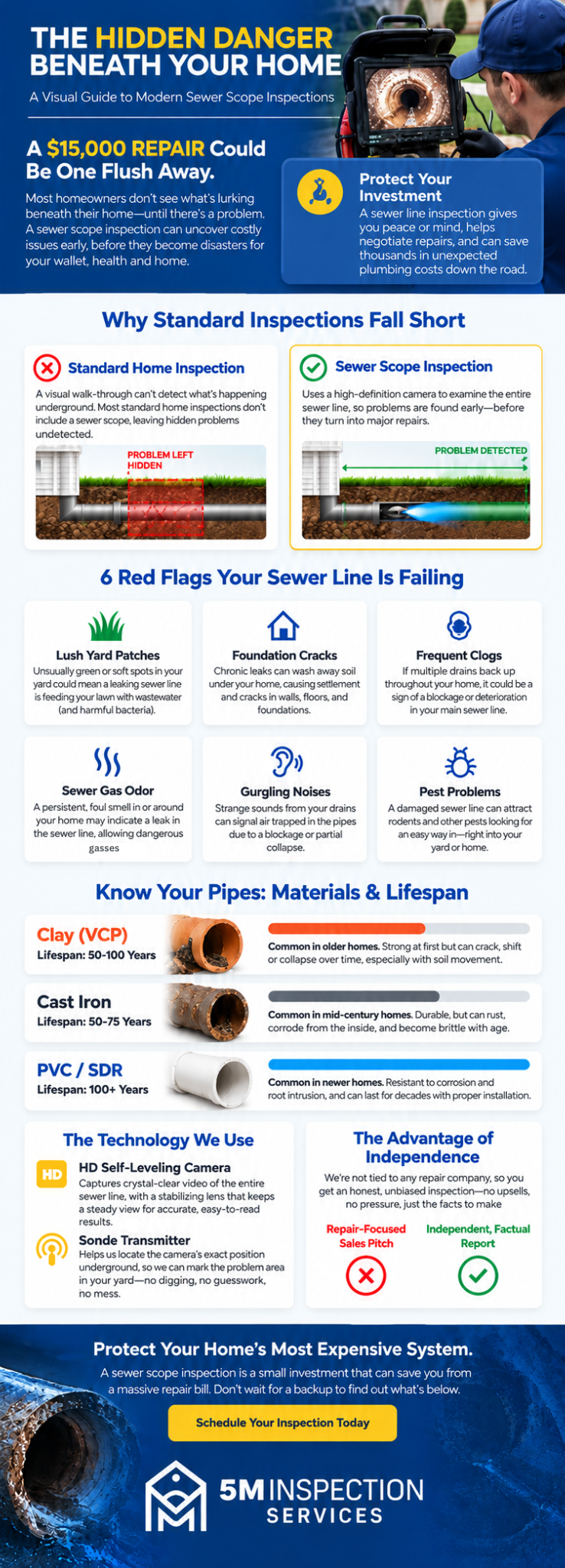
- Identify six critical warning signs, such as localized lush yard patches or foundation cracks, that indicate a failing main waste line.
- Discover what to expect during a professional sewer inspection, including the “Run-and-Watch” method used to verify proper flow and drainage.
- Recognize the importance of independent, unbiased reporting to protect yourself from the inherent conflict of interest in repair-focused sales pitches.
What is a Sewer Inspection? Protecting Your Home’s Hidden Infrastructure
A sewer inspection is a high-resolution video evaluation of your home’s lateral waste line. We use specialized fiber-optic technology to travel deep into the underground pipes that connect your house to the municipal tap. It’s a precise diagnostic tool that goes where the human eye cannot. Most homeowners assume their plumbing is healthy as long as the toilets flush. However, sewer failures are often invisible. They hide beneath the soil until a total backup floods your basement or crawlspace. A simple 30-minute scan acts as a safeguard against a five-figure excavation project later.
Sewer Scope vs. Standard Home Inspection
Standard home inspectors perform a vital service, but they have visual limits. They check for functional drainage by running faucets and flushing toilets. They can’t see the structural integrity of the pipes buried deep underground. The “Main Lateral” is the section of pipe running from your foundation to the municipal tap. This section is your legal responsibility; it is not maintained by the city. Modern 2026 standards require specialized Sewer Scope Technology to identify cracks, root intrusions, or offsets that a standard visual check will always miss. Without this specialized view, you’re essentially guessing about the health of your home’s most expensive infrastructure.
Why ‘Out of Sight’ Shouldn’t Mean ‘Out of Mind’
Real peace of mind comes from seeing the interior of your pipes with your own eyes. In Central Indiana, shifting soils and aging infrastructure make this even more critical. A compromised main line doesn’t just cause clogs. It impacts your home’s total value and future resale potential. Buyers are increasingly savvy and often demand proof of a healthy system before closing. Think of your sewer line as the most critical environmental exit point of your property. Keeping it clear is about more than plumbing; it’s about protecting your investment and your family’s health. Taking 30 minutes for a professional sewer inspection now ensures you aren’t surprised by a disaster tomorrow. We focus on delivering facts so you can make an informed decision for your family’s future.
How Sewer Scope Technology Works: A Real-Time Look Underground
Modern technology transforms a blind guess into a surgical assessment. We use high-resolution cameras attached to flexible, high-tensile cables to navigate your home’s waste line. These aren’t just simple “snakes” used for clearing clogs. They feature self-leveling heads that keep the video feed upright at all times. This ensures we never lose our orientation while navigating tight turns or vertical drops. Powerful LED arrays illuminate the pitch-black interior, revealing every hairline crack or structural flaw. This rigorous Sewer Inspection Process follows industry standards to ensure no defect goes unnoticed during our evaluation.
One of the most critical tools in our kit is the “Sonde” transmitter. This device sits behind the camera head and emits a specific radio frequency through the pipe walls. As we push the camera through the line, a technician on the surface uses a handheld receiver to track the signal. This allows us to pinpoint the exact location and depth of a break or blockage under your lawn. If you’re considering a Sewer Scope Inspection, this precision is what prevents your entire yard from being dug up for a localized repair. We find the problem so you can fix only what is necessary.
Identifying Underground Pipe Materials
The camera reveals the history of your home’s infrastructure. Clay pipes are common in older Indianapolis neighborhoods. They have an expected lifespan of 50 to 60 years and are highly susceptible to root intrusion at the joints. Cast iron pipes, typically lasting 50 to 75 years, suffer from internal scaling and “channeling,” where the bottom of the pipe eventually corrodes away. Modern PVC and SDR pipes can last 100 years or more. While they are incredibly durable, they still fail if improper soil compaction causes “bellies” or sags that trap debris and cause constant backups.
The Role of High-Resolution Video Data
5M Inspection Services prioritizes clarity and objective evidence. Our cameras capture micro-fissures and offset joints that lower-quality equipment misses. We record the entire session in real-time. This video evidence is your strongest leverage during home price negotiations. You won’t just receive a vague summary. You get a digital file you can share with contractors or keep for your permanent home records. Distance tracking software tells us exactly how many feet the camera has traveled. This maps the path of your line with absolute certainty from the foundation to the street. For a deeper understanding of how this technology works from start to finish, our complete sewer line camera inspection how-to guide walks through every step of the modern diagnostic process.
6 Red Flags: Identifying When Your Main Line Needs an Inspection
Your yard shouldn’t have secrets. If you notice a patch of grass that looks suspiciously healthier than the rest of your lawn, don’t celebrate yet. This lush green area often signals a nutrient-rich leak from a cracked pipe. The soil is essentially being fertilized by sewage. Similarly, foundation cracks or unexplained sinkholes suggest that a leaking pipe is eroding the soil beneath your home’s slab. This structural instability can lead to catastrophic damage if the underlying cause isn’t identified through a professional sewer inspection. A foundation inspection can help determine whether sewer leaks or poor drainage are contributing to the structural issues you’re observing. We believe in finding these issues before they find your wallet.
Listen to your plumbing for internal warnings. A distinct “gurgling” sound after a flush indicates air bubbles are being forced back through the system. This is a classic sign of a partial blockage or a venting issue. You should also consider the calendar. Any home built before 1980 likely uses clay or cast iron materials that are now brittle and prone to collapse. Finally, watch for pests. Broken lines act as subterranean highways for rodents and insects to enter your basement. If you see these signs, it is time to act.
Environmental Risks in Central Indiana
Central Indiana presents unique challenges for underground infrastructure. In communities like Carmel and Fishers, mature Silver Maples and Oaks are notorious for root intrusion. Their roots seek out the moisture inside pipe joints with surgical precision. Indiana’s heavy clay soil also shifts significantly during the seasons. This movement causes “bellies” or sags where water and debris pool, eventually leading to a total backup. The intense freeze-thaw cycles of our winters further stress older, brittle joints, causing them to separate or snap. These local factors make a regular sewer inspection a necessity for long-term property health.
External Signs vs. Internal Symptoms
Many homeowners fall into the trap of the “silent failure.” A pipe can be 90% blocked or structurally compromised without showing a single symptom inside the house. Waiting for a backup means waiting for a disaster. When you compare the CCTV sewer inspection cost to the price of an emergency basement cleanup and excavation, the preventive choice is clear. Look for white or black plastic “cleanout” caps in your yard. These access points are often installed after previous repairs, which can be a major clue about the line’s history. For a detailed look at what these standards should look like, you can review the City of Portland’s sewer inspection guide, which sets a high bar for residential safety protocols.
Navigating the Sewer Inspection Process: What to Expect on Site
The day of your sewer inspection begins with a search for the most effective entry point. Most often, we look for a main cleanout. This is usually a capped pipe located in the basement or crawlspace, often near the water heater or main stack. If an indoor cleanout isn’t accessible, we may use a roof vent stack or an outdoor cleanout in the yard. This process is meticulous and typically takes between 30 and 60 minutes to complete. We don’t rush the assessment because your home’s financial security depends on our thoroughness. Our goal is to provide a comprehensive look at the system’s interior without causing any disruption to your day.
During the scan, we utilize the “Run-and-Watch” method. By flushing water through the system while the camera is active, we can observe the flow in real-time. This helps us identify “bellies,” which are sags in the pipe where water pools and traps debris. We also look for “offsets,” where two sections of pipe have shifted and no longer line up perfectly. These gaps are prime entry points for roots and soil, which eventually lead to a total structural failure. Identifying these issues early is the only way to prevent a minor shift from becoming a major excavation project. To fully prepare for what a professional technician looks for during this process, review our detailed sewer line camera inspection homeowner’s guide before your appointment.
Preparing Your Home for the Inspector
To ensure a smooth visit, please clear a path to your main cleanout. This access point is often tucked away in utility rooms behind storage boxes. We also ask that you avoid running heavy appliances like dishwashers or washing machines during the test. Excessive water flow can obscure the camera’s view of the pipe’s interior walls, making it harder to spot hairline cracks. If your home lacks a standard cleanout, don’t worry. We can often find alternative routes through roof vents to ensure your sewer inspection is completed with total accuracy.
Interpreting the Video Report
Once the scan is finished, you’ll receive a detailed video report that documents every foot of the line. It’s important to understand the terminology we use. You might see notes on “scale,” which is mineral buildup common in cast iron, or “root intrusion,” where fine hairs enter through joints. This report is your most powerful tool for negotiation. You can use it to gather accurate quotes from multiple contractors, ensuring you aren’t overcharged for repairs you don’t actually need. When you’re ready to hire a pro, use this sewer inspection camera near me checklist to ensure you’re working with an expert who puts your interests first.
Don’t leave your home’s most expensive system to chance. Book your Sewer Scope Inspection now to get the objective facts you need for total peace of mind.
Unbiased Reporting: The Advantage of Independent Sewer Inspections
Many plumbing companies offer a “free” or heavily discounted sewer inspection. While this sounds like a bargain, it often comes with a significant catch. This is known as the “Repair Company Conflict.” When the person looking through the camera is the same person who gets paid to dig up your yard, their objectivity is naturally compromised. They have a financial incentive to find problems that require expensive solutions. At 5M Inspection Services, we believe your protection should never be used as a sales lead. We provide facts, not fixes.
Our independent model ensures that our data is 100% objective. We don’t sell repair services, so we have no reason to exaggerate a minor hairline crack or a small root hair. Instead, we provide a rigorous technical assessment that acts as your shield during a property transaction. We treat every potential home like we’re buying it for our own families. This protective, community-oriented approach is a point of professional integrity for us. You receive a clear, unbiased video report that serves as the ultimate leverage during the “Inspection Response” phase of your home purchase. It turns a stressful negotiation into a conversation driven by hard evidence.
Why 5M Inspection Services Stays Independent
We are committed to residential property assessments only. By refusing to offer repair work, we maintain the necessary distance of a certified professional. Our team leverages 2026 technology to provide the most accurate imaging available in Central Indiana. This includes high-definition cameras that reveal structural flaws with surgical precision. We position ourselves as a collaborative partner. We are watchful, detail-oriented, and deeply invested in your long-term security. You aren’t just getting a service; you’re getting a protective ally who respects the high stakes of your investment. Our localized care means we are accountable to you, not a corporate repair quota.
Moving from Inspection to Action
The final report is more than just a video; it’s a roadmap for your next steps. Sometimes, the data reveals a “deal-breaker” like a total pipe collapse that justifies walking away from a property. In other cases, it provides the evidence you need to request a significant repair credit from the seller before closing. For instance, see our sewer scope inspection in Westfield, IN for a real-world example of how an independent report saved a buyer from a $15,000 disaster. Integrating this sewer report into your total home evaluation ensures that no hidden infrastructure issue can derail your financial future. We deliver the certainty you need to move forward with confidence.
Secure Your Home’s Future with Total Certainty
Protecting your investment starts with looking beneath the surface. You now know how to spot the red flags of a failing main line and why high-definition video is your best tool for negotiation. Most importantly, you understand the vital difference between a repair pitch and an objective assessment. A professional sewer inspection isn’t just a technical requirement; it’s your financial safeguard against the unexpected. You deserve to know exactly what’s happening underground before you commit to a property.
5M Inspection Services is a family-owned and operated business led by owners Chris and Morgan Markham. Since 2019, we’ve served Indianapolis, Westfield, Carmel, and Fishers with a commitment to professional integrity and reliable home inspections. Our high-resolution video reports are delivered same-day, giving you the facts you need to move forward without delay. We treat your property with the same meticulous care we’d give our own. Don’t leave your home’s most expensive system to chance.
Schedule Your Unbiased Sewer Scope Inspection with 5M Today. You don’t have to face the home buying process alone. Let’s make sure your new backyard stays beautiful and your basement stays dry.
Common Questions About Sewer Inspections
Is a sewer scope inspection really necessary for a new construction home?
Yes, even brand-new homes can have compromised main lines. Construction debris like mortar, bricks, or drywall mud often gets washed down drains and hardens in the pipe during the build. Additionally, heavy equipment driving over the yard can crush or shift pipes before the soil has settled. Checking the line now ensures you aren’t inheriting a builder’s mistake that could lead to a backup months after you move in.
How much does a typical sewer inspection cost in Indianapolis?
Pricing for a professional sewer inspection depends on the accessibility of the cleanout and the total length of the line. Most inspectors offer a flat fee for residential properties, though costs can increase if the technician must access the line through a roof vent instead of a basement cleanout. We recommend checking with local providers for current rates in the Central Indiana area to ensure you’re getting a fair, competitive quote.
What happens if the camera finds roots in the sewer line?
Finding roots indicates that the pipe has a breach, usually at a joint or a hairline crack. Roots seek out the moisture and nutrients inside the line; once they enter, they will continue to grow and cause chronic blockages. While small roots can sometimes be cleared with specialized equipment, their presence suggests that the pipe’s structural integrity is failing. This finding is a major point of negotiation during the home buying process.
Can a sewer inspection detect leaks under the concrete slab of the house?
A video scan can identify cracks, holes, or separated joints where water is likely escaping, but it is not a pressurized leak test. It reveals the internal condition of the pipe as it passes under your foundation. If the camera shows a major break beneath the slab, you’ll have the objective evidence needed to investigate further before the leaking water erodes the soil and causes foundation instability. Pairing these findings with a professional foundation inspection gives you a complete picture of your home’s structural health before you commit to a purchase.
How long does the sewer inspection process take from start to finish?
A thorough evaluation typically takes between 30 and 60 minutes on site. This timeframe includes locating the access point, performing the “Run-and-Watch” test, and recording the high-definition footage. We prioritize accuracy over speed to ensure every foot of the line is documented for your final report. Our goal is to provide a comprehensive assessment without disrupting your schedule or the property transaction timeline.
Will the inspector need to dig up my yard to perform the test?
No, this is a completely non-invasive procedure. We use existing access points like the basement cleanout, an outdoor cleanout cap, or a roof vent stack to enter the system. The high-tensile camera cable is designed to navigate the interior of the pipe without disturbing your landscaping or foundation. It is the most efficient and cleanest way to see underground without ever picking up a shovel.
What is a ‘belly’ in a sewer line and is it a deal-breaker?
A “belly” is a low spot or sag in the pipe where water and waste pool instead of flowing to the municipal tap. These are often caused by shifting Indiana clay soil or poor initial installation. While a small belly might only require occasional maintenance, a deep or long sag can lead to constant clogs and structural failure. It isn’t always a deal-breaker, but it certainly requires a professional evaluation of the long-term repair costs.
Do I need to be present during the sewer camera inspection?
You aren’t required to be present, but we highly encourage it. Seeing the real-time video feed allows you to ask questions and understand the severity of any findings as they happen. If your schedule doesn’t allow you to attend, our digital reports provide clear, high-definition evidence and professional analysis that you can review at your convenience. We make sure you have the facts regardless of your location.