
What if that hairline crack in your basement isn’t just natural settling, but the first warning sign of a repair bill that could exceed fifteen thousand dollars? It’s a question that keeps many Indiana homeowners awake at night, especially when you’re unsure if you need a professional house foundation inspection or just a bucket of sealant. You deserve to know if your family’s home is truly safe without feeling like you’re being pressured into an expensive, unnecessary repair contract.
We understand the anxiety that comes with structural uncertainty. This guide explains exactly what happens during a rigorous evaluation so you can protect your investment with technical facts rather than fear. You’ll learn how to spot red flags specific to Indiana’s expansive clay soils, such as bowing walls or horizontal cracks that signal intense hydrostatic pressure against your home’s footprint.
We’ll walk you through the diagnostic process, the importance of local building code compliance, and why an unbiased report is your best defense against predatory sales tactics. By the end, you’ll have a clear path toward structural certainty and the peace of mind you need to keep your family safe.
Key Takeaways
- Understand the technical difference between a standard home check and a specialized house foundation inspection to ensure every load-bearing component is verified.
- Learn the “Nickel Test” and other specific diagnostic markers to distinguish between harmless cosmetic settling and dangerous structural failure.
- Discover how a pre-listing evaluation protects your equity and prevents “deal-killer” surprises during the home-selling process.
- Identify why hiring an independent inspector who doesn’t sell repair services is the only way to receive an objective, honest report.
- Master the impact of Indiana’s expansive clay soil on your foundation and how to mitigate moisture-related risks before they become five-figure problems.
What is a House Foundation Inspection and Why is it Critical?
Your home’s foundation is its literal anchor. It’s the most expensive “invisible” component of your property, often ignored until a door won’t close or a crack appears in the drywall. A professional house foundation inspection is a diagnostic deep-dive into the structural skeleton of your home. It goes far beyond a casual glance at the basement walls. This specialized evaluation focuses on the structural footings, load-bearing walls, and intricate support systems that keep your roof level and your family safe. We look for the subtle shifts that indicate a home is moving beyond its natural tolerances.
Objectivity is your greatest asset during this process. Because foundations are buried beneath the earth, problems are easy to hide or misinterpret. A certified professional provides a rigorous, technical assessment that separates minor cosmetic issues from structural failures. This clarity is vital because foundation repairs are notoriously costly. Catching a drainage issue early can save you tens of thousands of dollars in future piering or wall anchors. We act as your protective, technical partner, ensuring you have the facts before you sign a contract or close on a house.
Foundation Inspection vs. Standard Home Inspection
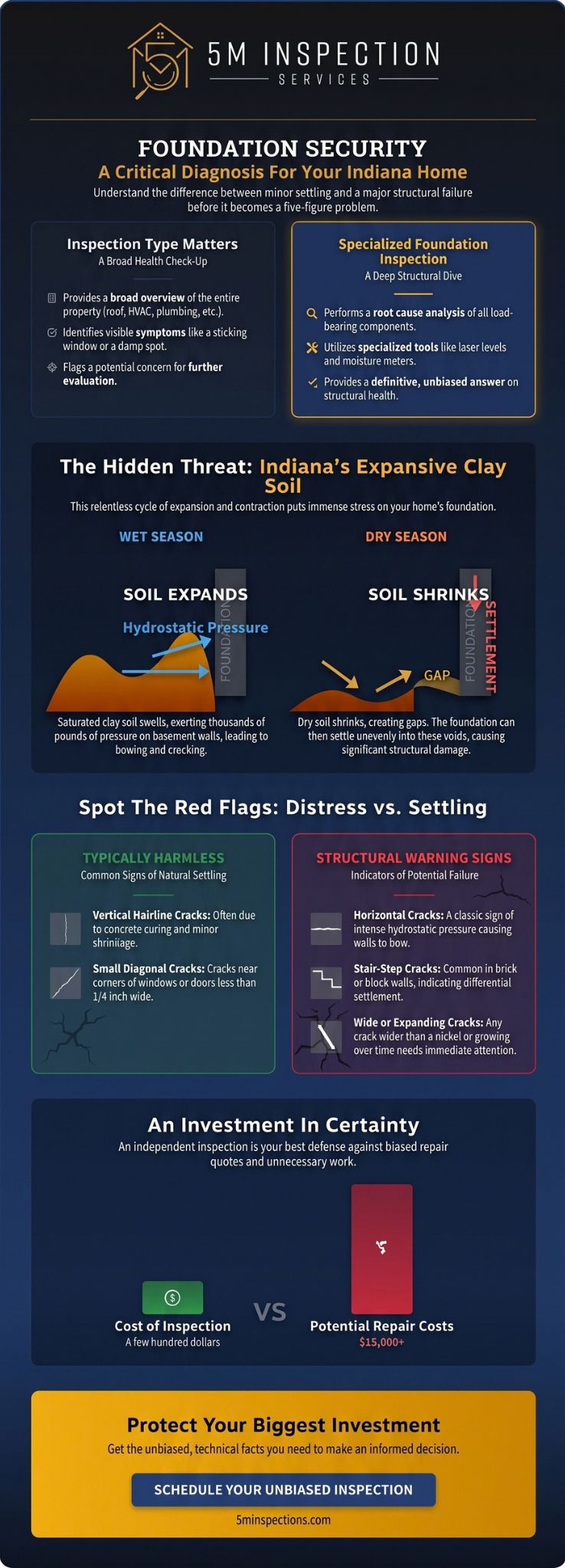
It’s a common misconception that a standard home inspection is the same as a structural assessment. A general inspector provides a broad overview of a property’s health, from the roof to the HVAC system. They identify symptoms, such as a sticking window or a damp corner in the crawl space. In contrast, a targeted structural assessment seeks the root cause of those symptoms. We utilize specialized tools like high-precision laser levels to track floor elevations and moisture meters to detect hidden intrusion. If a general inspector flags a concern, our job is to provide the definitive, unbiased answer on whether that concern is a deal-breaker.
The Role of Central Indiana Soil in Foundation Health
Central Indiana presents a unique set of geological challenges that many national guides overlook. Our region is dominated by high-clay soil, which behaves like a giant sponge. During wet seasons, this soil expands significantly, exerting immense hydrostatic pressure against your basement walls. When the weather turns dry, the soil shrinks, leaving gaps that allow the foundation to settle or shift. This relentless cycle is the primary reason Indiana homes are prone to bowing walls and stair-step cracking.
The local frost line also plays a critical role. If footings aren’t poured deep enough, the ground’s freeze-thaw cycle can heave the entire structure upward, causing sudden and dramatic damage. We understand these regional nuances. We know that a crack in a Carmel basement often tells a different story than one in a Greenwood crawl space because of the way our local earth moves. Our goal is to give you certainty in an environment that is constantly shifting beneath your feet.
The Inspection Process: What Foundation Inspectors Actually Evaluate
A professional house foundation inspection is a systematic investigation. It requires a keen eye for detail and a structured walkthrough that begins long before we step inside your home. We approach every property as a technical puzzle, looking for the physical evidence of movement and the environmental factors that cause it. Our process moves from the exterior perimeter to the deepest interior points, ensuring every load-bearing component receives a thorough review. We don’t just look at the concrete; we examine the entire structural ecosystem including sill plates, floor joists, and support piers.
Documentation is the final, critical step of this process. Every observation is recorded in a detailed report that provides a clear snapshot of your home’s structural health. This isn’t just a list of problems. It’s an objective record that helps you make informed decisions about your property. If you’re currently assessing a potential home, scheduling a professional evaluation can provide the clarity you need before committing to a purchase.
Exterior Evaluation: Grading, Drainage, and Perimeter
The exterior check is where we identify the “why” behind foundation stress. We look for negative grading, which occurs when the soil slopes toward your foundation walls instead of away from them. This allows water to pool against the structure, saturating the clay soil and increasing pressure. We also verify gutter downspout terminations. If they discharge within three feet of the house, they’re likely contributing to soil instability. We also check for spalling, which is the crumbling or flaking of concrete that suggests the footings are being compromised by moisture or age.
Interior Evaluation: Basements, Crawlspaces, and Slabs
The interior walkthrough of a house foundation inspection varies significantly depending on your home’s construction type. We look for specific markers of distress in each environment:
- Basements: We distinguish between vertical cracks, which often indicate natural settling, and horizontal cracks, which suggest the walls are bowing under external pressure.
- Crawlspaces: This is a high-stakes area where we look for wood rot in the sill plates, sagging floor joists, or standing water that can weaken the support piers.
- Slab-on-Grade: Since the foundation is the floor, we check for heaving, significant cracks under the flooring, or doors that have suddenly become misaligned.
By identifying these secondary indicators of movement, such as cracks in the mortar or gaps between the wall and the ceiling, we can build a complete picture of your home’s integrity. This meticulous approach ensures no hidden defect goes unnoticed.
Identifying Red Flags: Structural Distress vs. Natural Settling
Every house in Central Indiana moves. It’s an inevitable result of our seasonal shifts and the way our local earth breathes. However, not every movement is a structural threat. Distinguishing between natural settling and a genuine structural failure is the primary goal of a professional house foundation inspection. We often use the “Nickel Test” as a quick diagnostic tool for homeowners. If a crack is wide enough to fit a nickel, it has moved beyond the hairline stage and requires a technical evaluation. This simple check helps you decide when to call for an expert opinion and when to breathe easy.
Structural distress isn’t just about the presence of a crack; it’s about the story that crack tells. We look at the width, the length, and the displacement of the material. When a foundation is under duress, it leaves a trail of evidence that an objective inspector can decode. Our job is to provide you with a definitive answer so you don’t spend thousands on repairs that aren’t actually necessary. We act as your protective partner, ensuring your family’s safety is backed by rigorous technical facts rather than guesswork.
Understanding Foundation Cracks: When to Worry
The direction of a crack signals the specific force acting upon your home. Vertical cracks often appear in newer homes as concrete cures and shrinks. They’re typically minor and result from the house finding its seat in the soil. While they should be sealed to prevent moisture or radon intrusion, they rarely signal a collapse. Horizontal cracks are a much more severe warning. They indicate that the saturated clay soil outside is pushing against the wall with enough hydrostatic pressure to cause it to bow inward. If left unaddressed, these walls can fail. Diagonal cracks or stair-step patterns in brick or block masonry are equally concerning. They suggest differential settlement, meaning one corner of the structure is sinking faster than the rest, which puts immense stress on the entire frame.
Secondary Signs of Foundation Movement Inside the Home
Movement isn’t always visible on the foundation walls themselves. Sometimes the most telling evidence is in your living room or kitchen. Windows that suddenly stick or doors that refuse to latch are classic indicators that the house frame is no longer square. If you notice floors that feel bouncy or slope toward a specific corner, it often points to a failure in the support piers or joists within your crawlspace. Drywall cracks radiating from the corners of door frames or windows are another sign that the underlying structure is shifting. We look for these secondary markers during a house foundation inspection to build a complete and honest picture of your home’s integrity.
When to Schedule an Inspection and How to Prepare
Timing is the most critical factor in structural maintenance. Waiting until a basement wall visibly bows is a recipe for financial stress. A proactive house foundation inspection identifies minor shifts before they escalate into five-figure repair bills. In 2026, the industry recommendation has shifted toward biennial checks for Central Indiana properties. This frequency allows us to monitor how your home reacts to the specific soil expansion cycles common to our region. Regular monitoring ensures your home remains a safe sanctuary rather than a source of anxiety.
Preparation is equally important. To provide the most rigorous evaluation, we need to see the “bones” of the structure. If you’re ready to protect your investment, schedule your comprehensive foundation evaluation today to ensure your property stands on solid ground.
Critical Timing for Buyers, Sellers, and Homeowners
For buyers, a structural evaluation is the ultimate due diligence. Even in competitive markets where timelines are tight, waiving this check is a massive risk. You’re essentially signing a blank check for future repairs. Sellers benefit equally from a house foundation inspection before listing. Identifying a minor settlement issue early allows you to gather competitive repair quotes on your own timeline. This prevents “deal-killer” surprises during the closing process and keeps you in control of the transaction.
Current homeowners should pay close attention to weather patterns. A dry, hot summer followed by a wet spring is the ultimate danger zone for Indiana foundations. As the clay soil shrinks and then rapidly expands, it puts maximum stress on your footings. If you notice new drywall cracks after a heavy rain following a drought, it’s time to call a professional. We act as your technical partner to determine if those cracks are cosmetic or a sign of deeper distress.
Preparing Your Property for a Thorough Evaluation
We take our role as your protective partner seriously, but we need your help to be thorough. A meticulous inspection requires physical access to areas that are often forgotten. Please clear storage boxes, laundry, or debris away from basement walls and crawlspace entries. If we can’t see the wall, we can’t verify its integrity. Our goal is to provide an unbiased report, and that requires a clear view of every structural component.
- Exterior Access: Ensure the entire perimeter is accessible. Move firewood piles or heavy landscaping equipment away from the foundation line.
- Crawlspace Entry: Clear any obstructions around the access hatch. We need to enter these tight spaces to check for wood rot, sagging beams, or standing water.
- Documentation: Gather any previous repair history or permits. Knowing what work was done in the past helps us understand the current state of the structure.
By providing clear access, you ensure our technical assessment is as accurate and comprehensive as possible. This transparency is the foundation of a reliable report that protects your family and your equity.
Choosing an Unbiased Foundation Inspector in Central Indiana
Choosing the right professional for your house foundation inspection is just as critical as the evaluation itself. Many homeowners are lured by “free” assessments offered by foundation repair companies. It’s vital to understand that these are often high-pressure sales pitches in disguise. Because those companies profit from the repairs they recommend, their objectivity is naturally compromised. You deserve a partner who is invested in your safety, not your repair budget.
We provide the technical clarity you need without the conflict of interest. As a family-owned entity rooted in Central Indiana, we prioritize your peace of mind over a sales quota. We don’t sell piers, anchors, or drainage systems. We sell the facts. This specialized focus ensures that every house foundation inspection we perform is a rigorous, honest diagnostic of your home’s health. We act as your protective partner, standing between you and unnecessary five-figure repair bills.
Why an Independent Inspection Saves You Thousands
An independent report is your best defense against commission-based sales tactics. Repair contractors often push for invasive solutions like hydraulic piers or carbon fiber wall anchors at the first sign of a crack. Our evaluations distinguish between cosmetic settling and genuine structural failure. We provide a prioritized list that separates simple maintenance, such as improving exterior grading, from urgent structural repairs. This clarity saves you money and prevents unnecessary construction on your property. If you’re in the middle of a real estate transaction, an unbiased report from a certified professional serves as a powerful negotiation tool. It provides the technical leverage you need to ensure the seller addresses actual issues before you close.
The 5M Inspection Services Commitment to Structural Safety
Our approach is a calculated blend of professional authority and familial warmth. We understand that your home is more than just a building; it’s where your family grows. This perspective drives our meticulous oversight. We take the responsibility of property safety seriously, delivering reports that are easy to navigate yet technically exhaustive. Our team has a deep understanding of the specific clay soils and geological challenges unique to Indianapolis, Westfield, and Carmel. We aren’t a national franchise; we’re your neighbors, and our ownership model ensures a level of personal accountability you won’t find with larger entities.
We remain highly responsive to the urgent nature of the Indiana real estate market. Whether you’re a first-time buyer or a long-term homeowner, we provide the certainty you need to move forward with confidence. Protect your investment with an expert foundation inspector in Westfield & Indianapolis who puts your family’s security first.
Secure Your Home’s Future with Structural Certainty
Your home is your most significant investment. Protecting it requires more than just hope; it requires technical evidence. By choosing an independent house foundation inspection, you’ve taken the first step toward separating expensive sales pitches from genuine structural needs. You now understand that Indiana’s clay soil and frost lines create unique pressures that demand localized expertise. Catching these shifts early is the only way to avoid the five-figure repair bills that haunt so many homeowners.
We are here to be your protective partner in this journey. Since 2019, our family-owned and operated team has provided meticulous oversight for neighbors across Central Indiana. We’ve inspected over 1,000 homes with 5-star reliability, ensuring every client receives a report they can trust. We don’t sell repairs, so our only priority is your family’s safety and your property’s integrity. Our certified expertise in Central Indiana residential structures provides the definitive answers you need to move forward with confidence.
Take the guesswork out of your home’s health. Schedule Your Unbiased Foundation Inspection Today and gain the clarity you deserve. We look forward to helping you protect what matters most.
Frequently Asked Questions
How much does a house foundation inspection cost in Central Indiana?
The cost of a professional evaluation depends on the size of your home and the complexity of its construction. Larger properties with expansive crawlspaces or multiple basement levels require more time and technical equipment to assess thoroughly. We focus on providing a rigorous, unbiased report that reflects the specialized expertise needed to verify your home’s structural health.
How long does a professional foundation inspection typically take?
A comprehensive walkthrough usually takes between one and two hours to complete. This timeframe allows us to perform a meticulous investigation of the exterior perimeter and every accessible interior support. We don’t rush the process because identifying subtle indicators of movement requires a patient, detail oriented approach to ensure nothing is missed.
Can I stay in my home if the foundation inspection reveals structural issues?
Most structural concerns identified during a house foundation inspection don’t require you to move out immediately. Issues like bowing walls or settling foundations typically progress over several months or years. If we discover a rare situation that poses an immediate safety risk to your family, we’ll prioritize notifying you so you can take instant protective action.
Is a home inspector qualified to perform a foundation inspection?
Yes, a certified home inspector with specific structural training is an excellent choice for a diagnostic health check. We specialize in identifying the root causes of distress and providing an objective overview of the entire structure. If the damage is so severe that it requires a stamped repair plan for building permits, we’ll guide you on how to proceed with the next technical steps.
What is the difference between a foundation engineer and a foundation inspector?
A foundation inspector acts as an unbiased diagnostic partner who identifies whether a problem exists. A structural engineer is typically brought in after a major issue is confirmed to design specific, load bearing repair solutions. Starting with an independent inspector is a protective move that prevents you from paying for expensive engineering designs if the issues are actually minor or cosmetic.
Will a foundation inspection report help me negotiate a lower house price?
A professional report is a vital negotiation tool during a property transaction. By presenting a technical document that outlines verified structural red flags, you move the conversation from speculation to documented facts. This evidence allows you to request specific repair credits or price adjustments, ensuring you don’t inherit a five figure repair bill after closing.
What are the most common foundation problems in Indianapolis homes?
In addition to the soil expansion issues common in our region, we frequently see water related damage in older Indianapolis neighborhoods. This often manifests as failing mortar joints in historic stone foundations or wood rot in floor joists caused by inadequate crawlspace ventilation. Many local homes also experience shifting due to the historical fluctuations of the regional water table.
Does homeowners insurance cover the cost of a foundation inspection or repairs?
Standard homeowners insurance policies rarely cover repairs caused by natural settling or earth movement. Coverage is typically limited to “sudden and accidental” events, such as a major plumbing failure that washes out a footing. It’s a good idea to check your specific policy riders for earth movement or water backup coverage to understand your level of protection.