Finding a water stain on your ceiling or wall can be unsettling. You may wonder whether water is still getting in, whether the problem was fixed years ago, or whether you are simply seeing condensation.
The good news is that the appearance of the stain is only one clue. During a water damage inspection, an inspector can look at moisture levels, the condition of nearby materials, the stain’s location, and whether it changes after rain, plumbing use, or humid weather.
For Indianapolis homeowners, buyers, and sellers, understanding what caused the stain can help you decide what to do next without jumping straight to the worst-case scenario.
Active Leak, Old Damage, or Condensation: How Can You Tell?
Water stains can look similar even when they have very different causes. A few simple clues can help point you in the right direction.
| What to Check | Active Leak | Old Damage | Condensation |
|---|---|---|---|
| Moisture | May be wetter than the surrounding area | Usually similar to nearby dry material | May only be damp on the surface |
| Material | Can feel damp, soft, cool, or swollen | Usually dry and firm | Often feels damp on the surface |
| Stain pattern | May spread or change | Usually stays the same | May appear as scattered or uneven patches |
| Common location | Near roofs, pipes, fixtures, windows, or appliances | Anywhere an older leak occurred | Windows, pipes, ducts, exterior walls |
| Timing | May worsen after rain or plumbing use | Usually does not change | Often changes with humidity or temperature |
One important thing to remember is that a dry stain does not always mean the problem is gone. Some leaks only show up during heavy rain, snowmelt, or when a particular plumbing fixture is used.
That is why inspectors look at the whole picture instead of relying on one moisture reading.
What Are the Signs of an Active Water Leak?
An active leak means water may still be entering or affecting part of your home.
You might notice:
- A stain that is becoming larger or darker
- Damp or softened drywall
- Peeling or bubbling paint
- Swollen wood or trim
- Moisture readings that are higher than nearby unaffected materials
- Water appearing after rain or plumbing use
Where the stain appears can also provide useful clues.
For example, a ceiling stain may lead an inspector to look at the attic, roofing, plumbing, or HVAC components above it. A stain in a basement may point to plumbing, drainage, foundation moisture, or another nearby source.
The goal is not simply to confirm that a stain exists. It is to understand what may be causing it.
How Can You Check a Water Stain Before an Inspection?
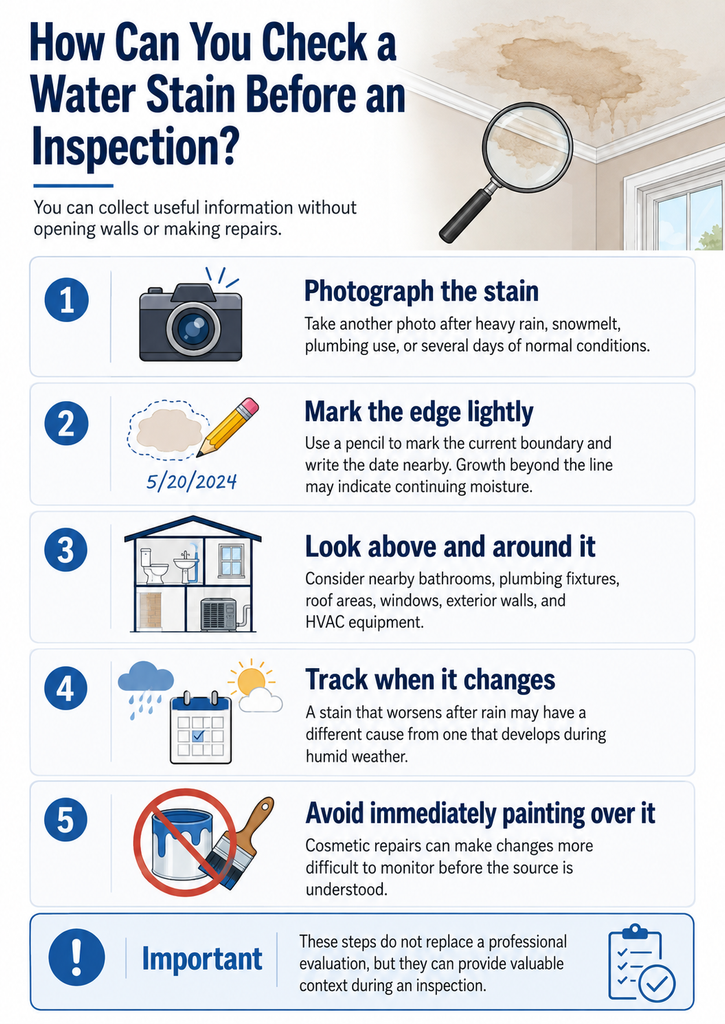
You can gather useful information before an inspector arrives without opening walls or making repairs.
- Take a photo. Photograph the stain now and again after heavy rain, snowmelt, plumbing use, or a few days of normal weather.
- Mark the edge lightly. Use a pencil to outline the current edge and write the date nearby. If the stain grows beyond that line, moisture may still be entering the area.
- Look above and around it. Think about what is nearby. Is there a bathroom upstairs? A roof section above it? A window, pipe, exterior wall, or HVAC system close by?
- Pay attention to timing. A stain that gets worse after rain may have a different cause from one that appears during humid summer weather.
- Wait before painting over it. Covering the stain too soon can make it harder to see whether it is changing.
These steps do not replace a professional inspection, but they can give your inspector helpful information about when and how the stain appears.
How Is Old Water Damage Identified?
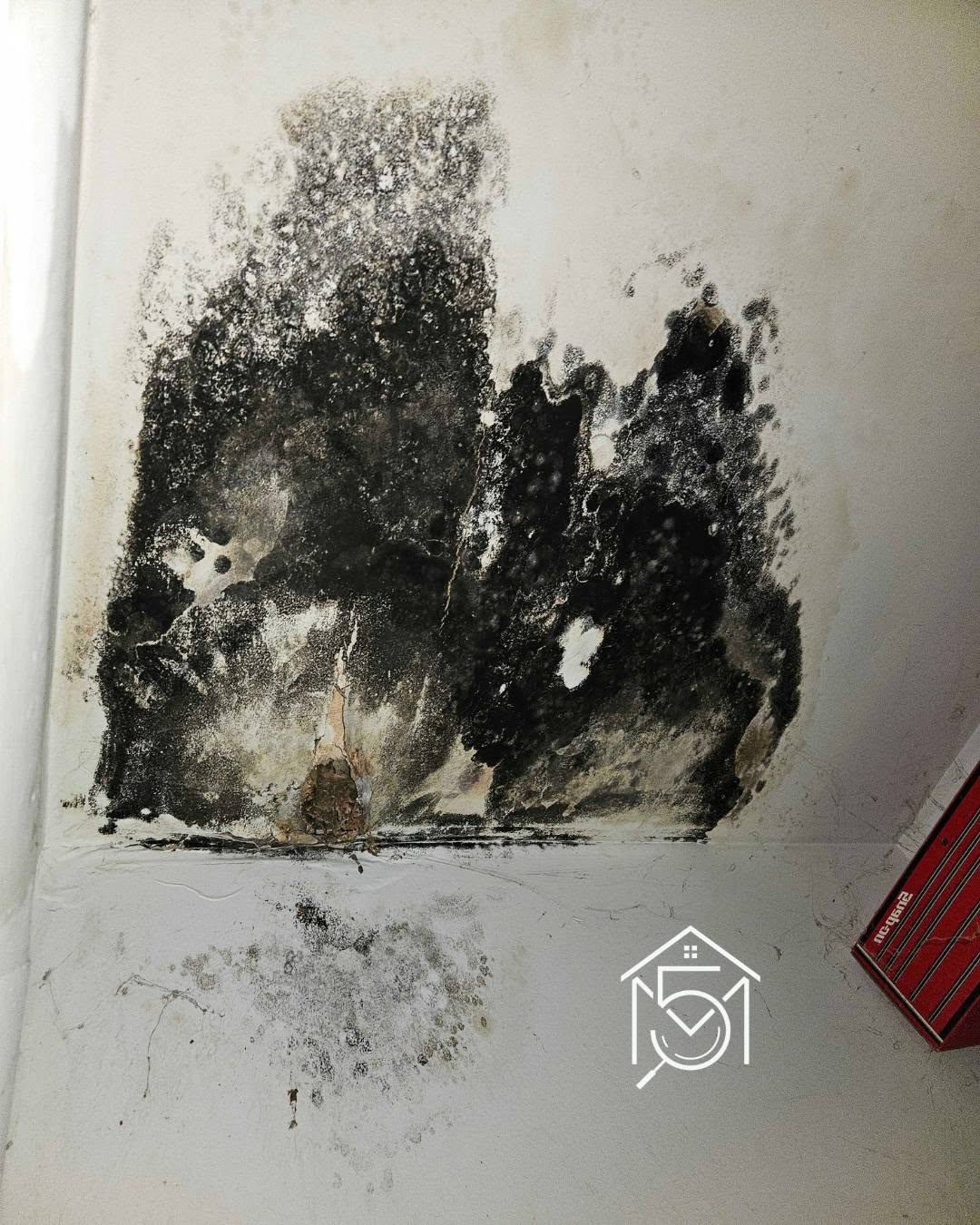
Old water damage often looks like a yellow, brown, or discolored mark that no longer changes in size or shape.
The surrounding drywall or wood may feel dry and firm, and moisture readings may be similar to other dry areas nearby.
Still, an old-looking stain does not automatically mean the original problem was properly repaired.
A home inspector may look for signs of previous roof repairs, plumbing work, damaged materials, or other conditions that could allow the moisture to return.
If you are buying or selling a home, repair records can be very helpful. Roofing invoices, plumbing receipts, previous inspection reports, and other documentation can help explain what happened and what was done to fix it.
Can Condensation Look Like a Water Leak?
Yes. Condensation can leave stains that look a lot like a roof or plumbing leak.
Condensation forms when warm, humid air comes into contact with a cooler surface. You may see it around:
- Windows
- Cold water pipes
- HVAC ducts
- Bathrooms
- Basements
- Exterior walls
- Areas with limited insulation
Instead of coming from one obvious source, condensation often appears because of temperature and humidity changes.
This can be especially confusing because the stain may come and go depending on the weather or how your heating and cooling system is running.
Even though condensation is not the same as a leaking pipe or roof, repeated moisture can still damage drywall, paint, wood, and other materials over time.
The solution may involve improving ventilation, insulation, air sealing, or humidity control rather than repairing a leak.
What Tools Are Used During a Water Damage Inspection?
Home inspectors do more than simply look at the color or shape of a stain. They may use several tools to get a better idea of what is happening.
Moisture Meters
A moisture meter helps compare the stained area with nearby materials.
If the affected area shows noticeably higher moisture, that may suggest the material is still wet. If the reading is similar to the surrounding area, the stain may be older.
However, moisture readings are only part of the investigation. A leak that happens only occasionally may be dry on the day of the inspection.
Infrared Thermal Imaging
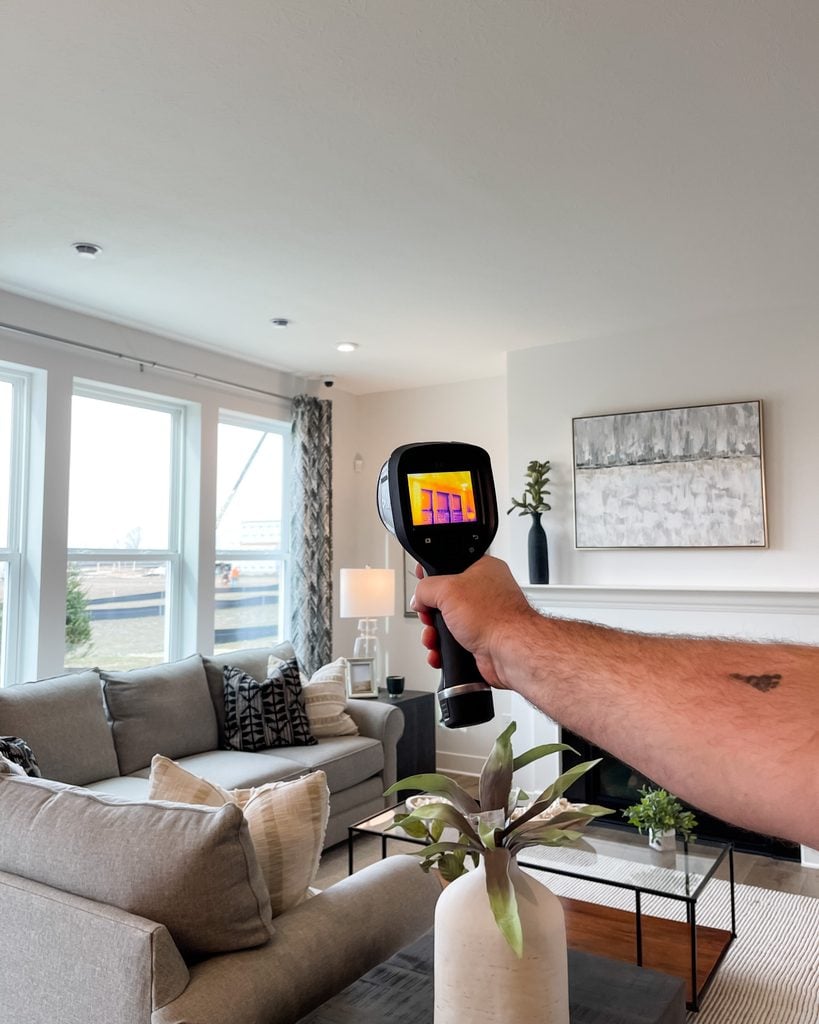
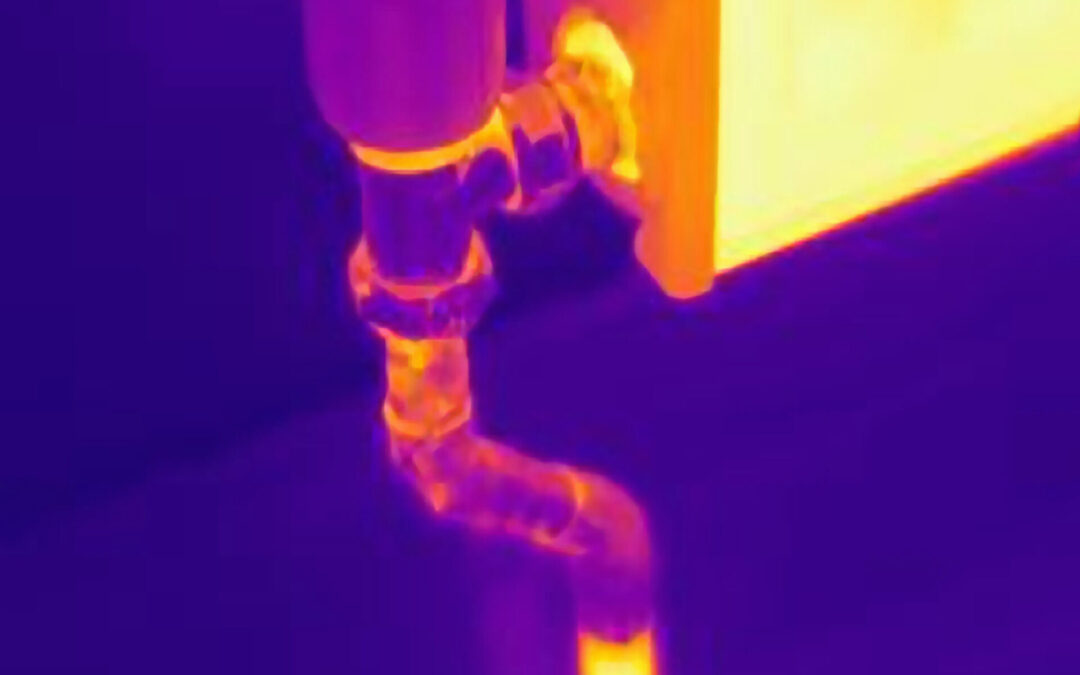
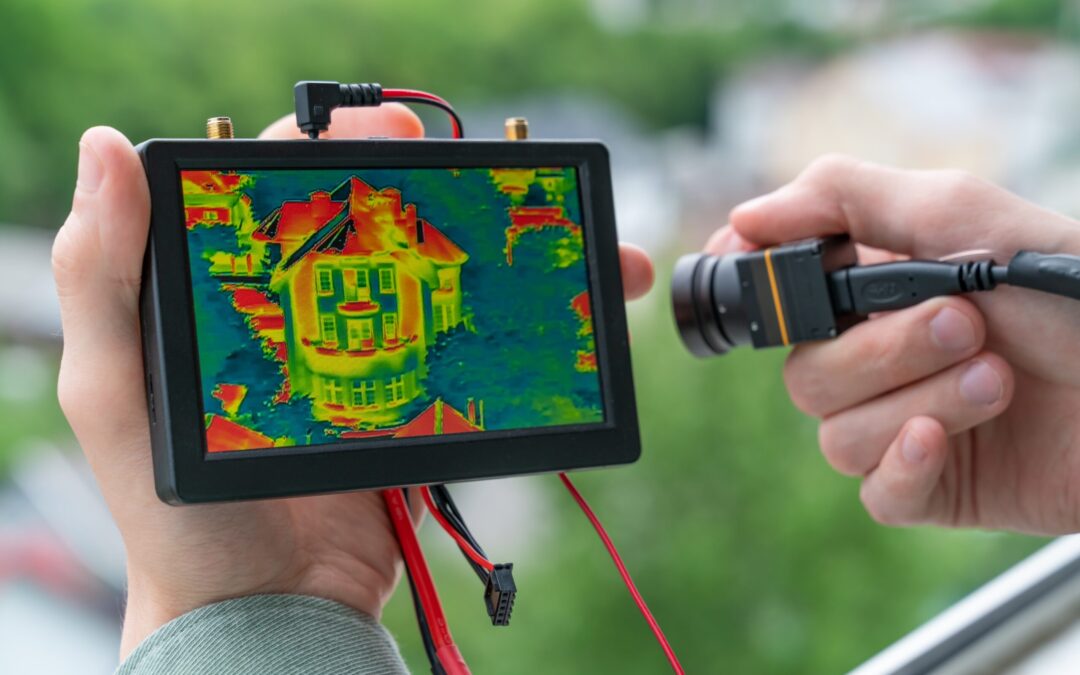
Thermal imaging helps inspectors spot temperature differences across walls, ceilings, and floors.
These temperature patterns can point to areas that deserve a closer look.
Thermal imaging does not actually see water through a wall. Temperature differences can also be caused by insulation, air leaks, HVAC ducts, sunlight, or different building materials.
That is why an inspector may use thermal imaging together with a moisture meter and a visual inspection instead of treating the thermal image as the final answer.
Visual Inspection
Sometimes the most useful clues are nearby.
Depending on where the stain appears, an inspector may look at accessible roofing areas, the attic, plumbing fixtures, windows, foundation walls, drainage, HVAC components, or other parts of the home.
Looking at the surrounding conditions helps narrow down where the moisture may be coming from.
What Should You Do If You Find a Water Stain?
First, do not panic. A stain does not automatically mean you have a major leak or an expensive repair ahead.
At the same time, it is a good idea not to ignore it.
Watch for changes after rain, plumbing use, snowmelt, or humid weather. Keep any records from previous repairs, and avoid painting over the stain until you have a better idea of what caused it.
If you are buying a home, pay attention to water stains, musty odors, patched drywall, basement dampness, and any past water issues mentioned by the seller.
Once the cause is better understood, you can decide whether you need a roofer, plumber, HVAC contractor, mold professional, restoration company, or another specialist.
Why Water Stains Matter When You Are Buying a Home
Water stains can raise a lot of questions during a home purchase because the stain itself rarely tells the whole story.
As a buyer, you may want to know:
- Is the area wet right now?
- Was the original problem repaired?
- Could the leak happen again?
- Is more evaluation needed?
- Are there repair records available?
A residential home inspection can document visible conditions and help you understand whether further evaluation may be needed before closing.
If the inspector cannot determine the exact source within the scope of the inspection, they may recommend having the area evaluated by the appropriate specialist.
For sellers, having repair records available can also make the situation easier to explain. A documented repair usually provides more useful information than an unexplained stain.
Final Thoughts
A water stain is evidence that moisture has been present, but appearance alone cannot tell you whether the problem is active, historical, or caused by condensation.
A water damage inspection or residential inspection can use moisture readings, thermal patterns, visible conditions, and the stain’s history to provide a clearer picture of what may be happening.
If you notice unexplained water staining in your home in Indianapolis, 5M Inspection Services can evaluate visible moisture concerns as part of its residential inspection and infrared thermal imaging services.
Schedule an inspection before buying, selling, or covering up the stain so you can better understand what is happening and what your next step should be.
Frequently Asked Questions
Can a home inspector always tell whether a water stain is active?
Not always. Moisture readings, thermal imaging, visible conditions, and the stain’s history can provide useful clues, but some leaks only happen occasionally. If the source is still unclear, the inspector may recommend additional evaluation.
Does thermal imaging detect water behind walls?
Not directly. Thermal imaging detects temperature differences on surfaces. Those patterns can help an inspector identify areas that should be checked more closely with a moisture meter or other methods.
Should I get mold testing if I see a water stain?
Not every water stain requires mold testing. It may be worth discussing if you notice visible suspected growth, a persistent musty smell, recurring moisture, or a history of unresolved water problems.
Can condensation cause water damage?
Yes. Condensation that happens repeatedly can eventually affect drywall, wood, insulation, paint, and other materials. Improving ventilation, insulation, or humidity control may help prevent it from coming back.
Should I paint over a water stain before selling my home?
It is usually better to figure out the cause first. If the issue has been repaired, keeping invoices or other records can help show a buyer what happened and how it was addressed.